
 ع
ع

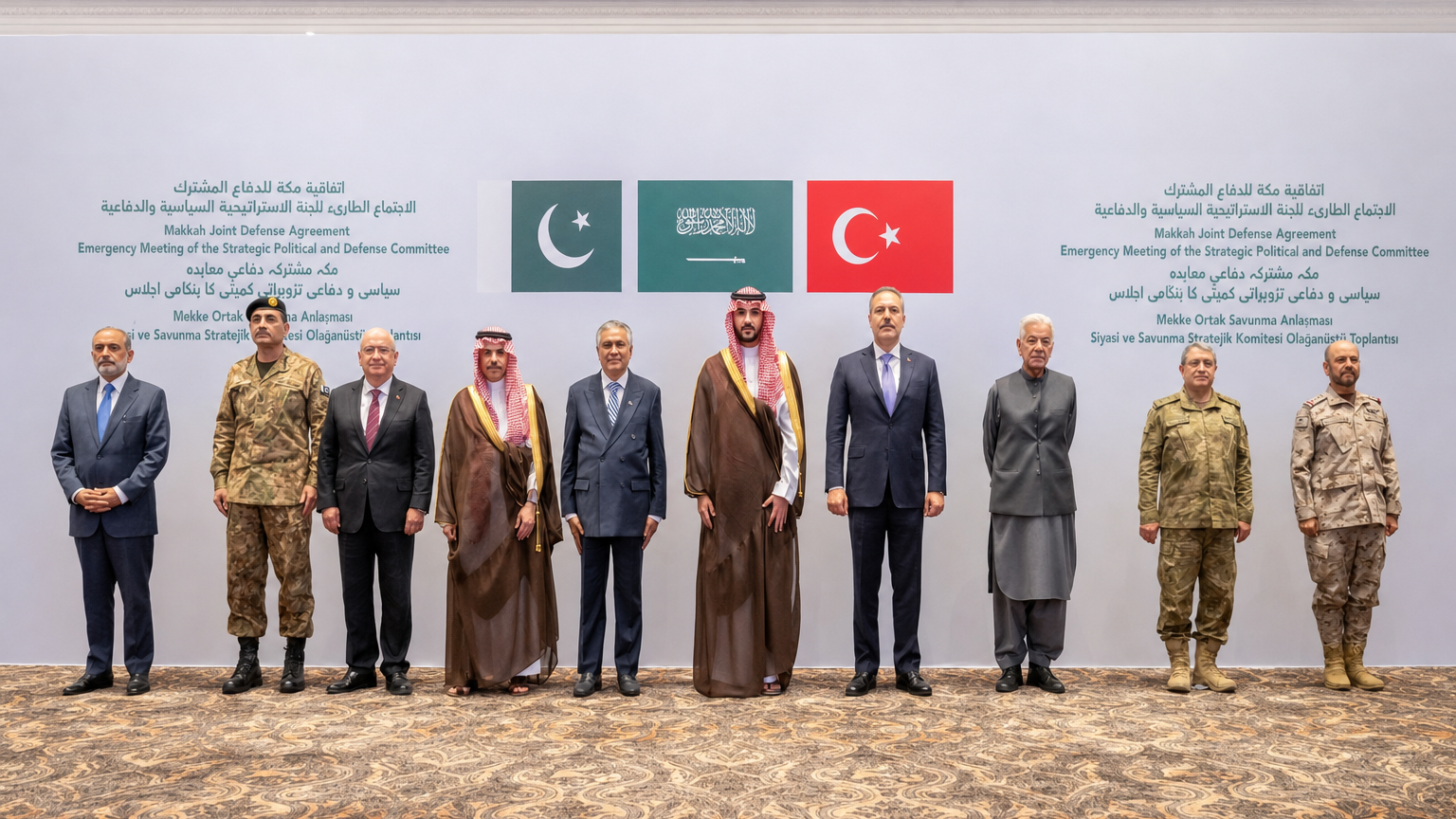

The Saudi Cabinet chaired by Crown Prince Mohammed bin Salman reiterated its strong rejection of ongoing threats to navigation in the southern Red Sea and Bab al-Mandab Strait during its session in Riyadh. The Cabinet praised the outcomes of the Makkah Defense Alliance emergency meeting held the previous day which reaffirmed solidarity among member states against attacks on Saudi infrastructure and activated collective defense commitments. The Cabinet also restated Saudi Arabia’s full support for Yemen’s legitimate government and Presidential Leadership Council in the face of Houthi escalation according to a Qatar News Agency report on the proceedings.
The Makkah Defense Alliance meeting involving Saudi Arabia Türkiye and Pakistan resulted in an agreement to immediately implement collective defense commitments including the rapid deployment of military forces and capabilities to the kingdom. The alliance appointed retired Pakistani Lieutenant General Nauman Mahmood as its first secretary-general for a three-year term as part of institutional development. The participants condemned attempts to target holy sites in Makkah and Madinah along with continuing attacks on Saudi cities civilians and economic facilities a joint statement from the Turkish Foreign Ministry detailed.
An Africa Center for Strategic Studies assessment found 12 Houthi attacks or attempted attacks on commercial vessels in the southern Red Sea since July including strikes on Saudi oil tankers. Shipping through the Bab al-Mandab has contracted sharply with weekly transits falling to levels less than one-third of those observed before the October 2023 Houthi campaign according to industry monitoring data. Insurance premiums for Red Sea transits have risen substantially adding roughly one million dollars per vessel for round trips and forcing many operators to reroute around Africa.
A United Nations report to the Security Council documented more than 60 Houthi-linked incidents against merchant vessels between early 2024 and September 2026 with several confirmed attacks occurring this year including one that killed four seafarers aboard a Tanzanian-flagged cargo ship in August. The Saudi Cabinet’s position aligns with repeated calls for adherence to international law and UN resolutions on maritime security in the region. The kingdom has maintained that such threats undermine global supply chains and regional stability beyond its own borders.
Saudi Foreign Minister Prince Faisal bin Farhan told the UN General Assembly in late September that Riyadh rejects any use of vital waterways as instruments of pressure or coercion stressing the need to restore conditions in key straits without imposed fees or restrictions. The foreign minister’s remarks echoed the Cabinet’s emphasis on freedom of navigation through the Strait of Hormuz Bab al-Mandab the Red Sea and Gulf of Aden according to a Saudi Gazette account. Saudi Arabia has also launched a multinational naval alliance aimed at safeguarding shipping lanes in response to the persistent risks.
The latest Cabinet session occurs against a backdrop of renewed Houthi claims of maritime embargoes targeting Saudi-linked vessels which have contributed to a measurable decline in traceable Saudi-affiliated transits through the Bab el-Mandab since July. Lloyd’s List Intelligence data places August transits at 1,166 vessels equivalent to 92.7 million deadweight tons a figure down 49 percent from 2023 averages. The Makkah Alliance activation signals a coordinated response among the three nations to enhance military readiness and integration in confronting these threats.