
 ع
ع

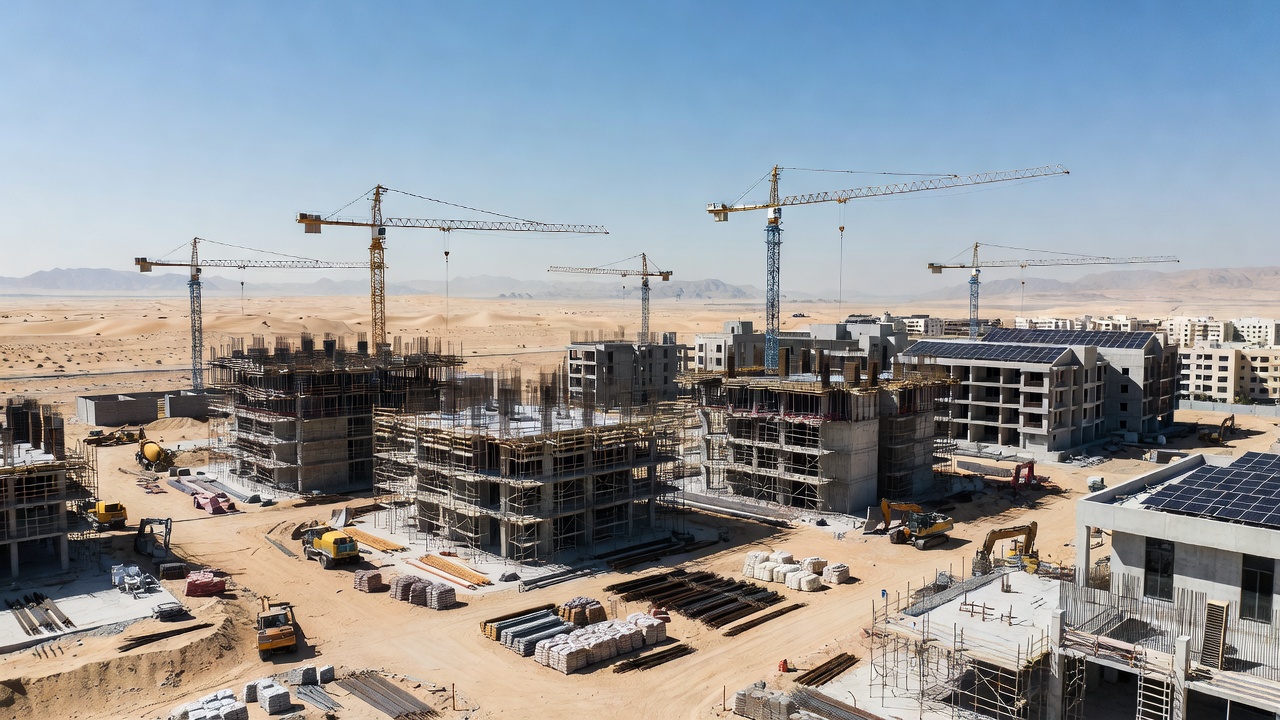

The construction industry has emerged as the second-largest contributor to Oman’s economy after oil while serving as the largest private-sector employer, Times of Oman reported on Tuesday. Dr Anchan C K noted in the publication that the sector continues to register rapid expansion in line with national diversification objectives. Forecasts point to sustained momentum across the coming quarters as public and private spending align with longer-term planning.
A Mordor Intelligence assessment placed the market value at $7.05 billion in 2025 before an increase to $7.27 billion this year. The same report projected expansion to $8.46 billion by 2031 with a compound annual growth rate of 3.08 percent. Residential projects held a 32.1 percent share of the market in 2025 while infrastructure work is advancing at a 5.18 percent compound annual growth rate to 2031.
The Public Authority for Projects, Tenders and Local Content unveiled a $3.9 billion pipeline in February that includes 10,000 upcoming tenders across 57 government entities, according to the Times of Oman article. Omani authorities have rolled out multiple programs aimed at affordable housing, healthcare facilities, transport links, renewable energy facilities and core infrastructure. Plans call for construction of more than 60,240 homes and nearly 6,000 hotel rooms by 2030 to handle population shifts and tourism growth.
Renewable sources are due to supply 30 percent of the country’s electricity by 2030, a goal that will necessitate extensive building in the energy and utilities area, industry analyses show. GlobalData estimated the construction industry registered 3.6 percent real-term growth in 2025 and anticipates an average 4.3 percent annual rise from 2026 through 2029. The National Center for Statistical Information recorded year-on-year foreign direct investment increases of more than 27 percent in manufacturing during the first half of 2025.
New construction represented 79.7 percent of total activity last year while renovation segments are projected to grow at 4.29 percent annually, Mordor Intelligence data places. Conventional on-site building techniques accounted for 92.9 percent of methods employed in 2025 although prefabricated and modular approaches are forecast to expand at 5.74 percent compound annual growth. Public investment made up 83.7 percent of funding sources with private capital demonstrating the fastest projected increase at 5.03 percent through the end of the decade.
The Times of Oman piece highlighted increasing uptake of green building methods such as rainwater harvesting systems and rooftop solar arrays to lower carbon emissions on new sites. Modular and prefabricated techniques are delivering shorter project schedules and better quality oversight. Dewatering innovations are enabling more effective groundwater management and helping keep complex projects on schedule.