
 ع
ع

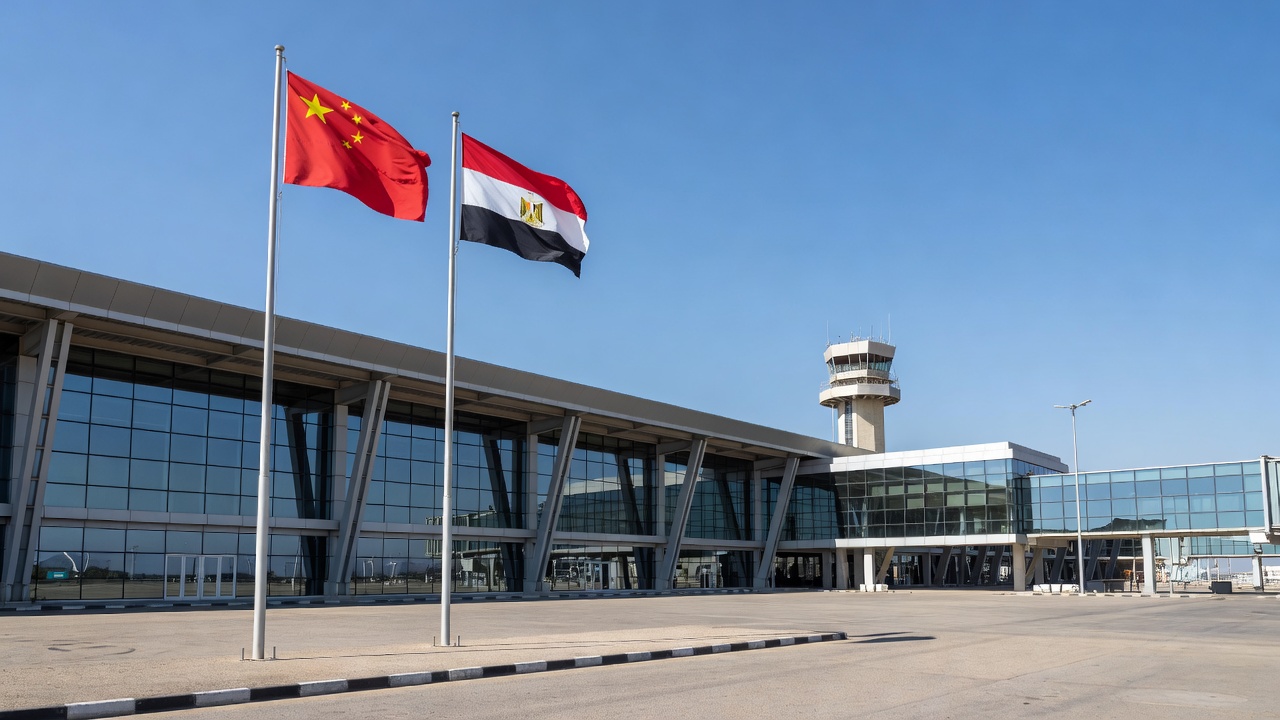

Chinese President Xi Jinping arrived in Cairo on September 1, 2026, for a state visit to Egypt, where President Abdel Fattah al-Sisi welcomed him at the international airport with a formal ceremony that included a red carpet, honor guards, folk dancers and youths waving both nations’ flags. The visit represents the second leg of Xi’s second overseas trip this year after his participation in a Shanghai Cooperation Organisation summit in Kyrgyzstan. It comes as Middle East countries reassess security and economic relationships in light of the fallout from the Iran war that has disrupted energy markets and raised questions about long-term U.S. commitments in the region.
In a signed article published Tuesday in Egyptian newspapers including Al-Ahram, Xi said China stands ready to deepen its comprehensive strategic partnership with Egypt while calling for greater mutual trust and an example of lasting friendship between the two peoples. He urged both sides to support each other on core interests, expand high-quality Belt and Road cooperation and tap potential for win-win outcomes across multiple sectors. Xi also encouraged stepped-up exchanges in education, tourism, science and technology, health, sports and archaeology to build stronger bonds between their civilizations and contribute to a community with a shared future for humanity.
Egypt became the first Arab and African country to establish diplomatic relations with the People’s Republic of China exactly 70 years ago, a milestone both sides have highlighted as the foundation for their current ties. President al-Sisi has made eight visits to China since assuming office in 2014, helping to elevate the relationship to comprehensive strategic partnership status. Xi last traveled to Egypt a decade ago and wrote in his article that he looked forward to working with al-Sisi to draw up a new blueprint for even closer cooperation.
Military collaboration has grown noticeably, with the two countries staging their second annual joint air force exercise last month that brought Chinese J-16 fighter jets to Africa for the first time. The drills featured joint air combat training with Egyptian Rafale aircraft, including refueling support from a Chinese tanker, according to Chinese state media. Egypt continues to receive roughly $1.3 billion in annual military aid from the United States yet has pursued diversified partnerships to enhance its strategic autonomy.
Chinese investments in Egypt have expanded rapidly into ports along the Suez Canal, manufacturing, solar energy, green hydrogen initiatives and satellite technology projects. Figures from the Central Agency for Public Mobilisation and Statistics show Egyptian exports to China increased nearly 200 percent to $840.8 million in the first half of 2026, while imports from China reached $10.4 billion during the same period. The economic engagement leverages Egypt’s position as a linchpin connecting Arab states, Africa and global trade routes.
Xi’s schedule includes planned visits to India and the United States later this month, building on his recent hosting of Jordan’s King Abdullah in Beijing where Palestinian rights and regional stability were discussed. The Egyptian trip follows years of steady high-level contact that has produced tangible results in infrastructure and trade. Both leaders have expressed commitment to using their partnership to advance cooperation between China, Arab nations and African countries more broadly.