
 ع
ع

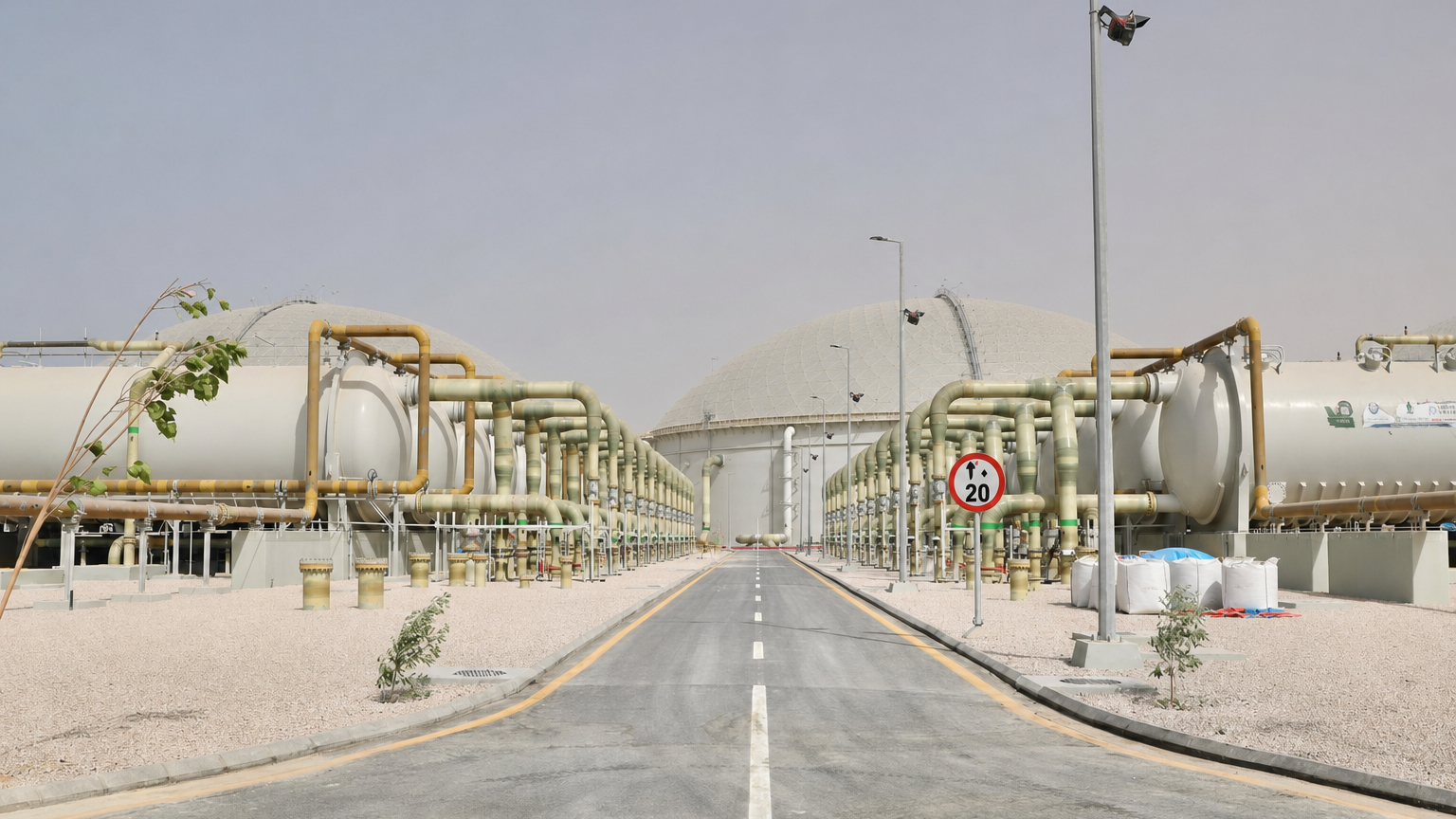

A Spherical Insights analysis has detailed how the kingdom’s desalination investments are generating openings for new technologies amid efforts to secure long-term water supplies. Saudi Arabia accounts for roughly 22 percent of global desalinated water output according to sector overviews from MEED and has shifted from thermal methods to more efficient reverse osmosis systems in recent projects. Public-private partnerships have become the primary procurement route for new capacity with more than 20 confirmed initiatives spanning desalination treatment transmission and storage through 2033. The approach supports both immediate supply needs and broader sustainability targets embedded in national planning.
Environment Water and Agriculture Minister Abdulrahman Al-Fadhli stated in June 2026 that the sector attracted more than $16 billion in investments while daily desalination production rose from 9 million cubic metres in 2016 to 16 million cubic metres in 2025. The ministry seeks to exceed 16 million cubic metres per day within five years even as it confronts the energy demands and environmental footprint of expanded operations. Private operators including international contractors have responded with bids on brackish water plants and major seawater facilities that incorporate improved efficiency measures.
Spherical Insights projected the Saudi reverse osmosis membrane market to grow at a 7.1 percent compound annual rate through 2035 driven by new facilities and government sustainability initiatives. Arab News reported in September 2026 that the Water Industries and Services Localization Program has advanced six of 18 targeted opportunities with $747 million committed to date and factories now producing membranes high-pressure pumps and control systems. These projects are expected to add $1.16 billion to gross domestic product by 2033 while generating nearly 3100 specialized jobs and cutting component costs by 20 to 30 percent.
The global water desalination equipment market will expand from $10.09 billion in 2023 to $22.96 billion by 2033 at an 8.57 percent compound annual growth rate according to separate Spherical Insights data with the Middle East and Africa region commanding the largest share. Saudi projects increasingly pair reverse osmosis with solar generation as demonstrated by the Shuaibah 3 initiative that is designed to reduce carbon emissions by 45 million tonnes and displace 22 million barrels of crude oil each year. Such integrations respond to concerns over energy intensity while aligning with Vision 2030 priorities for diversified and lower-carbon infrastructure.
Transmission and storage additions form a key element of the strategy with plans for 1640 kilometres of new pipelines and strategic reserves reaching seven days of supply a 2025 World Construction Network assessment noted. These elements create further demand for digital monitoring AI analytics and predictive maintenance systems that optimize network performance and reduce losses currently estimated at 30 to 40 percent in urban systems. International financiers have shown rising interest evidenced by KKR’s credit facility for the Rabigh 3 plant serving Mecca and banking consortia backing the Ras Mohaisen facility.
The localization drive aims to manufacture 90 percent of core water industry components domestically through 2033 with total investment targeted at $2.93 billion according to Saudi Press Agency figures cited by Arab News. Partnerships with firms such as Toray for membrane production and others for energy recovery devices have already led to operational factories in Dammam Jubail and Riyadh. The program extends beyond water to support adjacent sectors including energy mining and food processing while advancing technology transfer and workforce development goals.