
 ع
ع

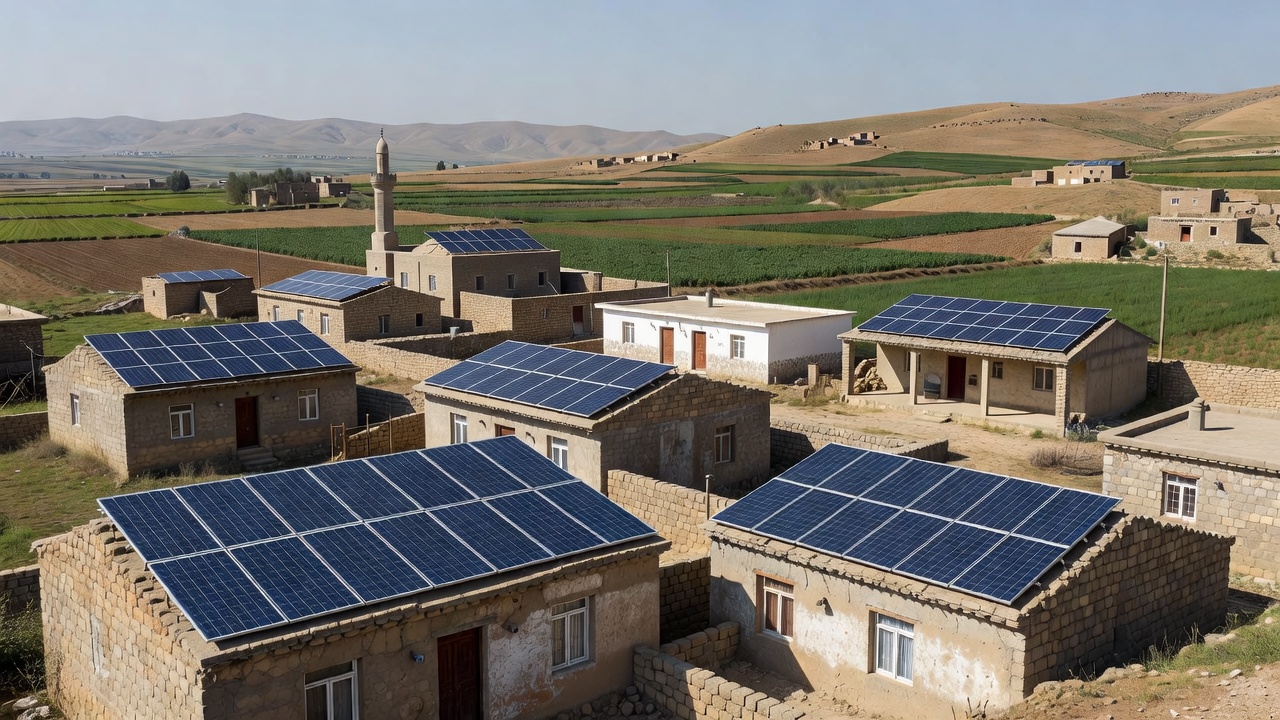

The Rwanga Foundation marked the completion of a solar electrification initiative in Ziarat village northeast of Erbil on July 1 2026 in a ceremony attended by Rawan Idris Barzani the commander of the Halo Special Division the governor of Erbil and local residents according to an announcement on the foundation’s website. The project delivers reliable renewable energy to 100 homes the mosque the health center and the community hall replacing previous dependence on inconsistent grid supply and costly generators. This latest effort forms part of a series that has now reached five solar-powered villages since the foundation launched its first such project in 2025.
Idris Nechirvan Barzani the founder and president of the Rwanga Foundation has driven the vision to replace short-term relief with infrastructure that fosters long-term resilience the foundation’s materials state. In an earlier statement Barzani said “Our sustainable villages in Iraq and Kurdistan region aren’t charity projects; they’re proof that even in the most difficult places we can break the cycle of dependency and create permanent self-reliant communities rooted in hope ecological balance and human dignity.” The approach emphasises local involvement including training residents to maintain the systems for ongoing self-sufficiency.
Earlier projects under the initiative have delivered comparable results with one village in Sheikh Wasan equipped with 72 solar systems incorporating 432 high-efficiency panels to serve 281 residents along with a mosque school health clinic and martyrs hall EU Reporter detailed last year. The Kulak Solar Village inaugurated in April 2025 stood as Iraq’s first fully off-grid solar-powered community providing continuous power for homes irrigation and community facilities according to the foundation’s original release. Rudaw reported that residents in the fifth village now receive 24-hour electricity after years of shortages that had hampered daily life and local businesses.
These solar villages address chronic electricity challenges across Iraq where power outages have long forced reliance on private generators that impose heavy financial burdens on rural households a pattern documented in multiple regional assessments. By powering essential services and enabling economic activities such as expanded agriculture and small enterprises the projects help curb migration from villages to urban centres the Rwanga Foundation has indicated. The model also supports education and healthcare by ensuring facilities operate without interruption.
The foundation’s Green Kurdistan campaign has positioned these developments as scalable pilots that governments could replicate across the Middle East where similar energy access gaps persist in remote areas. Complementary renewable strategies in Gulf countries including the UAE’s Energy Strategy 2050 and Saudi Arabia’s Vision 2030 offer broader policy context for integrating such community-level solar solutions according to sector analyses from the Middle East Council on Global Affairs. Rwanga officials have noted that directing benefits locally rather than through large-scale external aid enhances community ownership and sustainability.
Expansion of the solar village concept continues with the foundation exploring additional sites to further its goal of ecological balance and economic viability in underserved regions the organisation stated. Each new installation builds on lessons from prior deployments to refine installation speed and local capacity building. Data from the foundation places the cumulative impact at improved living standards for hundreds of families across the completed projects.