
 ع



A new Middle Eastern competition is starting on virtual circuits, testing how national teams can bring emerging drivers into a shared regional sporting story.
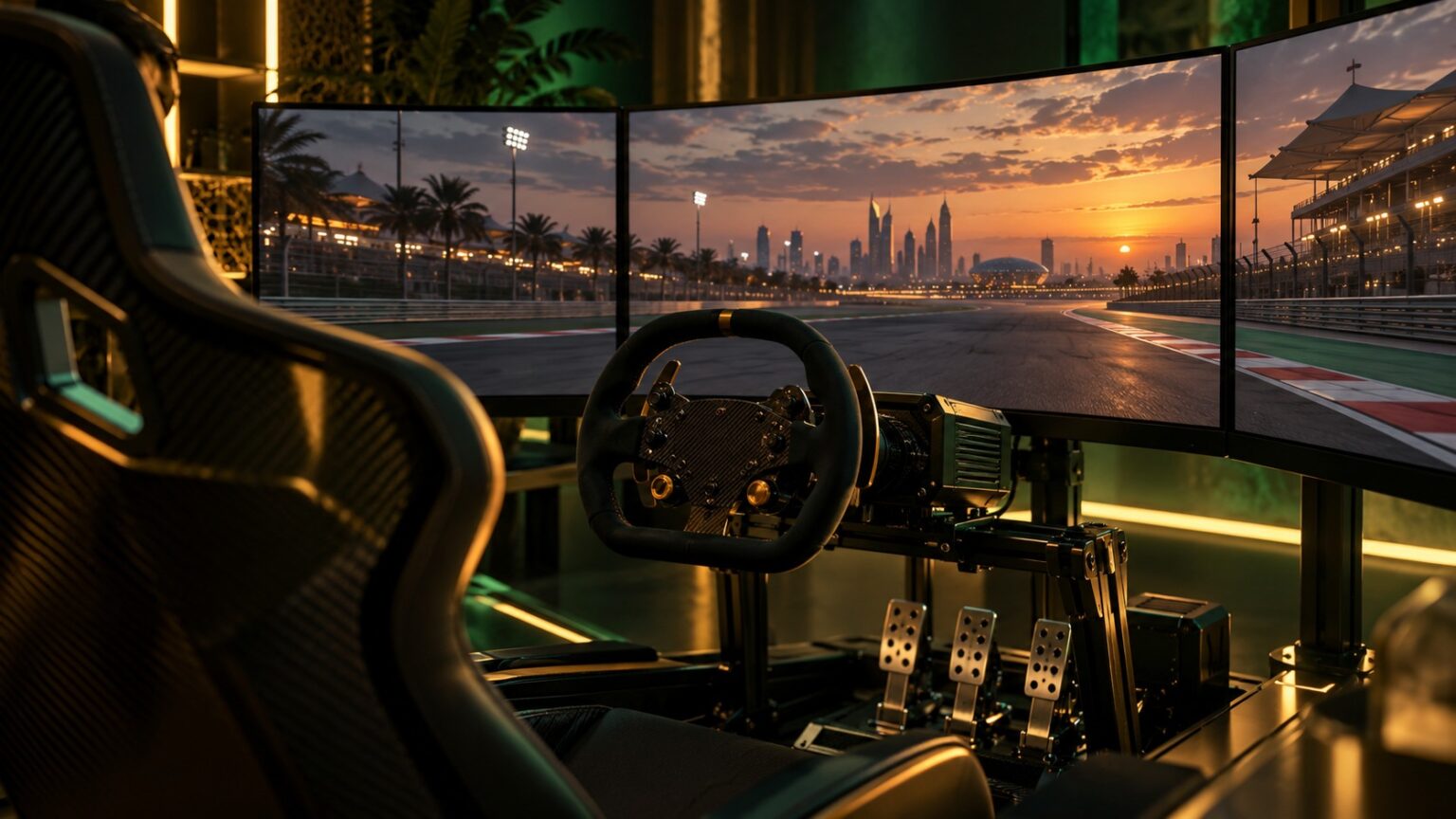
Middle Eastern motorsport is often introduced through the scale of its circuits and the international championships they host. Race of Kingdoms is approaching the region from a different starting point: drivers competing on simulators, organised around national identities that spectators can recognise before they know a competitor’s name.
The project’s official website identifies sim racing as its first pilot competition. Its wider plans encompass several physical racing disciplines, but those remain a subsequent ambition. The immediate story is more focused: whether a regional team competition can turn dispersed online participation into a sporting community with its own competitors, rivalries and continuity.
Founded by Gonzalo Gobert-Cézanne, Race of Kingdoms brings together Bahrain, the UAE, Jordan, Kuwait, Oman, Qatar and Saudi Arabia under its seven-team format. That creates a recognisable point of entry for audiences across the Gulf and Jordan, while giving the pilot a practical task: establish the competition before expanding the programme.
A team identity before a racing career
In its public championship updates, the organiser has presented national driver line-ups, qualifying results, racewear and country-specific liveries. Those elements explain the proposition more clearly than a broad promise to develop motorsport. Competitors are being placed within teams that can be followed collectively, rather than appearing only as individual names on a timing sheet.
For Kuwait, that opens a story about representation at a level below the familiar international racing calendar. The relevant distinction is between watching a global championship arrive in the region and following a regional competitor through a qualifying process. One brings an established sporting product to an audience. The other begins by making the participants themselves the focus.
The format also gives a simulator competition an identity beyond the software on which races take place. A national team can connect qualifying, individual driver profiles and subsequent races into one sequence. Whether that produces a durable following will depend on what the competition delivers over time, but the structure makes the intended connection visible from the outset.
An established place for virtual competition
The wider sporting context is already tangible. At the 2024 FIA Motorsport Games in Valencia, the FIA reported 60 entries in Esports F4, with no discipline attracting more participants at that edition according to its announcement. Virtual racing was therefore part of an international competition organised around national representation, rather than an activity confined to separate gaming communities.
That precedent matters because it establishes the sporting format independently of Race of Kingdoms’ own ambitions. It does not confer FIA recognition on the new project, nor does it demonstrate that a virtual result guarantees a professional driving opportunity. It shows that national-team esports has already been used within a major motorsport programme.
The FIA’s 2024 esports expansion included GT competition on Assetto Corsa Competizione and Formula 4 on iRacing. The event planned identical high-level hardware across 24 simulators and reduced the entry fee to €800 per driver. Those details highlight an important part of accessibility: organising a competition still requires equipment, rules, technical support and a clear route into the event.
Starting with a manageable competition
Launching first through sim racing gives Race of Kingdoms a defined initial product. A physical championship would require a different layer of circuit operations, vehicles, transport, technical inspection and on-site safety arrangements. Its website’s distinction between the current pilot and later racing categories is therefore substantive, and should remain central to how the project is understood.
For the audience, the pilot offers a chance to assess the sporting experience directly. Results, driver stories and the progression from qualifying to competition provide more information than a long list of possible future disciplines. They also establish whether the national-team format is easy to follow across several countries and successive rounds.
There is a related distinction between access and progression. Sim racing can introduce a competitor to organised racing without first requiring a race car, but moving into a physical category involves additional skills and resources. The existence of both in one long-term proposal should not be mistaken for a funded seat, a guaranteed trial or an automatic transfer between disciplines.
The team structure also raises an editorial distinction between a competitor’s nationality and the authority organising the event. A country name on a livery does not establish government backing or an official national-team appointment. Reporting can celebrate the representation visible in the competition while describing the organiser and its pilot accurately.
What the first season can establish
For sponsors and sporting organisations, a pilot creates evidence that can eventually be examined: participation, completed rounds, audience engagement and how consistently the competition is delivered. These are different measures, and none can be inferred from social-media follower totals alone. An audience interested in a national team is also not necessarily the same group as the drivers entering its qualifiers.
For competitors, the first achievement is more immediate. A named team, a visible result and a place in a regional contest give otherwise dispersed activity a public sporting context. That is the part of Race of Kingdoms that can be reported now, without borrowing scale or success from its future plans.
The pilot’s significance lies in that starting point. Before the proposed wider programme becomes a calendar of physical races, the project is building a competition around who represents each country. Its first season will establish what that idea looks like when national identity is carried onto a virtual grid.