
 ع
ع


After a 115 percent overrun in Paris and an AUD 7.1 billion venue bill in Brisbane, the IOC has rewritten host selection around cost, and Qatar is the candidate whose file was already written that way.
The International Olympic Committee’s 146th Session in Lausanne endorsed a reformed host selection process on 24 June, setting mid-2029 as the target date to elect the 2036 host. Interested parties will be shortlisted for a new Strategic Dialogue stage in March 2027, then required to complete a Future Host Questionnaire and submit core financial guarantees before the final evaluation round.
Read closely, the reform is a cost document. It front-loads guarantees, staggers commitment and returns the decision to a competitive vote. It exists to stop the movement awarding Games that end up costing far more than anyone promised. On that test, Doha’s file begins from a position no rival can match.
The bill the reform is trying to control
Paris 2024 came in at around USD 8.7 billion on an overrun of 115 percent. Los Angeles 2028 has already revised its forecast from USD 5.3 billion to USD 6.8 billion. Brisbane 2032, awarded eleven years out and effectively unopposed, is working inside a venue funding envelope of AUD 7.1 billion covering 17 new and upgraded venues, with a main stadium at Victoria Park costed at about AUD 3.7 billion and a federal contribution of AUD 3.44 billion behind it.
Brisbane organisers place 84 percent of their venues in the existing or temporary column. The remaining 16 percent contains the stadium and the aquatics centre. In Olympic budgeting that residual is not a rounding item; it is the entire problem, and it is where every recent host has lost control of the number.
Qatar’s file has no residual
Confirming the bid, Qatar Olympic Committee president and bid committee chairman Sheikh Joaan bin Hamad Al Thani said the country holds 95 percent of the required sports infrastructure, with a national plan to reach full readiness. The percentage is the bid’s own. The inventory behind it is public and in continuous use: the eight stadiums that hosted the 2022 World Cup, the aquatics and athletics venues that carried world championships in 2024 and 2019, the gymnastics worlds in 2018, the 2024 Asian Cup, and an Asian Games programme running from 2006 through to the 2030 edition ahead.
None of it was built for 2036. All of it was commissioned, paid for and put to work for something else, and most of it is booked again before the decade closes, with the FIBA World Cup arriving in 2027. A host that has already absorbed the capital cost changes the arithmetic the IOC has to underwrite. It also removes the failure mode that has embarrassed the movement most reliably, which is a construction programme running late into a fixed opening date.
A crowded field and a specific advantage
The 2036 contest is competitive. Ahmedabad, Nusantara, North Jeolla, Santiago and Istanbul are confirmed, with Saudi Arabia, Egypt, Germany, Budapest and Spain having signalled interest, and at least ten prospective projects were in talks when IOC president Kirsty Coventry paused the process last year. Several offer larger domestic markets and deeper sponsorship bases. None offers a finished venue map.
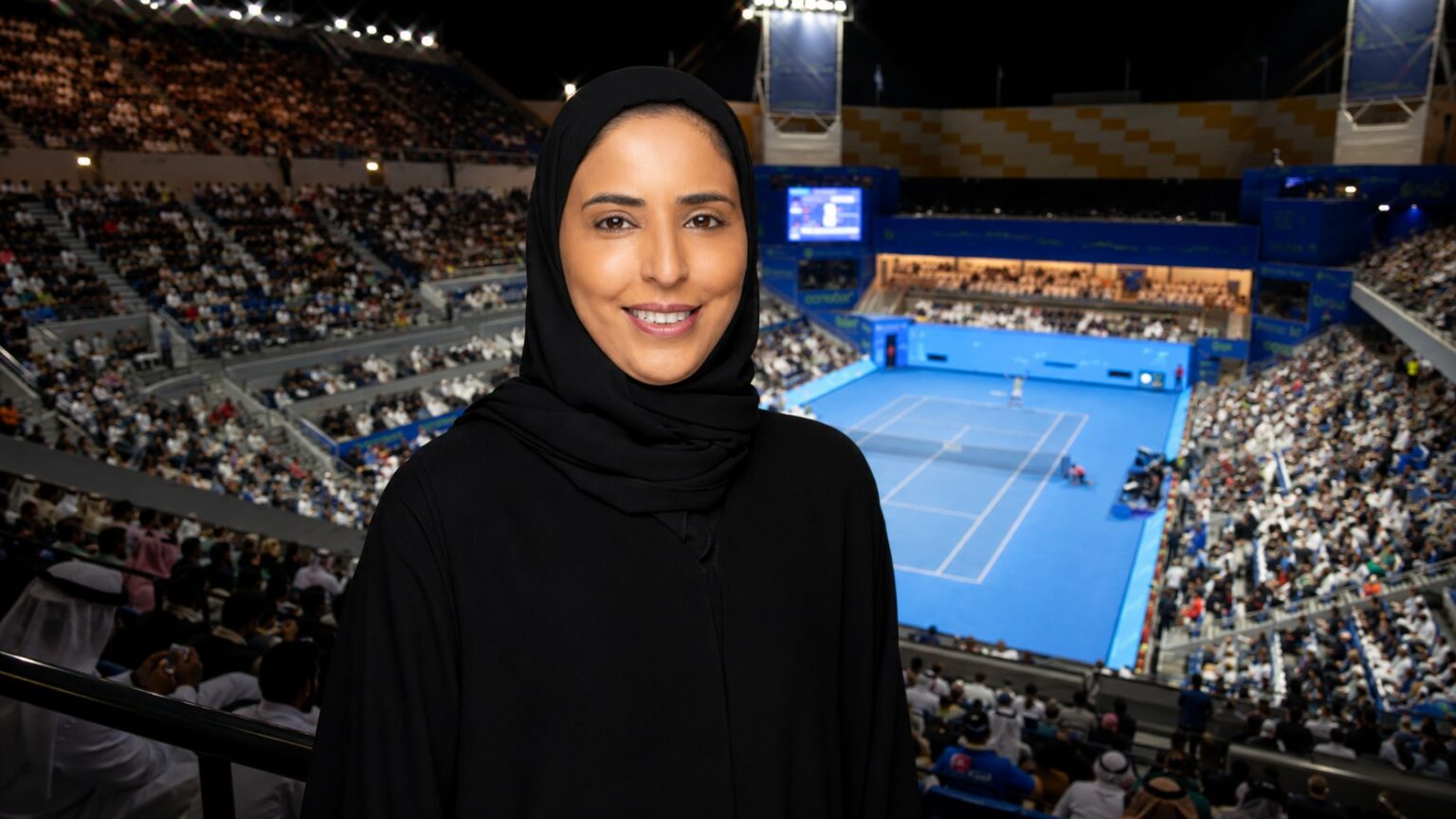
Qatar has also staffed the file for the new process rather than the old one, naming Fatima Sultan Al Kuwari chief executive in June, a group-level corporate operator rather than a sports administrator, on a timetable whose first milestone is a questionnaire and a set of guarantees.
The one item an inventory does not cover
Doha’s 2016 and 2020 bids proposed October dates to avoid summer temperatures and did not reach the shortlist. The July and August window exists because federation calendars and broadcast contracts are built around it, and the 2022 World Cup was pushed to November and December for exactly that reason. The bid committee has not yet said which weeks of 2036 it would propose. Every rival can offer a northern summer without qualification, and no quantity of finished concrete answers that. It is the one question Qatar has to solve rather than simply demonstrate.
What it has already demonstrated is the harder half. The reformed process asks candidates to prove, seven years out, that they can hold a cost line. Doha can point at the buildings and show that the line was held a decade ago. From March 2027 the IOC begins deciding what that is worth.