
 ع


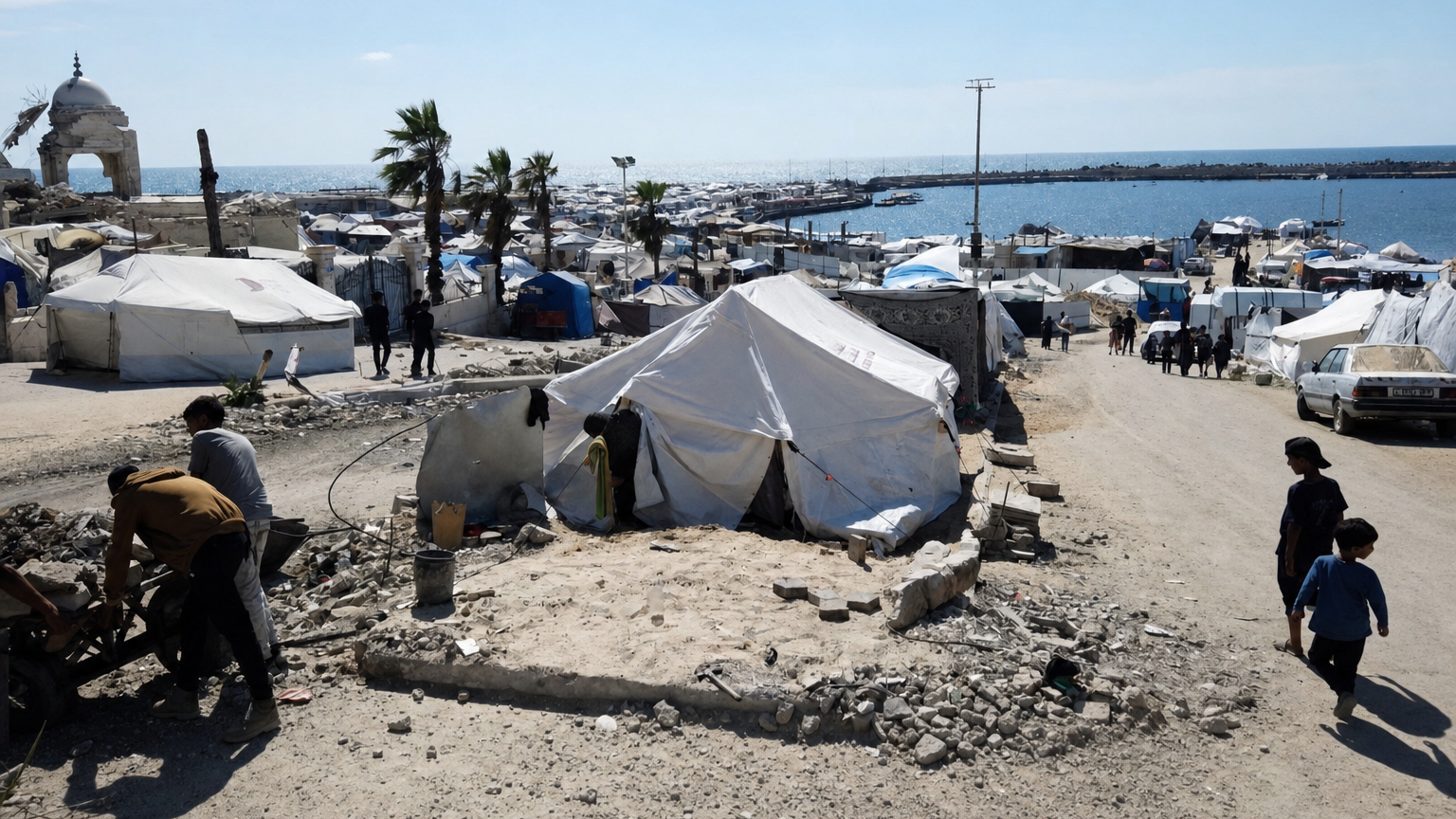

The Office of the United Nations High Commissioner for Human Rights documented fresh displacement triggers in recent weeks across Al Shujaiyeh in Gaza City and eastern sectors of Al Bureij, Deir al Balah and Al Maghazi in the central Gaza Strip, according to its statement. Israeli military operations have focused on extending control from the so-called yellow line demarcation, with the stated objective of covering 70 percent of Gaza’s territory, the office reported. This pattern has left civilians surrounded and repeatedly forced inward, compounding the destruction of what remains of hospitals, schools and homes in those zones.
A drone strike on tents sheltering displaced families at the Al Shujaiyeh junction on October 25 ignited a fire that burned for five hours and displaced 200 families, or roughly 800 people, most of them women, children and elderly persons, the Palestinian Ministry of Public Works and Housing informed UN monitors. Ajith Sunghay, head of UN Human Rights in the Occupied Palestinian Territory, characterised the situation as a nightmare that is both acute and chronic. Sunghay added that those displaced prior to the ceasefire announcement have little to no prospect of returning because the areas lie beyond the yellow line, while further displacements continue without respite.
The UN Human Rights Office cautioned that the combination of intensified attacks, methodical neighbourhood destruction and denial of humanitarian access appears aimed at a permanent demographic shift, sustaining concerns of ethnic cleansing first flagged in earlier OHCHR assessments. Such forcible transfers could amount to war crimes and, in certain circumstances, crimes against humanity, the office stated in its October 30 release. According to the statement, bombardment has not ceased even a year after the ceasefire, trapping families in inadequate shelters as they face their fourth winter under fire.
The warning follows a UN Independent International Commission of Inquiry report issued on October 26 that concluded Israeli authorities and forces continue to commit genocidal acts in Gaza with intent to destroy Palestinians as a group in whole or in part, even after the ceasefire agreement. The commission, chaired by Srinivasan Muralidhar, documented ongoing use of heavy munitions, drones and sniper fire in populated areas, alongside the yellow line’s transformation into a de facto border reflecting territorial expansion. Muralidhar noted that these actions form part of a broader strategy involving extermination, persecution and forcible displacement across the occupied Palestinian territory.
OHCHR verification has confirmed 1,076 conflict-related deaths between the ceasefire announcement in October 2025 and the end of July 2026, including 331 near the yellow line, an OCHA humanitarian situation report from mid-October showed. Nearly all of Gaza’s 2.1 million residents have experienced displacement at some stage since October 2023, according to OCHA assessments that place 950,000 displaced people in sites at medium to high risk of flooding ahead of the rainy season. The latest OHCHR statement builds directly on that data by underscoring how internal movements have eliminated safe return options across large areas.
In the West Bank, military operations reinforced by settler violence have displaced 34,176 Palestinians as of August, the largest such movement since 1967, a figure the Commission of Inquiry attributed to systematic attacks on civilians based on nationality, ethnicity and age. OCHA partners have recorded acute respiratory infections as the leading health condition among those affected in both territories, where shelter supplies meet only 18 percent of identified needs for the coming winter. Sunghay urged an end to the suffering, noting that accountability for these patterns remains indispensable.