
 ع


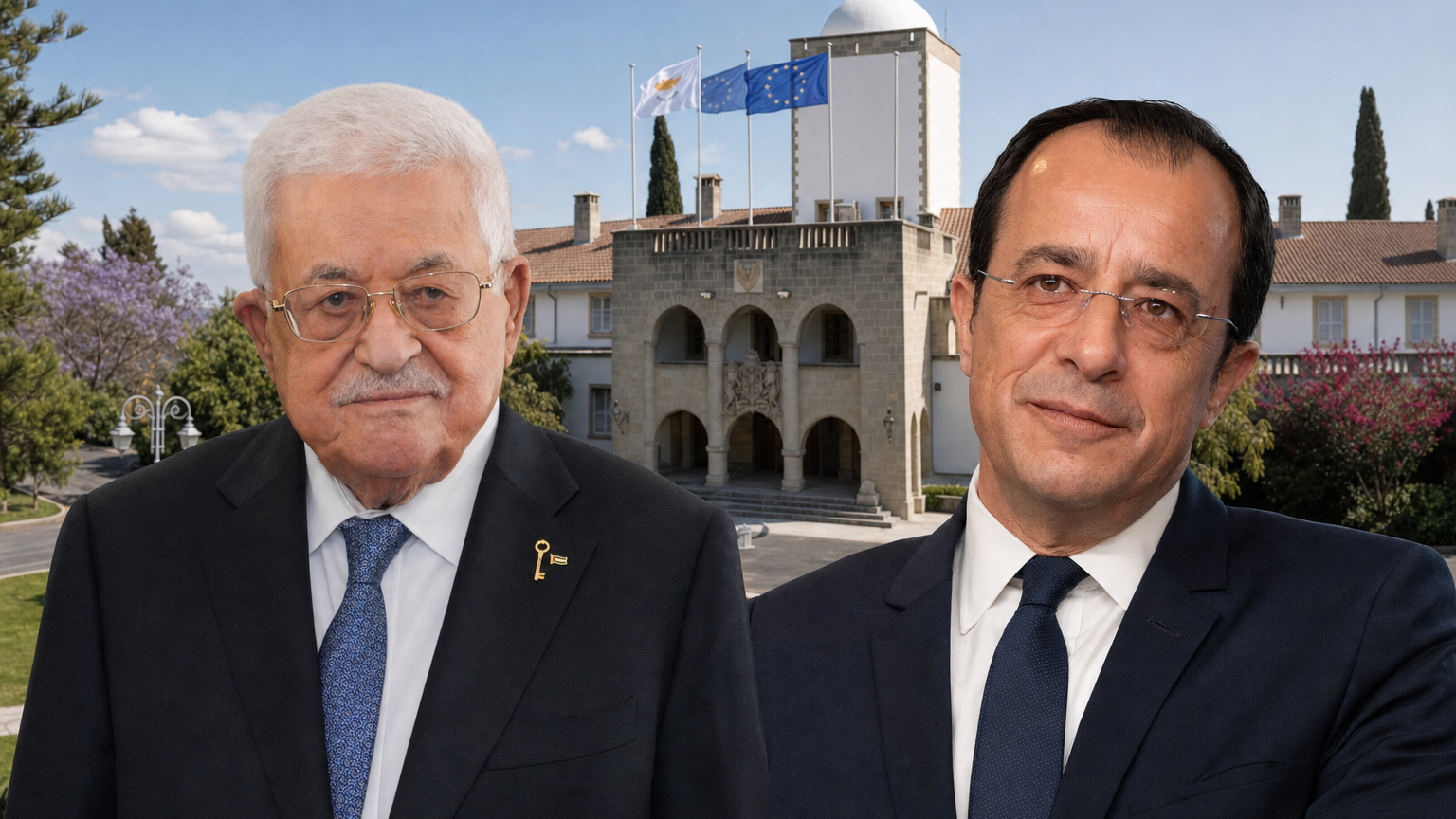

Palestinian President Mahmoud Abbas expressed hope that the period after a new Israeli government takes shape would open the door to serious political dialogue aimed at achieving peace based on international law. “For many years now, we have been extending a hand to the Israeli side in order to achieve peace with them, so that Israel and Palestine may live in security, stability and peace,” Abbas said during a joint press conference with Cypriot President Nikos Christodoulides in Nicosia. He added that the Palestinian side has repeatedly sought peace in line with United Nations resolutions and principles of human rights, according to the official Palestinian news agency WAFA. Abbas reaffirmed the leadership’s commitment to peaceful popular resistance while discussing the challenging conditions in the West Bank, Gaza and East Jerusalem with his Cypriot counterpart.
With nearly all votes counted from Israel’s parliamentary election, neither Prime Minister Benjamin Netanyahu’s bloc nor the opposition group led by former military chief Gadi Eisenkot secured a majority in the 120-seat Knesset. A count of about 97 percent of ballots released by the Central Elections Committee showed Netanyahu’s bloc with 53 seats, the opposition with 67 and Arab parties with 19, an outcome that points to extended coalition talks. The inconclusive result comes as the Israeli-Palestinian peace process has remained frozen for more than a decade.
A United Nations briefing to the Security Council in September 2026 documented continued high levels of settlement activity, with planning authorities advancing nearly 4,570 housing units in Area C of the West Bank and more than 3,500 in East Jerusalem during the period reviewed. Reuters reported earlier in 2026 that more than 36,000 Palestinians had been displaced over the preceding year by settlement expansion and associated violence, which the world body described as suggesting a pattern of mass forcible transfer. According to data compiled by the Arab Organisation for Human Rights in the UK, the settler population in the West Bank including East Jerusalem stood at approximately 780,000 by the end of July 2026.
The Palestinian leader told reporters that Cyprus could play a role in fostering regional cooperation, a point Christodoulides acknowledged by noting that his country stands ready to convey regional concerns to the European Union and cannot change its geographic position. Abbas highlighted recent European positions on the conflict, pointing to alignments from countries such as Spain, France, Germany, Italy and the Netherlands with Palestinian views on a settlement. Diplomatic tallies place the number of United Nations member states that recognize Palestine at 157 as of October 2026, a figure that has grown with several recent European recognitions.
Settlement construction and violence against Palestinians have increased markedly in the occupied West Bank under the current Israeli government, where the Palestinian Authority holds limited self-rule, according to multiple international monitors. A report from the Israeli NGO Peace Now cited in regional coverage noted that authorities have retroactively legalized outposts and directed substantial funding toward infrastructure for such sites in recent years. These developments have drawn criticism for undermining prospects for a viable two-state outcome even as Abbas reiterated the Palestinian readiness for dialogue once a new administration forms in Israel.