
 ع



The Ministry of Foreign Trade, in collaboration with the Abu Dhabi Chamber of Commerce and Industry, organised a UAE-Benin business roundtable on October 29, 2026, to examine prospects created by the Comprehensive Economic Partnership Agreement the two countries signed earlier in the week. Minister of Foreign Trade Thani bin Ahmed Al Zeyoudi, who headed the UAE delegation, described the meeting as a chance to turn shared interests into concrete investment projects and commercial partnerships. He noted Benin’s standing as one of West Africa’s fastest-growing economies and voiced the UAE’s determination to enlarge its business presence in promising African markets, especially in logistics, manufacturing, energy and telecommunications.
Ministry of Foreign Trade figures show non-oil trade between the UAE and Benin increased 63.5 percent in 2025 to approximately $2.15 billion. Al Zeyoudi stated that the CEPA would reinforce these flows by lowering tariffs, simplifying procedures and allowing small and medium-sized enterprises greater access to both markets. He urged private-sector actors in the two countries to capitalise on the pact and build long-term partnerships that support UAE companies’ expansion into African markets.
The African Development Bank Group’s 2026 Country Report recorded that Benin’s economy grew 8.1 percent in 2025, propelled by activity in construction, manufacturing, transport and trade, with projections remaining above 7 percent annually through 2027. An International Monetary Fund assessment released in October 2026 forecast 7 percent growth for Benin in 2026, placing the country among the quicker-expanding economies in sub-Saharan Africa. These trends, combined with improvements in tax administration, digital public services and budget transparency, have enhanced Benin’s attractiveness to foreign investors.
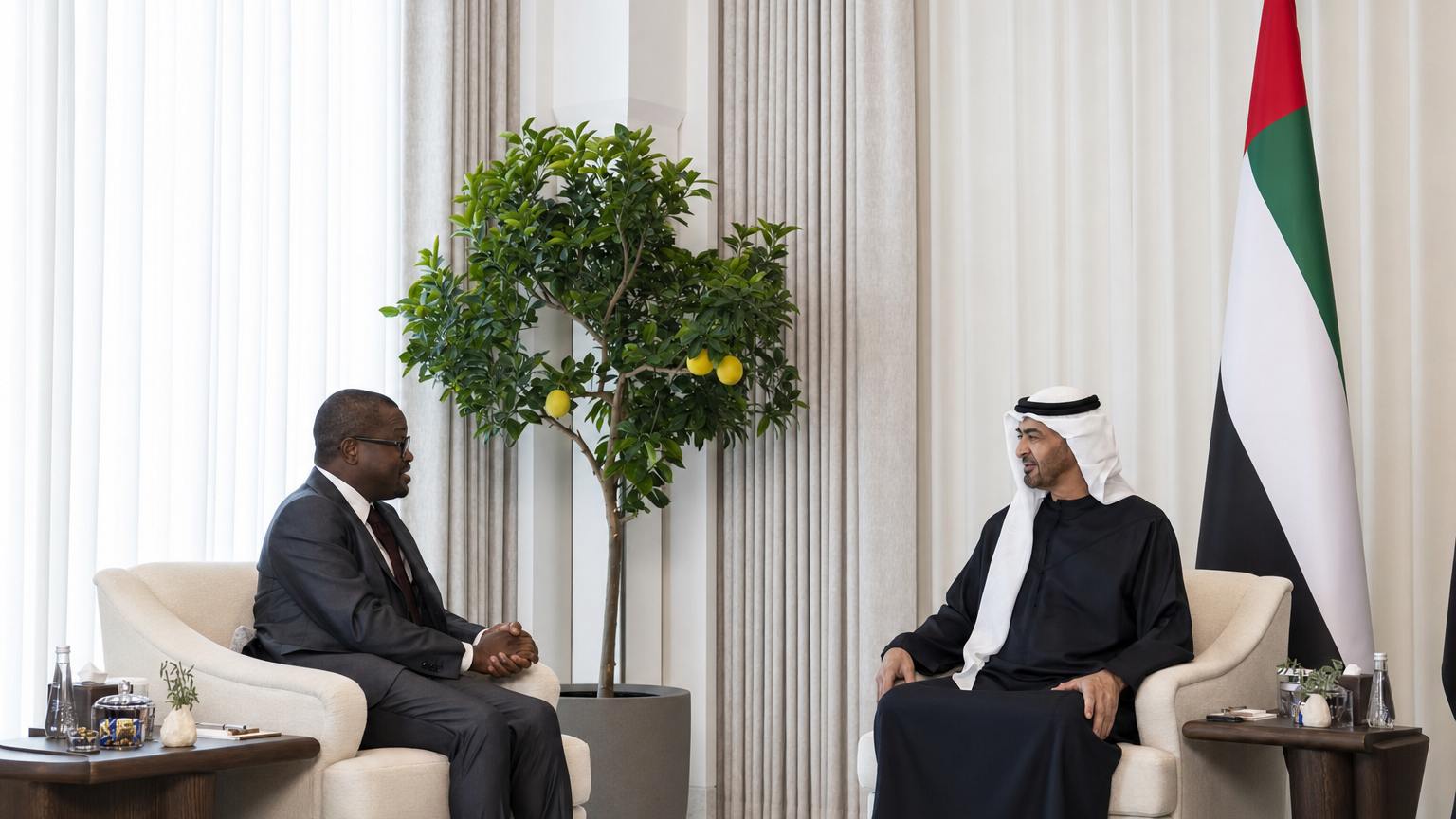
UAE President His Highness Sheikh Mohamed bin Zayed Al Nahyan and Benin President Romuald Wadagni witnessed the exchange of the CEPA on October 25, 2026, opening a new chapter in bilateral economic relations. The agreement, once in force, will reduce or eliminate customs duties on a wide range of goods, remove trade barriers and improve access for service providers and investors, according to a statement from the Ministry of Foreign Trade. It is expected to increase UAE exports to Benin by more than $1 billion by 2033 while lifting Benin’s exports to the UAE by over $100 million in the same period, the ministry added.
Sheikh Mohammed bin Khalifa Al Nahyan, Chairman of the Abu Dhabi Chamber of Commerce and Industry, said the pact reflected both nations’ resolve to deepen economic cooperation through facilitated trade, enhanced market access and mutual investment. He identified technology, renewable energy, logistics and agriculture as priority areas for UAE capital deployment in Benin and stressed the need for private-sector involvement in developing commercially sound projects. The chamber signed a memorandum of understanding with the Benin Chamber of Commerce and Industry in 2022 to advance ties in trade, investment and business development.
Khalid bin Hadi, Director-General of the Abu Dhabi Chamber, pointed to opportunities in food processing, light manufacturing, construction materials, logistics and technology that could reinforce supply chains and open fresh commercial channels. The roundtable builds on previous UAE business visits to Benin and forms part of Abu Dhabi’s drive to convert high-level accords into on-the-ground private-sector engagement. Benin, Africa’s largest cotton producer with annual output exceeding one million tonnes, also presents potential in textiles, cashew nuts, shea products and fruit exports.
The initiative fits the UAE’s broader approach to economic partnerships across Africa, where it has concluded 37 comprehensive economic partnership agreements, 18 of which are in force. Benin officials have indicated the CEPA will grant their goods improved entry to the UAE and wider Gulf markets while facilitating imports of Emirati machinery and technology. Bilateral non-oil trade has more than doubled since 2021, providing a solid platform for further growth once the agreement takes effect.