 ع
ع
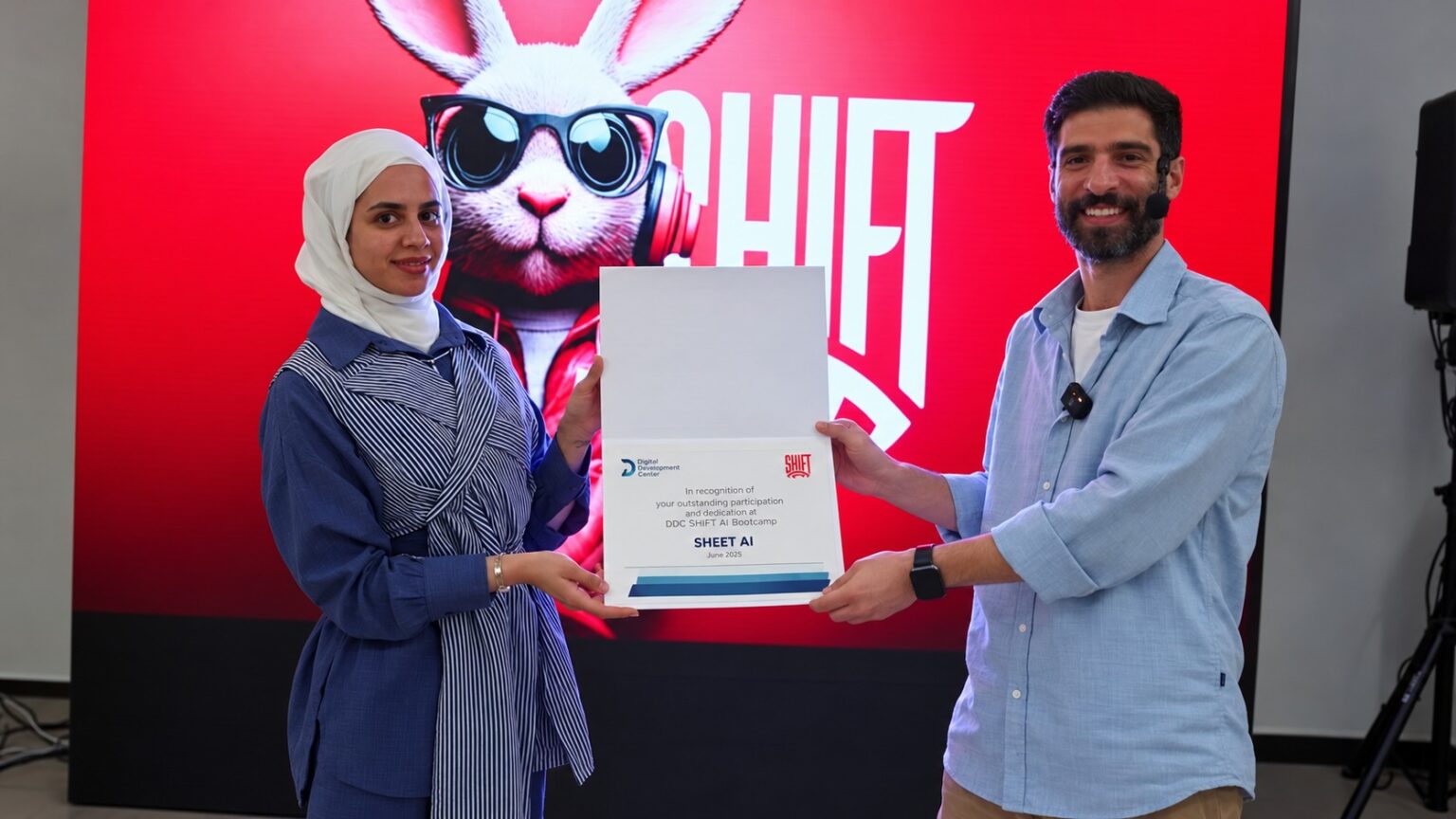

SHIFT’s next four-day programme ends with an audience screening, bringing questions of story, authorship and creative judgement into the AI training room.
An AI filmmaking workshop scheduled in Kuwait later this month will end with a test that takes place outside the software: participants’ films will be shown to an audience. SHIFT’s next programme runs from 29 October to 1 November in Sharq, with a cinema screening built into its final day.
The format brings a practical question into the debate over generative media. Producing an individual image or shot is one task. Developing a film that holds together across scenes, sound and editing is another. A screening makes the finished work, rather than the generation process alone, the point of attention.
SHIFT is led by Kuwaiti filmmaker Abdulrahman Al-Khamis. Its published workshop outline describes four stages: prompts and image generation, video and sound, production, and a final premiere. The audience votes on the completed films. Those are the programme’s stated activities, not an independent assessment of the films participants will produce.
A training format with a visible endpoint
According to SHIFT’s current programme information, sessions run from 4pm to 8pm across the four days and are delivered in Arabic and English. Participants are required to bring a laptop and obtain a one-month Higgsfield subscription separately from the workshop fee.
That distinction between tuition and software access is part of the economics of this type of training. A course can provide instruction and a deadline, while the tools used to generate the material may remain separate commercial services. The published requirements make that split explicit for this programme.
More consequential than the equipment list is the deadline itself. Each participant is asked to move from an initial idea through production to something that can be shown. The structure makes selection, sequence and completion part of the exercise, alongside learning how to request images or motion from a model.
It also creates an observable output. The existence of a completed film can be checked, and its creative choices can be discussed. That is a narrower, more concrete result than a general claim that someone has mastered AI filmmaking after attending a short course.
Technical literacy meets creative judgement
The relationship between tool use and creative judgement is also appearing in international cultural policy. A UNESCO-convened expert report presented in 2025 argued for cultural AI literacy that combines technical knowledge with critical thinking. It examined issues including creative agency, cultural diversity and the position of artists in changing value chains.
That framework provides context for programmes such as SHIFT’s without endorsing any particular provider. Knowing which instruction produces a visual effect is useful technical knowledge. Deciding whether that effect serves a story, repeats a stereotype or distracts from the subject involves a different kind of judgement.
A film’s meaning also depends on relationships between its parts. A convincing shot does not determine how a sequence should be paced, where sound should enter or which detail an audience needs to understand a character’s action. Those remain creative decisions even when software produces part of the material.
The significance of a screening-led course is therefore not that it settles the debate about AI and art. It creates a local setting in which that debate can be attached to actual work, with choices and results available for an audience to examine.
A local practice enters a wider debate
On its founder and studio page, SHIFT reports more than 900 trainees, over 15 workshops and more than 15 festival editions. These are the studio’s own cumulative figures. They describe the scale it says it has reached, but do not by themselves establish employment outcomes, commercial success or the standard of every film produced.
The studio’s public screening room includes work and festival coverage alongside participant films. This gives the training activity a visible connection to production and exhibition, rather than presenting the workshop as an isolated classroom product. It also provides a place to distinguish the instructor’s commercial work from the output of individual participants.
UNESCO’s earlier discussion with film-sector stakeholders brought together concerns about new creative possibilities and the value of human work. The issues extend across the production chain, including who controls the tools, whose work informs them and how creative contributions are recognised.
For a Kuwaiti workshop, these questions can be approached through the decisions made inside each project. The choice of language, setting, imagery and point of view determines whether a film expresses a particular experience or merely reproduces a familiar visual style. Technical novelty alone cannot answer that question.
The screening is a beginning, not a career measure
SHIFT’s upcoming dates provide a near-term example of how AI production is being taught locally: a defined period of instruction, an individual project and a public-facing endpoint. The approach places a film in front of viewers who can respond to it as a film, regardless of the tools behind it.
That response remains distinct from professional recognition or a sustainable career. A short screening programme can establish that a work was completed and presented. Longer-term conclusions would require evidence about subsequent productions, commissions, continued practice or other outcomes beyond the event itself.
The immediate story is consequently specific. From 29 October, another group of participants is scheduled to work through SHIFT’s production process, with their screening planned for 1 November. The resulting films will provide the clearest evidence of how they have combined software capabilities with the choices that make a story their own.