

 ع
ع

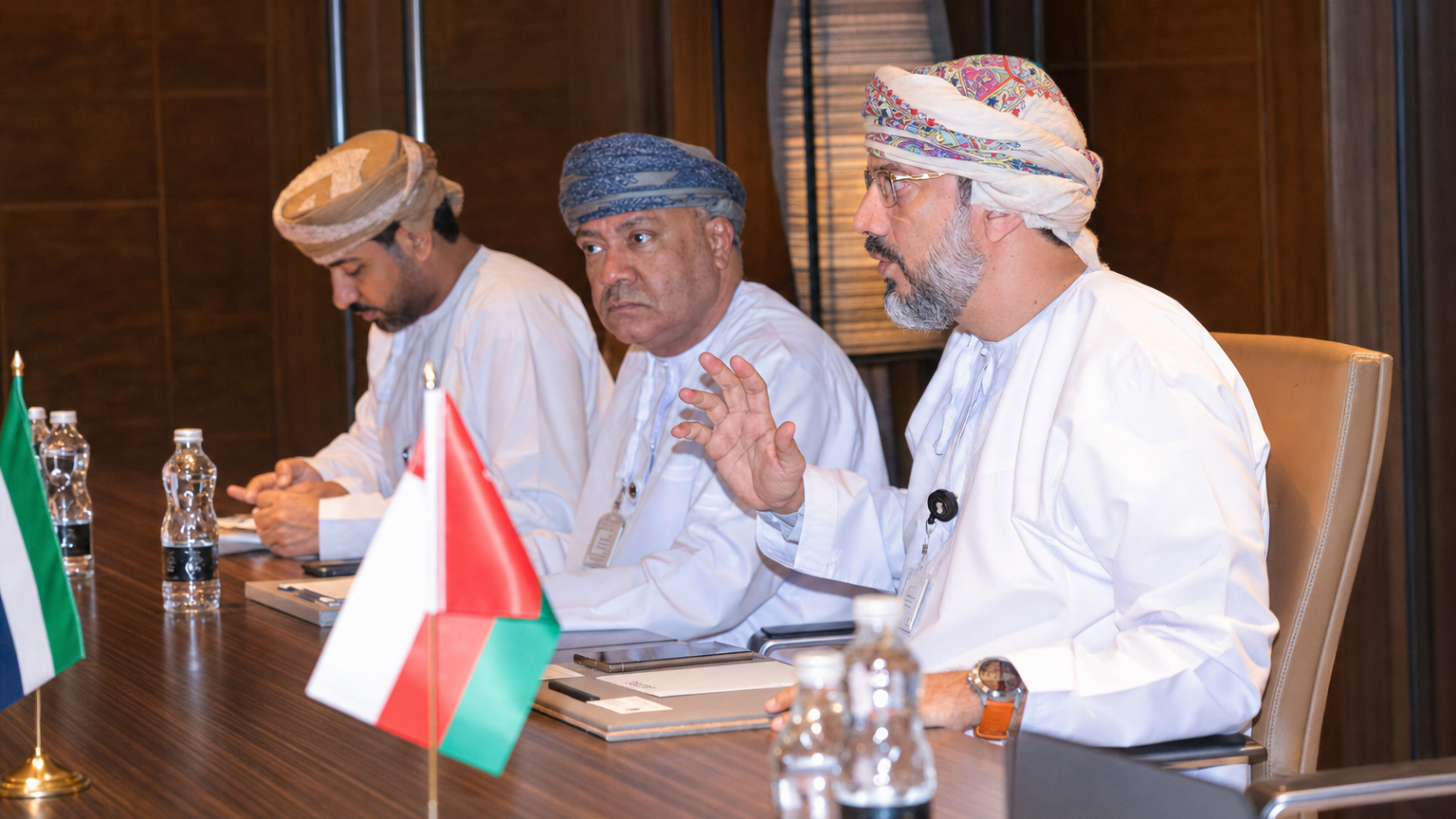

Uzbekistan’s Ministry of Investment, Industry and Trade announced on October 2 that Minister Laziz Kudratov secured commitments from Omani counterparts to draft both a preferential trade agreement and an updated investment protection pact during his working visit to Muscat that ran from September 30 to October 2. The ministry said the discussions with Oman’s Minister of Economy Khamis bin Saif Al Jabri and Minister of Commerce, Industry and Investment Promotion Anwar bin Hilal Al Jabri focused on expanding bilateral trade volumes that have remained modest, alongside industrial cooperation and the creation of new logistics corridors. Officials from both sides examined ways to ease market access for exporters, address certification requirements and customs procedures, and accelerate technical negotiations on product coverage, tariffs and rules of origin that would underpin the preferential trade deal.
According to the ministry, the meetings reviewed opportunities to convert identified prospects into concrete joint ventures while building on the existing Uzbek-Oman Investment Company established in 2009 with an initial capital commitment of $500 million. Kudratov and his Omani hosts considered new production capacities, export routes, energy storage systems, data centres and raw-material processing facilities that could support direct supplies between the two economies. The ministry’s summary of the visit placed particular emphasis on transport and logistics corridors that would strengthen connectivity, including potential use of Omani ports for re-export of Uzbek goods.
Separate sessions with Omani business leaders covered an array of sectors that included logistics, energy, petrochemicals, electrical engineering, mining, banking and tourism, the ministry reported. Participants evaluated prospects for establishing export-oriented manufacturing operations inside Oman’s economic and free zones while exploring collaboration on energy storage, petrochemical processing and dedicated logistics infrastructure. These conversations also addressed the potential for data-centre development and direct supplier relationships that could reduce intermediate costs and expand market reach for products from both countries.
The two governments agreed to organise a dedicated business forum accompanied by an exhibition showcasing Uzbekistan’s investment potential together with targeted meetings between major companies from each side, according to the ministry’s account of the visit. Preparations will feed into the sixth session of the Omani-Uzbek Joint Intergovernmental Committee scheduled to convene in Muscat, where officials aim to deliver measurable outcomes rather than broad declarations. Oman Observer reported that the sides intend to establish a business council that would maintain continuous private-sector coordination and help translate opportunities into commercially viable projects.
Bilateral trade between the countries stood at $2.9 million in the first four months of 2025 while four enterprises with Omani capital operated inside Uzbekistan and the investment company had already financed 11 projects worth $231 million, the Uzbek embassy in Muscat has previously stated. The latest talks continue a pattern of engagement that began with diplomatic relations established in 1992 and has included multiple sessions of the joint committee as well as direct air services between Muscat and Tashkent that both sides hope to leverage for greater commercial activity. Uzbekistan’s overall foreign trade turnover reached $57.4 billion in the first eight months of 2026, a 7.6 percent increase from the previous year, according to the National Statistics Committee, underscoring the relatively small scale of current exchanges with Oman that the new agreements seek to enlarge.
The ministry indicated that both delegations underscored the importance of private-sector participation in driving the next phase of economic partnership, including joint industrial projects that align with Oman’s logistics ambitions and Uzbekistan’s diversification goals. Plans to update the existing investment promotion and protection framework aim to provide clearer guarantees for investors and broaden the scope of permissible cooperation across priority sectors. Officials from both countries expressed confidence that accelerated work on the preferential trade agreement would remove remaining procedural barriers and open wider markets for goods originating in either economy.