 ع
ع

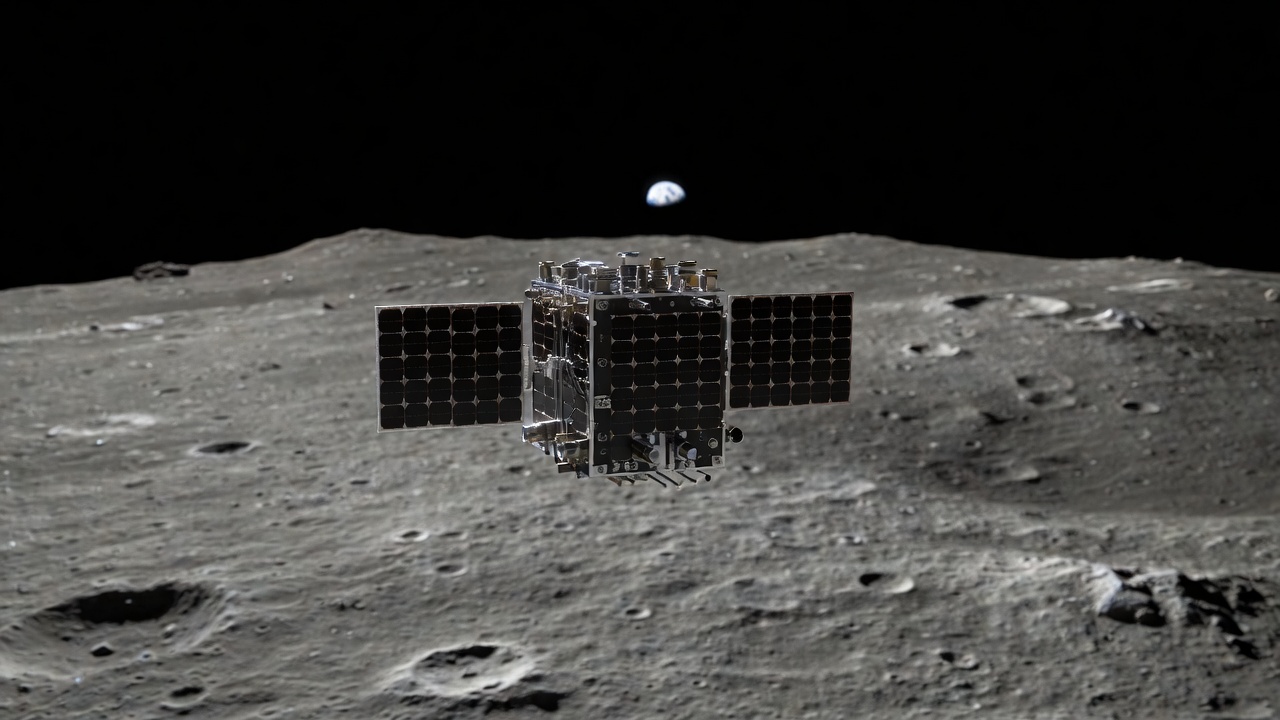

More than 1,000 participants attended a virtual seminar organized by Makkah’s education authority on April 21, 2026, to examine Saudi Arabia’s involvement in NASA’s Artemis II mission that recently orbited the moon, according to the Saudi Press Agency. The event featured experts detailing the Shams CubeSat developed by the Saudi Space Agency as well as research conducted by Saudi scientists, tying these achievements to the objectives of Vision 2030.
The Saudi Press Agency reported that the seminar titled “Saudi Arabia Towards Space … Contribution to the Artemis II Mission” included faculty members from King Abdulaziz University’s College of Astronomy and Space Sciences. Dr. Ayed Sulaiman Al-Rahili and Dr. Samira Al-Harbi led presentations on the evolution of human spaceflight along with specifics of the Artemis II flight. Al-Rahili in particular highlighted Saudi Arabia’s growing role in the space sector through its Shams satellite while the hosts engaged students and enthusiasts in an open dialogue on the sector’s future.
The Saudi Space Agency developed the Shams satellite, also known as SHMS or Space Weather CubeSat-1, which launched aboard the Artemis II mission on April 1, 2026, from Florida’s Kennedy Space Center, a Saudi Press Agency assessment found. Operating in a highly elliptical orbit, the CubeSat measures aspects of space weather and solar radiation, reflecting the development of national capabilities in space technologies. This participation made Saudi Arabia the first Arab nation to integrate a satellite into the Artemis program, with the mission concluding on April 11 after a journey of approximately 685,000 miles, according to mission data cited in seminar coverage.
Arab News reported that Saudi astronaut Rayyanah Barnawi’s study examining the effects of spaceflight on human disease was published in the journal Science Advances in January. Barnawi, a biomedical researcher with prior experience on Axiom Space’s Ax-2 mission to the International Space Station, focused her work on stem cell and cancer-related experiments in microgravity. Such contributions from Saudi scientists enhance the Kingdom’s profile in orbital research and align with efforts to build domestic expertise in the field.
Figures from the Communications, Space and Technology Commission place the Saudi space economy at $8.7 billion in 2024, with the direct space market encompassing commercial services and infrastructure valued at $1.9 billion that year. The commission’s projections show the overall space economy expanding to $31.6 billion by 2035 at a compound annual growth rate of 12 percent, outpacing the global average of 9 percent. Additional investments totaling around $32 billion are directed toward the sector, supporting infrastructure and technology development as outlined in commission reports.
Seminar hosts stressed the importance of empowering students to achieve the goals of Vision 2030, which identifies space as a strategic pillar for economic diversification and a thriving knowledge-based society. The Communications, Space and Technology Commission data further indicates the direct space market is forecast to reach $5.6 billion by 2035 under the same growth trajectory. This educational outreach through the Makkah event forms part of ongoing initiatives to foster local talent in astronomy, space sciences and related technologies.
A Space Foundation assessment placed the global space economy at $464 billion in 2022 with forecasts of growth to $738 billion by 2030, providing benchmark context for Saudi Arabia’s accelerated expansion. The seminar presentations, as covered by the Saudi Press Agency, reviewed the Artemis II mission as NASA’s first crewed flight beyond low Earth orbit since Apollo 17 in 1972. Among accompanying small satellites, only Shams successfully achieved its objectives while contributing to collective scientific returns from the lunar flyby.