
 ع
ع

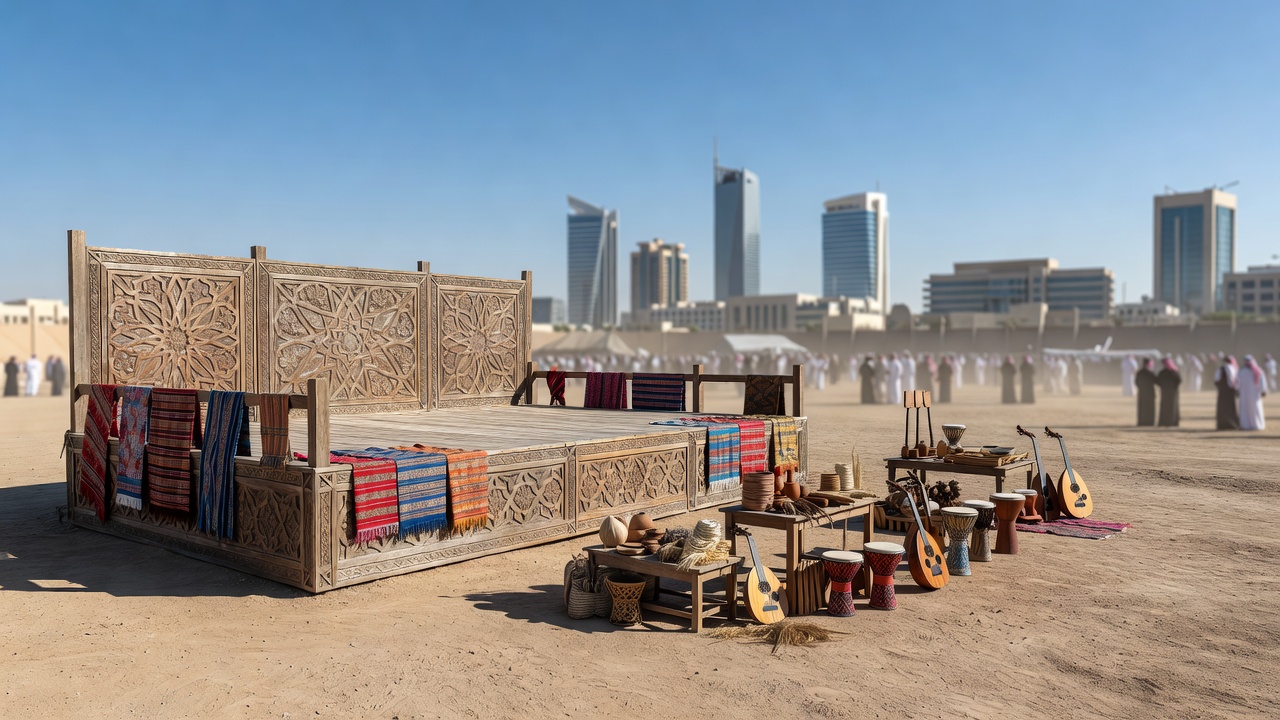

The Saudi Ministry of Culture hosted the Traditional Arts Festival in Riyadh from March 26 to April 8 to celebrate traditional performing arts from across the Kingdom. The event aimed to nurture creative talent, strengthen cultural identity and promote creativity and excellence, according to the ministry’s March 20 announcement. Features included a performance arena, Nabati poetry evenings, hands-on workshops and “The Story of the Sea” live show.
The ministry’s announcement detailed how the festival offered a rich cultural experience through its dedicated performance arena that reflected the cultural diversity of Saudi regions. Nabati poetry evenings provided a platform for traditional oral literature, while workshops enabled participants to learn the fundamentals of various arts via direct involvement. The live performance “The Story of the Sea” recreated elements of coastal communities and their maritime heritage using authentic sailor chants. Organizers positioned the event as a means to discover and support emerging talents in traditional disciplines.
This festival aligns with the work of the Ministry of Culture, which was established in 2018 to oversee the Kingdom’s cultural development as part of the Vision 2030 program. The ministry has formed 11 cultural commissions, one of which focuses specifically on performing arts including theater, dance and live shows. In 2021 the Royal Institute of Traditional Arts was founded to help preserve and transmit traditional skills to new generations, according to ministry records. These institutions have expanded opportunities for artists and increased public engagement with heritage.
According to a sponsored article in Harvard Business Review, the cultural sector is slated to contribute 3 percent of Saudi Arabia’s gross domestic product by 2030. The piece noted that cultural tourism rose 109 percent from 2019 to 2022, with 18 million local tourist trips involving cultural activities. The Traditional Arts Festival contributes to this growth by bringing traditional performing arts to audiences in the capital. Such programming supports the commissions’ goals of raising participation rates in cultural events across the population.
The Performing Arts Commission encourages the production of performances and the activation of theaters to integrate these arts into national cultural identity, a sector strategy document indicated. By hosting festivals like the one in Riyadh, the ministry seeks to highlight regional variations in traditional expressions from different parts of the Kingdom. The event ran for nearly two weeks, allowing repeated opportunities for attendance and participation. Workshops in particular emphasized practical learning to build skills among younger Saudis interested in heritage preservation.
Similar efforts have included the establishment of the Saudi National Orchestra and Choir in the same period, broadening the scope of performing arts in the country. The Traditional Arts Festival specifically targeted vernacular forms like Nabati poetry that have historical significance in Bedouin and rural traditions. Participants and visitors gained insight into how these arts have evolved while maintaining core elements. The ministry listed the festival among its cultural calendar events for the first half of 2026.