

 ع
ع

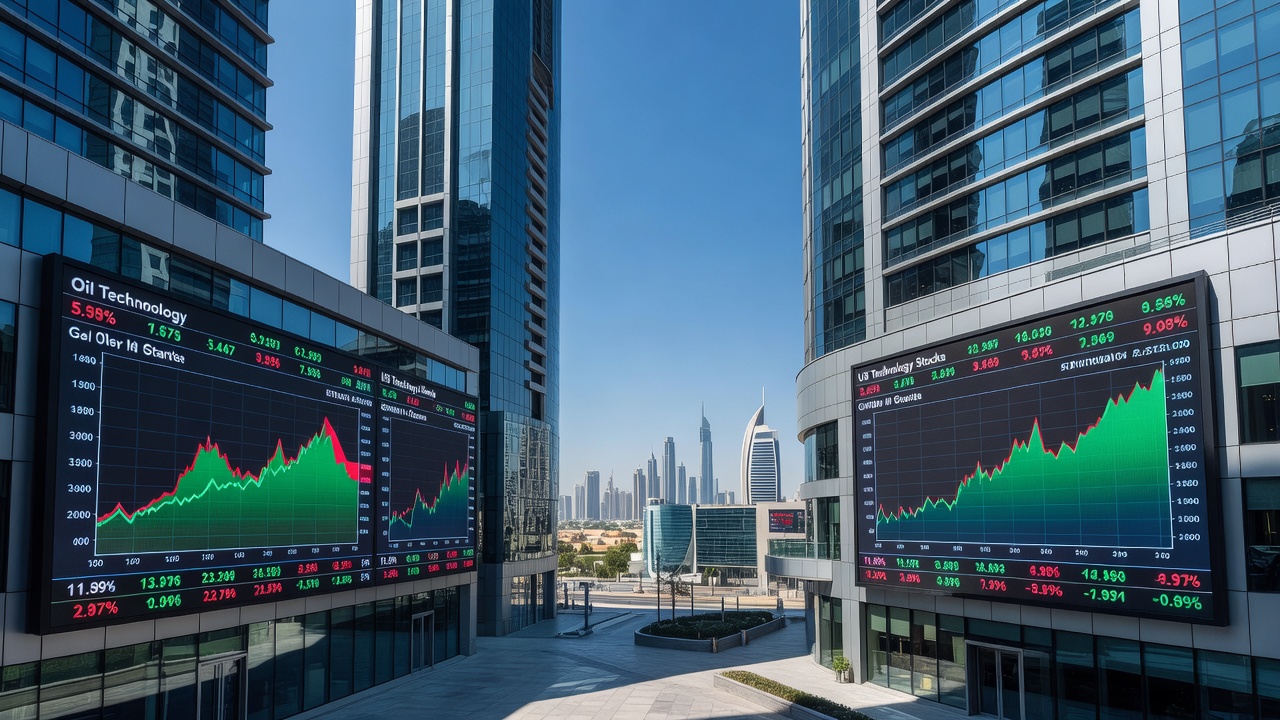

Tarik Chebib, the Middle East CEO of trading platform Capital.com, told Fortune that President Donald Trump’s market-moving pronouncements are triggering almost instantaneous trading among Middle Eastern retail investors. “We see the price fluctuation immediately, and that will lead to trades,” Chebib said. “We see that there’s more activity around those kinds of announcements.” His observations come as trading activity across the UAE accelerates, positioning the country as a challenger to more established financial hubs while retail investors place ever-larger leveraged bets on assets ranging from gold and oil to U.S. technology stocks.
In the first half of 2026, the Dubai Financial Market’s trading value soared 40 percent year-on-year to $32.5 billion while Abu Dhabi’s exchange recorded $46.6 billion in trades, according to data cited by Fortune. Vijay Valecha, chief investment officer at Dubai-based Century Financial, confirmed that the pattern extends beyond any single brokerage. “As soon as there’s any kind of announcement coming from the White House or President Trump, we see activity increasing immediately,” Valecha added. He stated that reactions to Trump’s statements now surpass those generated by Federal Open Market Committee decisions, CPI releases or U.S. jobless numbers.
Capital.com reported that the Middle East accounted for 57 percent of the platform’s $1.13 trillion in global client trading volume during the second quarter of 2026, with the majority originating from the UAE. The firm has previously logged record trading volumes in the MENA region for the first quarter of 2025, attributing the rise to growing local appetite for retail trading combined with global market volatility. Chebib has led Capital.com’s MENA operations since 2022 after earlier heading Middle East activities for another major retail brokerage, underscoring the increasingly competitive environment for such platforms.
The responsiveness coincides with deepening U.S.-UAE economic connections that may heighten investor focus on developments in Washington. The U.S.-U.A.E. Business Council reported that bilateral trade exceeded $39 billion in 2025, with U.S. exports to the UAE climbing 16 percent year-on-year to more than $31.4 billion. These ties have included expanded cooperation in commercial aviation, advanced technologies and investment partnerships valued in the hundreds of billions of dollars since 2025.
Industry executives described Trump statements as functioning like tradeable events on par with corporate earnings or central bank meetings for UAE retail traders, albeit with far less advance notice. The leveraged character of many positions amplifies the speed and scale of resulting volume increases. Such dynamics illustrate the maturation of retail trading infrastructure and its integration with global political and economic signals.
Fortune noted that the trend reflects a broader acceleration in UAE financial market activity as the emirates draw greater international retail participation. Both Dubai and Abu Dhabi exchanges have benefited from this shift, registering consistent gains in trading value and positioning the UAE as an emerging hub capable of rivaling traditional centers. Executives indicated the sensitivity to U.S. political pronouncements is likely to persist given ongoing economic interdependencies.