
 ع
ع

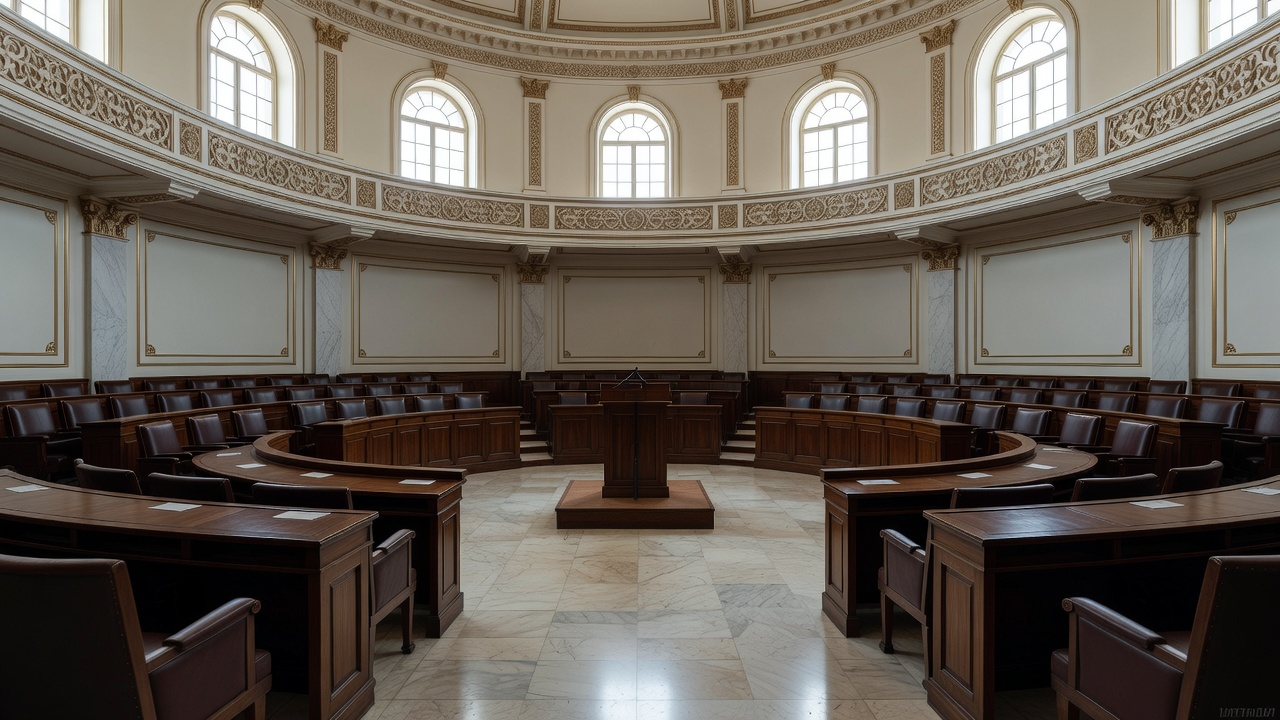

Syrian state television reported that the transitional parliament opened its inaugural session on Sunday with 206 lawmakers present after representatives were sworn in at the assembly building in Damascus. The body elected Abdelhalim al-Awwak as speaker after he secured 99 votes in the ballot. President Ahmed al-Sharaa had completed appointments to the 210-member assembly only days earlier, capping a selection process that began with indirect voting in most provinces last October.
According to an Agence France-Presse dispatch from the capital, the new authorities dissolved the previous legislature after toppling Assad in December 2024 and adopted a temporary constitutional declaration to govern the transition period. Two-thirds of the seats were filled through local committees named by an electoral commission that al-Sharaa appointed, while he directly named the remaining 70 members last week. The session excluded representatives from the Druze-majority Sweida province amid unresolved sectarian tensions from violence last year as well as one lawmaker who had died.
Al-Sharaa addressed the assembly by urging lawmakers to serve as models of responsibility and competence while contributing to a culture of dialogue, the rule of law and respect for institutions. He added that the country was writing a new chapter in its history. The remarks came as the transitional government he leads, formed in March 2025 with merged economic and energy ministries and without a prime minister post, continues to consolidate authority across former opposition and regime areas.
Claudio Cordone, the deputy UN special envoy for Syria, described the opening session as a key milestone in the country’s political transition. He stated that the United Nations would follow its work closely and stands ready to support the body. A February 2026 Congressional Research Service assessment noted that the indirect selection process and limited consultation had drawn criticism from election experts and raised questions about the inclusivity of the transition.
The parliament holds a renewable 30-month mandate during which it must form a committee to draft a permanent constitution, approve the national budget and propose or amend laws. A political scientist, Ibrahim al-Asil, told Agence France-Presse that the assembly can fulfill its role by enacting legislation and overseeing government operations. He stressed that the independence of the parliament from the executive branch is fundamental to its success.
Critics cited by Agence France-Presse have highlighted the absence of direct elections, the underrepresentation of women with only six elected according to transition tallies, and limited inclusion of religious and ethnic minorities including no Druze members among those chosen. Civil society groups have also pointed to the concentration of power in the presidency without a prime minister as a structural weakness. The Congressional Research Service report highlighted ongoing sectarian violence and external pressures from Turkish and Israeli military presence as factors complicating the parliament’s ability to assert broader legitimacy.