

 ع
ع

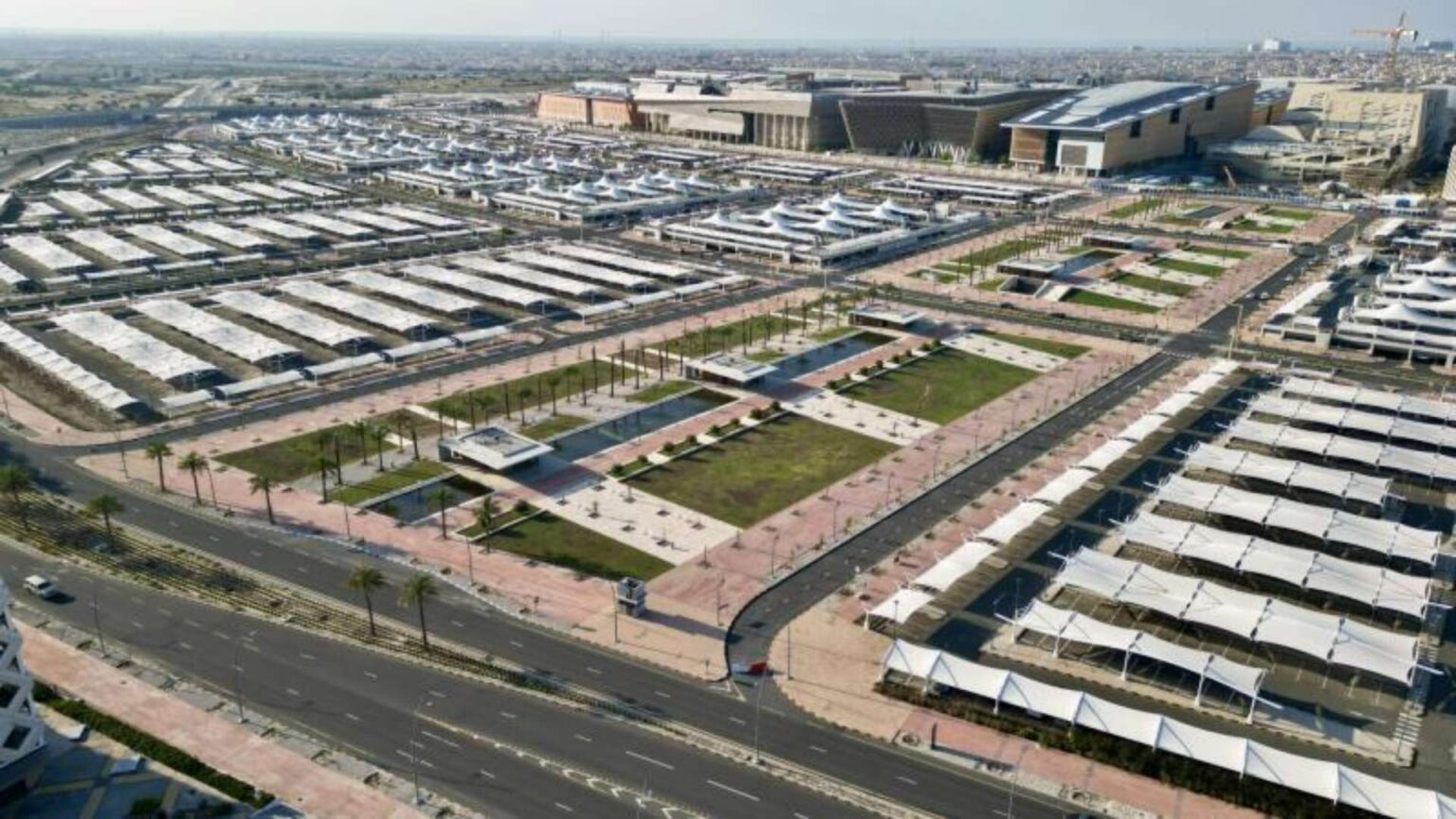

November’s facilities management conference turns attention to what happens after construction, as cooling and maintenance become central to the operation of large assets.
The cost of a building does not stop when construction ends. Cooling, maintenance and the everyday organisation of its services determine how it operates for years afterwards. That is the part of Kuwait’s development story set to come into focus at the second Kuwait Facilities Management Conference and Exhibition in November.
The CONEX-organised event lists workshops on 16–17 November 2026 and the conference on 18–19 November, at the Radisson Blu Hotel Kuwait. Its intended participants include building owners, facilities managers, contractors, engineers and public authorities, bringing together people who encounter the same asset at different stages of its life.
The timing gives the subject a wider energy context. The International Energy Agency’s 2025 assessment of the Middle East and North Africa identifies cooling and desalination as major sources of future electricity-demand growth. Operating a building is therefore also part of the discussion about the infrastructure needed to support it.
Buildings belong in the energy discussion
In its 2025 regional electricity assessment, the IEA projected that cooling and desalination together would account for around 40% of the increase in electricity demand across the Middle East and North Africa through 2035. This is a regional projection, not a measurement of Kuwait’s facilities sector.
It nevertheless establishes why building operations are economically relevant. Cooling is a service delivered inside buildings but supplied through an electricity system outside them. Decisions about how equipment is operated and maintained sit at the connection between those two systems.
An owner’s maintenance budget and the electricity network’s capacity plan are usually discussed by different professionals. The underlying demand links them. A facilities-management discussion that includes energy specialists can examine that connection without treating every operational change as a substitute for investment in generation and networks.
There is also a difference between reducing annual consumption and reducing demand at the busiest time of day. Both are useful subjects for analysis, but they are not interchangeable. A reported improvement needs to specify what was measured and the conditions under which the comparison was made.
Kuwait already has examples at institutional scale
Kuwait University’s description of Sabah Al-Salem University City shows how these issues appear in a large local development. The university identifies central cooling, shading and building-design measures as components of its approach to the campus environment.
Such a campus is more than a collection of completed structures. It contains shared systems that must serve teaching, administration and other activities over time. The operational question is how those systems continue to function as the buildings are occupied and their patterns of use change.
This is where facilities management becomes distinct from construction. The work involves the recurring responsibilities of operating an asset, maintaining service and keeping information about its condition. The headline construction specification is only one part of the evidence needed to understand its performance.
University buildings also show why comparisons require care. A teaching space, a laboratory and an administrative office do not necessarily have the same operating schedule or technical requirements. Reporting a single consumption figure without explaining what it covers can conceal those differences.
Research makes efficiency claims more specific
A Kuwait Foundation for the Advancement of Sciences project record describes research into water and electricity use in cooling towers. The project examined variable-frequency drives using field work at coastal and inland sites in Kuwait.
Its relevance lies in the way the question was framed: a defined technology, a particular system and measurements in different local conditions. The project description alone does not justify attaching a universal savings percentage to every building. It shows the kind of investigation needed before an efficiency claim can be generalised.
For facilities teams, this places measurement at the centre of the discussion. An intervention should be evaluated against a relevant baseline, with attention to changes in occupancy, weather and operating hours. Without that context, a before-and-after total may answer less than it appears to.
The same principle applies to new digital tools. Sensors and dashboards can record conditions, but a useful operational account needs to explain what staff did with the information. A display of data is not the same as a documented change in the performance of a building.
The environmental picture includes construction and operation
The UN Environment Programme’s 2024–2025 buildings assessment attributes 32% of global energy use and 34% of global carbon dioxide emissions to buildings and construction. These are worldwide sector figures, covering a much broader scope than maintenance in Kuwait.
They help distinguish two connected questions. The materials and activities involved in creating a building have an environmental footprint, while its operation continues to require resources after completion. Facilities management addresses the latter directly and can also influence decisions about repair and replacement.
That distinction prevents the conversation from becoming a simple competition between new and old buildings. A new asset still has to be commissioned, used and maintained, while an existing one may have opportunities for targeted work. In either case, the evidence concerns a specific building and the service it provides.
November brings owners and operators together
The conference’s published speaker list draws from contracting, banking, real estate and facilities services. That mix reflects the range of organisations responsible for the operating life of Kuwait’s buildings. Their interests meet in contracts, maintenance programmes and decisions about when equipment requires attention.
The shared questions concern those responsibilities: how performance is defined, which costs are counted and how an owner can distinguish a proposal from a measured result. They determine how an operating contract relates to the condition and use of a building.
Kuwait’s built environment will continue to be judged through the buildings people use each day. November’s discussion gives the operating life of those assets a place alongside the more visible announcements about their construction.