

 ع
ع

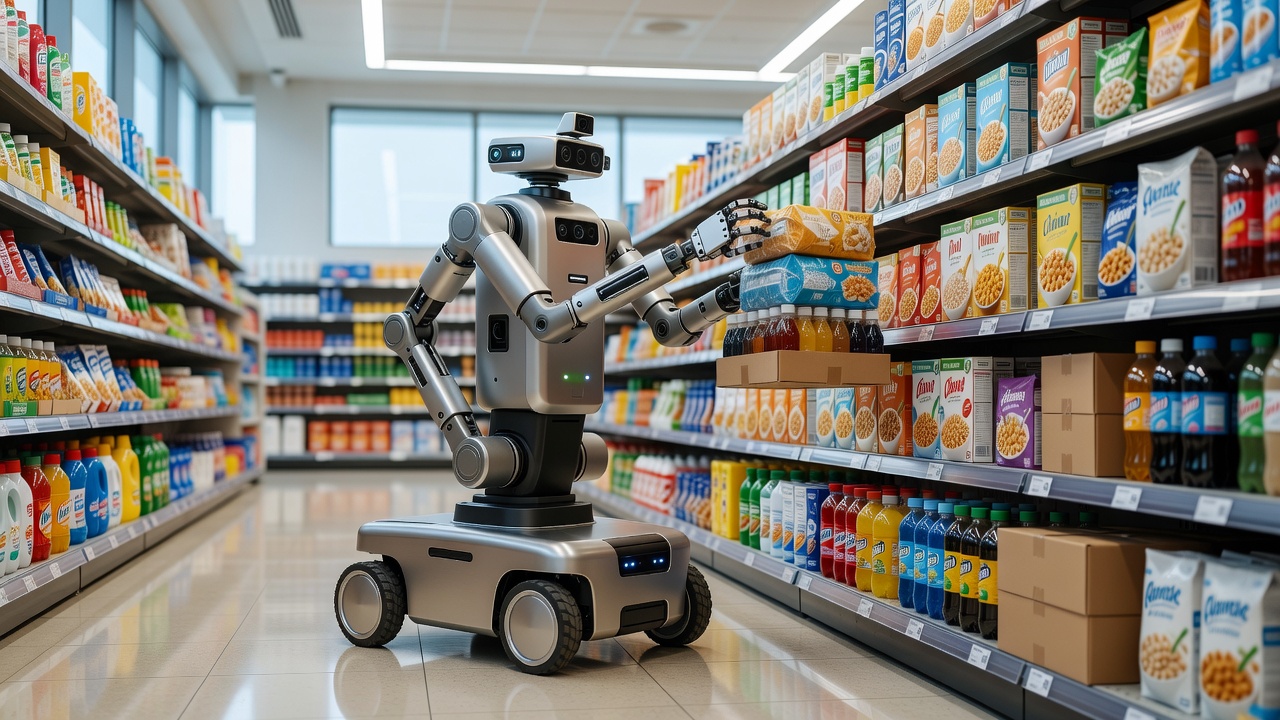

Striding AI is developing a new generation of robotic foundation systems designed to accelerate Physical AI deployment in real-world environments, the company said in a statement distributed via GlobeNewswire. The Beijing-based firm focuses on foundational technologies that allow robots to perceive, reason, act and improve continuously through interactions with the physical world by combining advanced foundation models with robotic perception, control systems, real-world action data and deployment infrastructure. Song Yao, founder and CEO of Striding AI, said in the announcement, “We believe that breakthroughs in Physical AI emerge from the continuous co-evolution of data, models, and infrastructure.” The systems-first approach integrates foundation models, robot hardware and software, data infrastructure, control systems and deployment engineering for scalable service, according to the release.
The company’s leadership team draws on expertise from AI chips, autonomous driving, robotics research and industrial technology, Striding AI said in the statement. This background supports development of World Action Models and next-generation reinforcement learning technologies aimed at large-scale robotics adoption. The firm positions itself to become a leading trustworthy robotic service provider through these efforts, the announcement noted.
Initial deployments will target structured retail environments where robots can handle shelf restocking, inventory counting, product organization and checkout assistance, the company reported. Such settings offer frequent human interaction, repeatable workflows and rich operational data that serve as an effective starting point for scalable Physical AI systems. Over time the technology is expected to expand into additional sectors, the statement indicated.
Broader applications envisioned by Striding AI include food services, agriculture, logistics, healthcare and telecommunications. The long-term goal involves robots that learn from real-world experience, improve continuously and integrate into everyday human environments. These capabilities form part of an integrated system that transfers skills more effectively across tasks and settings, according to the release.
Striding AI’s closed-loop robotics architecture spans perception, planning, execution, feedback and recovery, with human-in-the-loop reinforcement learning converting operations into ongoing training data, the company stated. Early internal testing showed this method improved task success rates by up to three times. The firm is also constructing infrastructure for robot pretraining, distributed reinforcement learning and edge-to-cloud orchestration to create a platform that advances as more units operate in the field.
The announcement follows Striding AI’s launch in early 2026 as a Chinese embodied AI startup backed by nearly $100 million in angel funding to recruit global talent and advance its models, a Momenta Media report said. It arrives amid growing industry focus on physical AI, which NVIDIA has characterized as enabling a 250-fold expansion from digital systems through reindustrialization applications in robotics fleets. A Forbes analysis published in May 2026 similarly identified physical AI as the next major technology boom by scaling AI principles to real-world tasks and datasets.