
 ع
ع

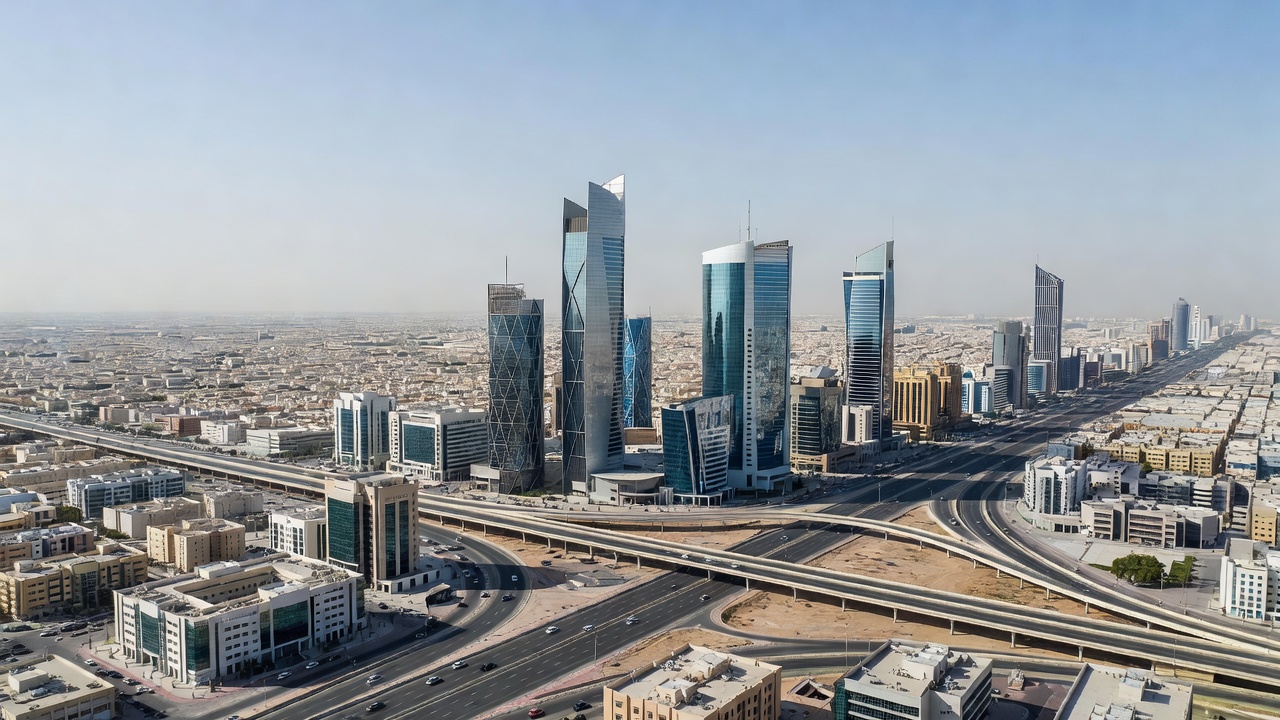

An assessment published Sunday by Asharq Al-Awsat quoted Dr. Ahmed bin Nasser Al-Rajhi, vice chairman of the Saudi Economic Association, describing economic resilience as a multi-stage process that starts with anticipating shocks before moving through absorption, recovery, adaptation and redirection toward a new growth trajectory. Al-Rajhi argued that true economic strength rests less on the sheer size of financial buffers than on the capacity to deploy those resources efficiently while broadening sources of production, growth and financing. He pointed to Saudi Arabia’s recent performance as evidence of progress, noting that non-oil activities continued expanding even when oil prices or output weakened. The article added that such patterns signal growing independence of non-oil drivers, whose contribution has helped bring the oil sector’s share of gross domestic product down to around 20 percent.
Al-Rajhi told Asharq Al-Awsat that the non-oil economy grew by roughly 5 percent annually between 2016 and 2019 despite lower oil prices, then repeated similar expansion rates from 2022 to 2025 even as the oil sector posted weak results. An International Monetary Fund staff assessment completed in June 2026 found that Saudi Arabia entered the year with strong momentum after 4.5 percent overall growth in 2025, supported by robust domestic demand and the gradual unwinding of earlier OPEC+ cuts. The IMF report noted that non-oil real GDP had expanded steadily in preceding years, driven by private consumption, investment and sectors such as retail, hospitality and construction. General Authority for Statistics data cited in the Asharq Al-Awsat article placed net foreign direct investment inflows at 19.1 billion Saudi riyals in the second quarter of 2026, a figure Al-Rajhi viewed as confirmation of the economy’s attractiveness despite regional headwinds.
Dr. Abdullah Almeer, assistant professor of economics at King Fahd University of Petroleum and Minerals, told the same publication that resilience depends on structural diversification, fiscal buffers, deep local capital markets, human and institutional development, and varied trade and investment ties. Almeer highlighted how investments in logistics and energy infrastructure, including the East-West pipeline running to Yanbu on the Red Sea, had allowed continued oil exports when access through the Strait of Hormuz was constrained earlier this year. Atlantic Council analysis published in September 2026 concluded that Saudi financial reserves, borrowing capacity and modest sovereign debt levels would enable the kingdom to withstand even an extreme scenario of zero oil exports for the remainder of 2026, albeit at significant cost to consumption and investment. The assessment added that such buffers reflect a far more sophisticated economy than existed a decade ago.
The IMF mission statement from June 2026 observed that the Saudi economy had demonstrated agility by rerouting shipments and easing logistical bottlenecks after the outbreak of conflict in the Middle East curtailed maritime traffic. Authorities responded with temporary, targeted support measures while preserving medium-term fiscal consolidation plans anchored on non-oil revenue growth and spending discipline. Public Investment Fund adjustments for the 2026-2030 period, which shift toward more selective capital allocation and greater private-sector participation, formed part of that recalibration according to IMF directors. Those steps build on reforms since 2016 that an IMF working paper dated January 2026 credited with narrowing structural gaps in business regulation, labor markets and governance.
Latest central bank figures show foreign assets remaining ample, providing additional insurance against prolonged external pressure. Asharq Al-Awsat reported that the combination of these tools has allowed non-oil growth to remain the primary engine even as oil-sector volatility persists. Experts consulted for the article cautioned that sustaining momentum will require continued alignment of education and skills with labor-market needs, deeper capital-market development and accelerated adoption of technologies such as artificial intelligence. The IMF has repeatedly urged completion of energy-subsidy reform while protecting vulnerable households to lock in fiscal sustainability over the coming decade.