

 ع
ع

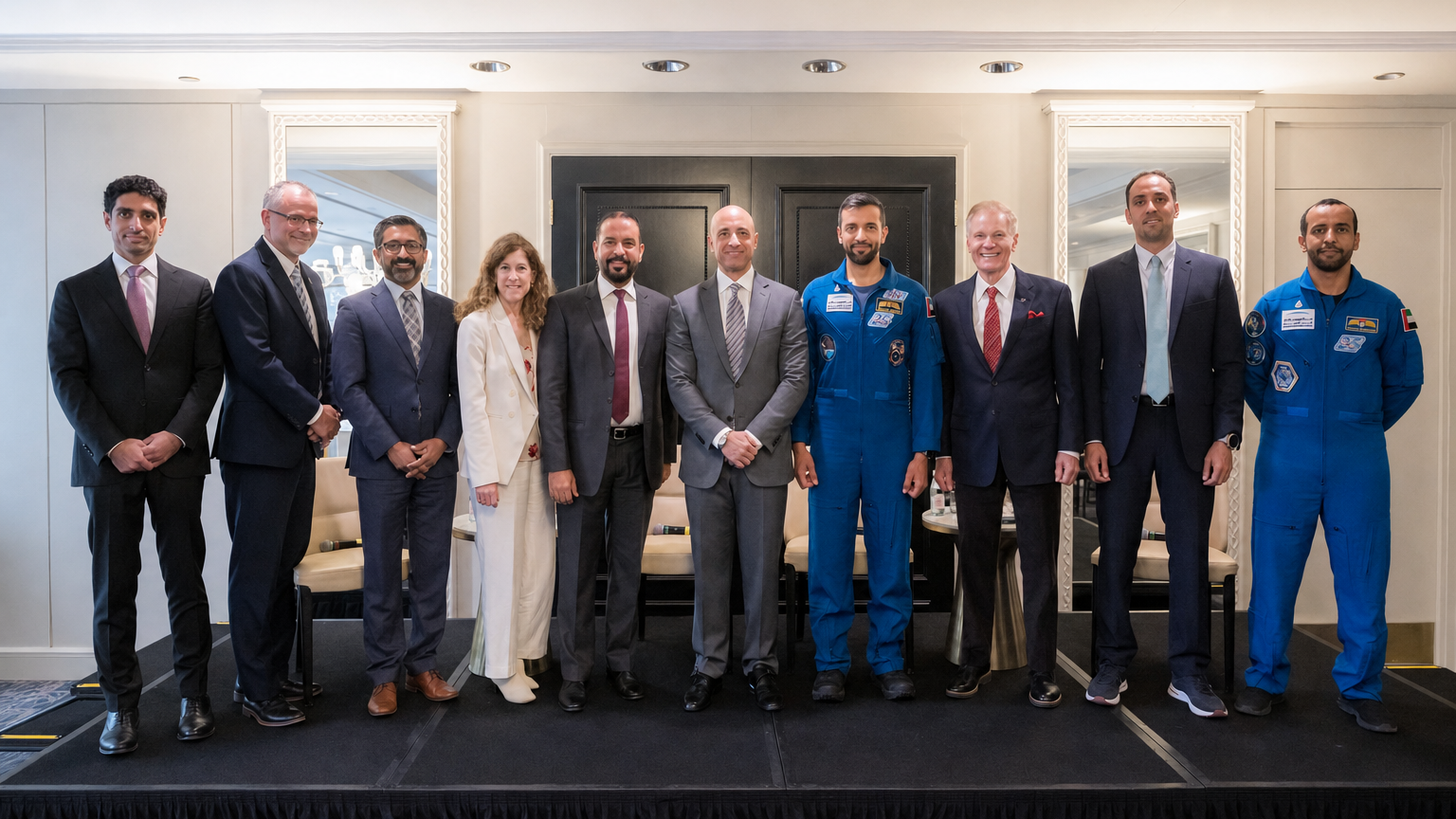

Developments throughout 2026 signal a clear transition in the UAE space sector from establishing foundational capabilities toward maximising their economic, technological and knowledge returns, according to a report from the Emirates News Agency. The National Space Strategy 2031, which the UAE Cabinet approved on March 29, 2026, anchors this change by placing economic outcomes at the core of future activity. The UAE Space Agency has described the plan as a framework for building a resilient ecosystem that draws investment while advancing global partnerships and competitive infrastructure.
Targets set out in the strategy include doubling revenues from the space economy, lifting the sector’s added value by 60 percent, doubling the number of national companies and start-ups, expanding investment in space assets and infrastructure, and growing UAE space exports in international markets, the Emirates News Agency reported. These goals build on three main pillars that seek to strengthen leadership in space partnerships, develop high-quality facilities and create an environment attractive to both domestic and foreign capital. The approach reflects a national vision that treats space not only as a domain for scientific achievement but as a driver of broader economic diversification.
Results from the preceding strategy demonstrate the foundation already in place, with the development of 30 satellites and more than 170 active entities now operating across the UAE space economy, according to the Emirates News Agency. That earlier period established strong capabilities in satellite manufacturing, launch services and international collaboration. The current phase shifts emphasis toward translating those assets into commercial data products, analytics and specialised services that generate sustained economic returns.
Space42 has emerged as a leading example of this evolution, completing local integration and testing for the Foresight Earth observation constellation in Abu Dhabi and expanding it to five satellites in June, the report stated. Cooperation with ICEYE has advanced technology transfer and localisation of the supply chain, allowing critical processes to occur within the country for the first time. Such progress illustrates how space-derived data and insights are increasingly feeding into sectors ranging from geospatial intelligence to resource management.
The UAE launched the International Space Cooperation Programme in May with an allocation of AED1 billion to fund joint research and development projects with global partners, according to the Emirates News Agency. This initiative supports technology localisation, patent generation and specialised talent development while fostering high-impact international linkages. In September, Marlan Space and Loft Orbital led a consortium that committed US$1 billion to develop the Altair-Next Gen constellation, with manufacturing scheduled to take place in Abu Dhabi, further embedding advanced production within the national industrial base.
The National Space Strategy 2031 is backed by investments exceeding Dh44 billion, which the UAE Space Agency has said will help secure a position among the world’s 10 largest space economies by the end of the decade. Salem Al Qubaisi, director-general of the agency, highlighted recent milestones including the extension of the Emirates Mars Mission Hope probe to 2028 and leadership in United Nations efforts on space sustainability. These elements combine to reinforce the UAE’s reputation as a reliable partner in global space initiatives while contributing measurable value to the national economy.