
 ع
ع

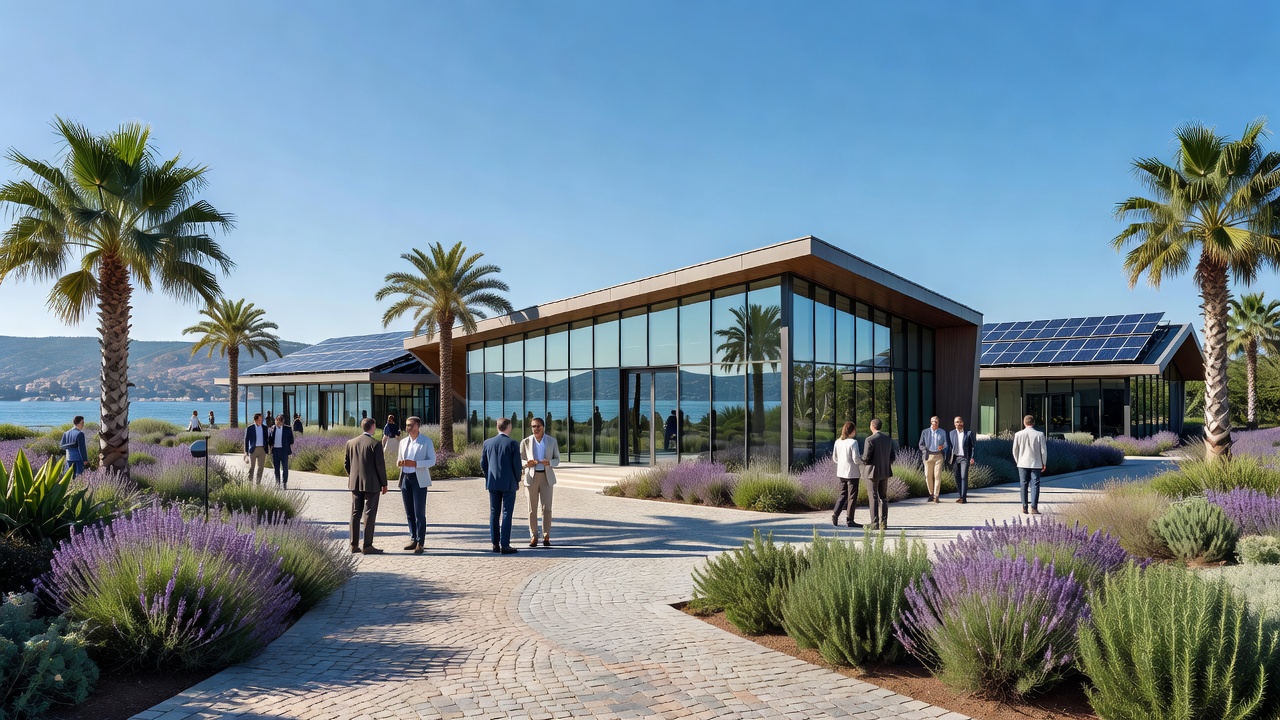

A joint statement from the League of Arab States and the Global Carbon Council described the pavilion as a dedicated platform for regional and international dialogue that will convene government representatives, institutions, business leaders and climate practitioners from across sectors. The initiative seeks to enable the exchange of expertise, formation of new partnerships and advancement of hands-on climate projects consistent with Article 6 of the Paris Agreement on cooperative mechanisms and carbon markets. It forms part of ongoing coordination that follows a memorandum of understanding the league signed last year with the Gulf Organisation for Research and Development, the entity affiliated with the Global Carbon Council, to strengthen work on emissions reduction, energy transition and environmental sustainability across Arab states.
Dr. Yousef bin Mohammed Al Horr, founder and chairman of the Global Carbon Council, said in the statement that confronting climate change requires cooperation that transcends borders and brings together different capabilities and visions. He added that the partnership with the League of Arab States reflects a shared commitment to advancing climate action in support of sustainable development. The pavilion, with its inclusive Arab identity and international aspirations, will offer participants from diverse countries and sectors the chance to bolster regional ties, share knowledge and back collective global efforts, according to the announcement, which noted that a full agenda and schedule will be released before the conference opens.
The League of Arab States and the Global Carbon Council indicated that the pavilion will function as a unifying Arab space within the larger COP31 venue while extending outreach to broader international audiences. COP31, hosted by Türkiye at the Antalya Expo Center, is scheduled to run from November 9 to 20 and will include negotiations, side events and country pavilions focused on elevating climate ambition. The announcement builds on the council’s prior involvement in Arab climate forums, including its presentation of registered carbon projects from multiple Arab nations at the 41st Meeting of the Arab Negotiating Group on Climate Change in Cairo last September, where discussions also covered the Arab States’ strategy for climate action financing through 2030.
The Global Carbon Council operates as the first international carbon credit issuance program based in the Global South and has obtained recognitions from the International Civil Aviation Organization under the CORSIA framework as well as from the International Carbon Reduction and Offset Alliance, its own documentation shows. It has forged multiple agreements with partners in developing countries to support Article 6 readiness, national carbon registry development and high-integrity credit generation for emission-reduction projects. These activities complement the League of Arab States’ emphasis on coordinated negotiating positions among its 22 member countries at successive climate summits, a priority Ambassador Dr. Ali bin Ibrahim Al Malki, assistant secretary-general for economic affairs, has reiterated in earlier briefings on regional alignment.
Türkiye’s COP31 presidency has set measurable 2035 targets that include lifting the share of electricity in global final energy demand from just over 20 percent to 35 percent, halving the growth in waste and cutting energy consumption intensity in buildings by at least 25 percent, according to a UNFCCC summary of the June launch of its Global Climate Action Agenda. The Arab Climate Pavilion is positioned to highlight regional perspectives on these themes, particularly the Arab world’s exposure to climate stresses such as prolonged drought and sea-level rise that threaten agriculture and coastal infrastructure. Earlier joint efforts between the League of Arab States and the Global Carbon Council have featured capacity-building sessions on carbon markets and net-zero strategies, including a 2023 webinar conducted with the Regional Center for Renewable Energy and Energy Efficiency that explored incentives for renewable projects to help fulfill nationally determined contributions.
Preparations for the pavilion coincide with continued Arab focus on scaling climate finance and technology access to meet Paris Agreement goals, an area where the Global Carbon Council has contributed through project evaluations that link mitigation outcomes to sustainable development benefits. The council’s participation in past COP gatherings has extended to delivering workshops on monitoring, reporting and verification systems as well as nature-based solutions, demonstrating a consistent role in bridging policy and implementation. Details on specific sessions at the Arab Climate Pavilion remain forthcoming, but the joint statement underscored its potential to amplify practical Arab contributions within the multilateral process.