
 ع
ع


A new analysis by Spherical Insights highlights how Saudi Arabia’s ambitious airport development program is generating fresh investment prospects in aviation infrastructure, services and related sectors. The kingdom is targeting 330 million air passengers annually by 2030 along with connections to more than 250 destinations under its 2022 Saudi Aviation Strategy, airportIR by Modalis reported. Passenger traffic stood at 140 million in 2025 after a 9 percent increase from the previous year, according to data compiled by the General Authority of Civil Aviation.
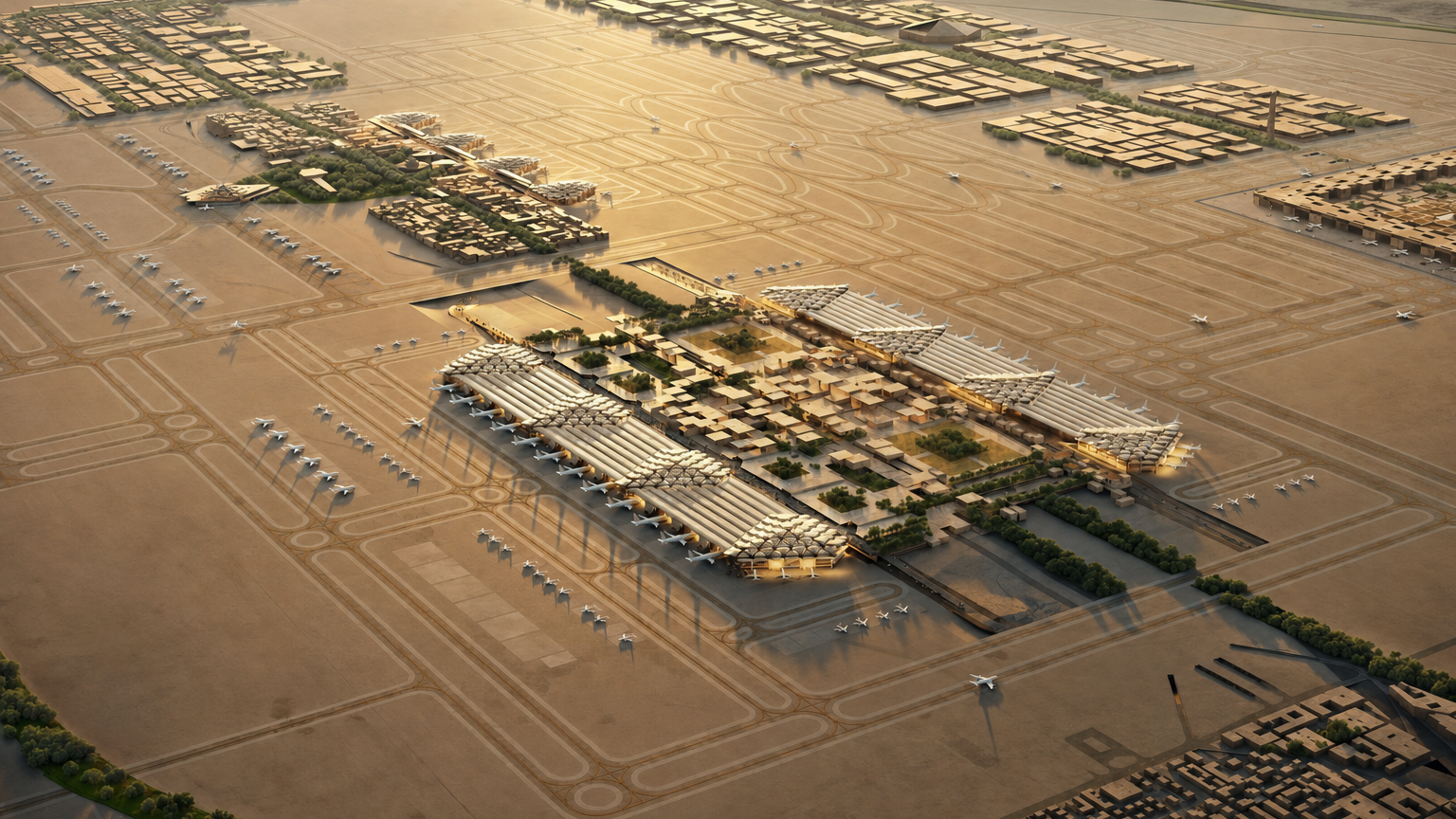
Central to these plans is the King Salman International Airport under construction in Riyadh, where investment estimates range from $22 billion to $50 billion for a facility ultimately capable of handling 185 million passengers per year. The project is projected to contribute $7.2 billion annually to non-oil GDP and create 103,000 jobs once complete, an Airport Technology profile indicated. Groundbreaking on the third runway took place in January 2026, marking a key step in the phased rollout that also envisions 3.5 million tonnes of annual cargo capacity by 2050.
Jeddah’s King Abdulaziz International Airport is undergoing a parallel $31 billion expansion that will raise its capacity to 114 million passengers by 2031, the Jeddah Airports Company stated. Jedco has scheduled six major contract packages for procurement between 2026 and 2028 covering airfield rehabilitation, terminal optimisation, fuel facilities and additional concourses. These upgrades respond to rising demand from tourism, business travel and religious pilgrimages while integrating new logistics zones.
The Public Investment Fund is directing more than $100 billion toward the broader aviation transformation, including fleet growth for the recently launched Riyadh Air carrier, Oxford Business Group noted in its Saudi Arabia 2025 report. Twenty-seven airports have been transferred to Matarat Holding Company to facilitate private sector participation through privatisation and public-private partnerships. Secondary gateways serving NEOM, the Red Sea coast and regional tourism sites form additional elements of the investment pipeline.
Spherical Insights analysis points to particular potential in maintenance repair and overhaul operations, air cargo handling, aviation academies and general business aviation as policy liberalisation continues. Global Data analytics placed the value of Gulf airport projects at $182.6 billion in mid-2025 with Saudi Arabia representing the largest portion at 42.5 percent. Such spending aligns with the transfer of regulatory functions to the General Authority of Civil Aviation to foster greater competition and efficiency.
Passenger volumes at western Saudi airports have expanded 162 percent since 2010, outstripping the national growth rate of 109 percent and elevating the region’s share of total traffic to nearly half, Aviation Business Middle East reported. Facilities in Jeddah, Medina, AlUla, NEOM Bay and the Red Sea International Airport now function as a coordinated multi-airport system serving distinct market segments. These developments reinforce the kingdom’s objective to emerge as a leading global aviation hub through sustained infrastructure delivery.