
 ع


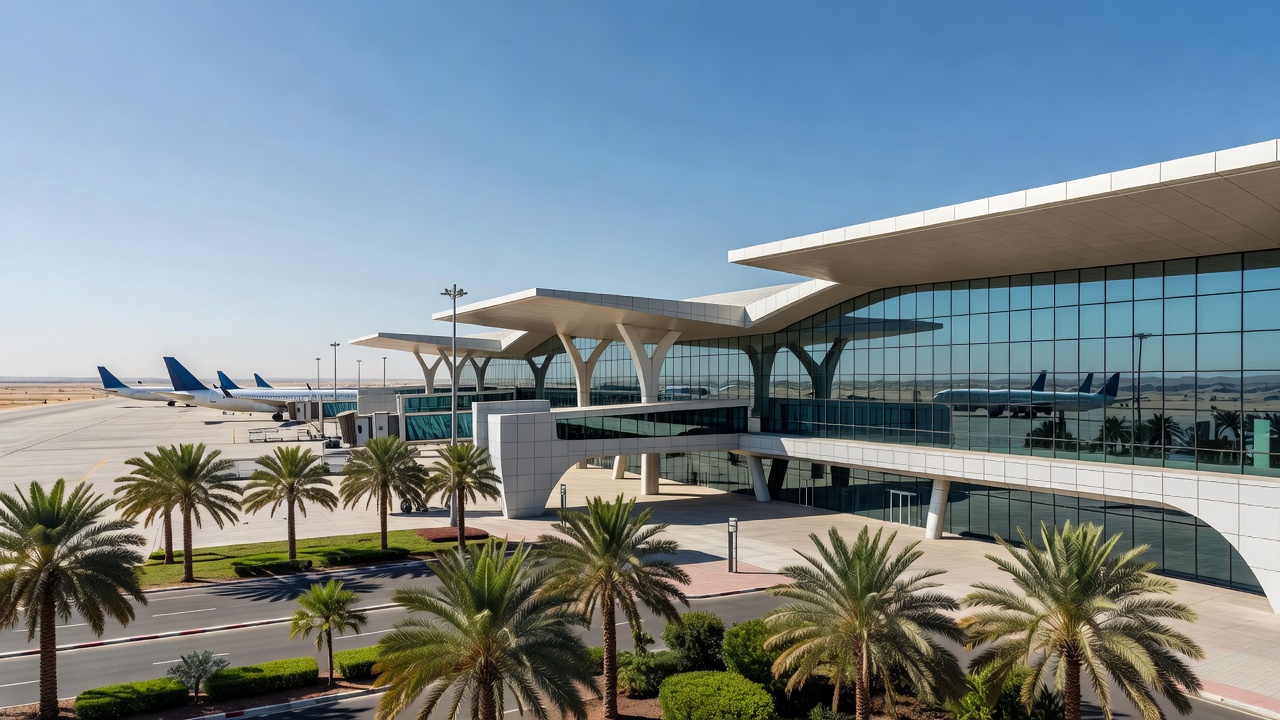

Il Sole 24 Ore reported that the October 10 strike on King Khalid International Airport, which resulted in fatalities, goes beyond a routine security breach as Saudi Arabia seeks to establish itself as an international center for investment, aviation and services. Houthis had publicly announced prior operations using missiles and drones aimed at Saudi targets including the airport itself. The newspaper noted that such incidents raise questions about how a conflict spanning more than a decade can again threaten one of the region’s key airports at a time when Riyadh is preparing to host major energy and investment events.
Security considerations for the airport extend to maintaining confidence in transport continuity and broader economic operations, according to the Italian business daily. The recent escalation connects to evolving dynamics in the Yemen file, where divergences have appeared between Saudi Arabia and the United Arab Emirates over local forces and spheres of influence in southern and coastal regions. A September 29 meeting in Riyadh between UAE Deputy Prime Minister Sheikh Mansour bin Zayed Al Nahyan, Saudi Crown Prince Mohammed bin Salman and Defence Minister Prince Khalid bin Salman indicated potential renewed coordination on these matters.
Saudi Arabia’s Vision 2030 economic transformation program depends on substantial foreign inflows, with the kingdom aiming for $100 billion in annual foreign direct investment by 2030. An AGBI analysis placed 2025 inflows at $33 billion, yet second-quarter 2026 figures dropped 18 percent to $6 billion amid regional instability. The Tadawul All Share Index reached a 43-month low this week as local investors shifted toward safer holdings, the same analysis showed.
Sharjah has moved in the opposite direction by establishing a detailed regulatory framework for the drone sector, a law issued on June 22 by Ruler Sheikh Dr Sultan bin Mohammed Al Qasimi that covers all drone types and applications across the emirate including free zones. The Sharjah Government Media Bureau stated that the legislation requires prior approval from the Department of Civil Aviation for government, commercial, research, recreational and media uses while excluding military operations. Objectives include preserving air navigation safety, aligning with international standards and promoting research, development and start-up activity to position Sharjah as a regional drone hub.
The emirate drew AED 7.7 billion in foreign direct investment in 2025, an 8.8 percent rise from the previous year, and now targets a further 20 percent increase to AED 9.24 billion, roughly $2.5 billion, for 2026, Arabian Business reported from the Sharjah Investment Forum. Mohamed Al Musharrakh, chief executive of the Sharjah FDI Office, cited the emirate’s dual-coast ports, Khor Fakkan expansion, Etihad Rail connections and freehold industrial areas as key attractions for logistics, light manufacturing, technology and hospitality projects. A planned $2 billion port and inland network upgrade forms part of efforts to bypass chokepoints such as the Strait of Hormuz.
Differences in approach reflect broader Gulf calculations on security and economic resilience, Il Sole 24 Ore observed. While Saudi authorities manage direct threats to high-profile infrastructure, Sharjah’s framework seeks to channel drone technology into productive economic channels through licensing, registration and designated airspace rules. The law also empowers enforcement by Sharjah Police to mitigate risks to people, property and aviation from unauthorized operations.