

 ع
ع

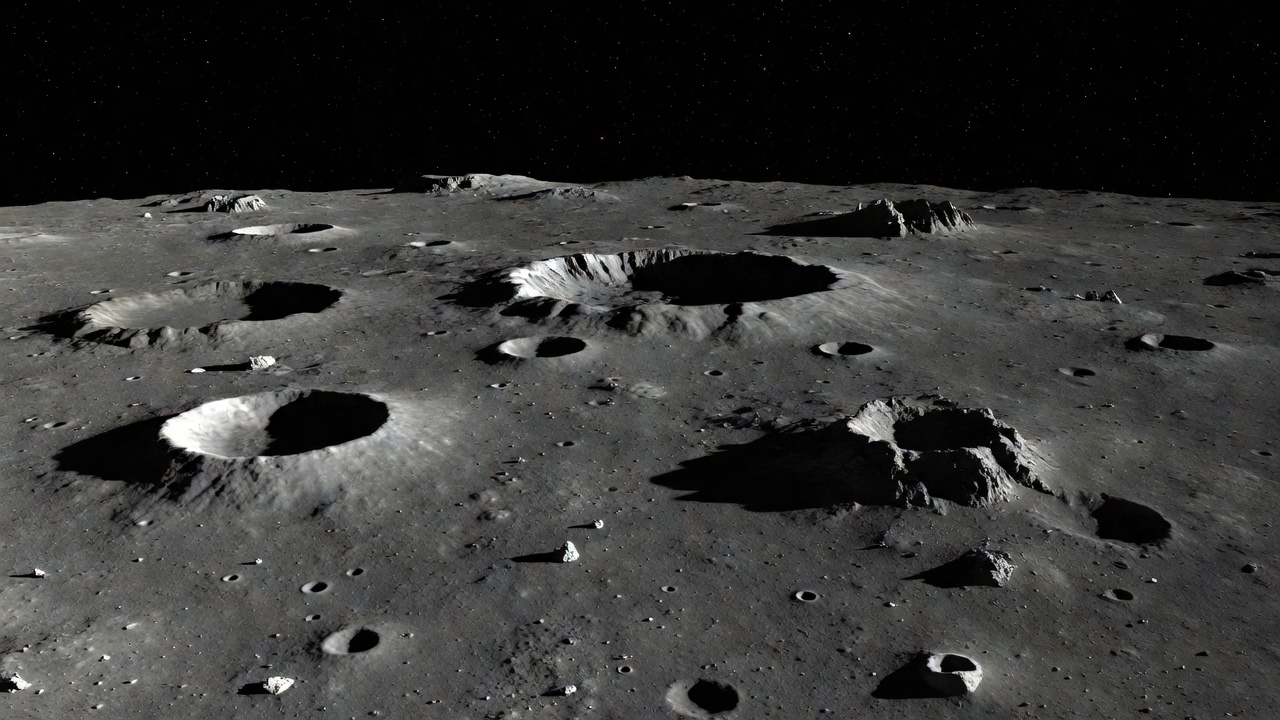

The United States and China are stepping up their lunar exploration programs with a focus on the moon’s south pole, NASA and the China National Space Administration indicated in recent mission updates. Following the successful return of the Artemis II crewed flight in April 2026, the US is preparing for further tests, while China is targeting a late 2026 launch for its Chang’e-7 probe to survey ice deposits. These initiatives come as both nations seek to establish a strategic foothold, according to an analysis published by Arab News on May 21, 2026.
NASA plans to use the Artemis program to return humans to the lunar surface for the first time since 1972. The Artemis III mission, now set as a low Earth orbit demonstration in 2027, will test landers developed by SpaceX and Blue Origin, the agency has stated. This step is intended to pave the way for a south pole landing on a subsequent flight. International partners are involved through the Artemis Accords, which have attracted dozens of signatories.
The China National Space Administration is advancing its Chang’e series with the Chang’e-7 mission scheduled for the second half of 2026. It will deploy multiple elements including a rover and a mini-flyer to explore and map resources at the south pole, according to updates from Chinese state media. Chang’e-8 is to follow in 2028 to demonstrate technologies like 3D printing using lunar regolith for construction. China aims to achieve a crewed lunar landing before 2030 and to build the International Lunar Research Station in collaboration with Russia by the mid-2030s.
Water ice is believed to exist in permanently shadowed craters at the lunar south pole, a finding supported by previous orbital data from multiple missions. Such ice could be processed into water for drinking, oxygen for breathing and hydrogen for fuel, reducing the need for supplies from Earth. Both the US and China have prioritized this location for their next landings. The resource potential has elevated the area’s importance in long-term planning.
The US-led Artemis Accords have been joined by 67 nations that agree to principles based on the 1967 Outer Space Treaty for peaceful exploration, the Arab News article reported. Meanwhile, China and Russia are proceeding with plans for the International Lunar Research Station at the same south pole region. The facility could incorporate a nuclear power source for sustained operations. This parallel approach signals the end of joint efforts on the International Space Station after its planned decommissioning in 2030.
Khaled Abou Zahr, writing in Arab News, observed that both powers view lunar settlements as a means to secure strategic advantage. He drew comparisons to terrestrial dynamics in the Arctic and Cold War space rivalry. The analyst noted the potential for de facto control through sustained presence despite the prohibition on territorial claims under international law. Future settlements in the 2030s and 2040s could test these frameworks.
The renewed competition builds on recent achievements, including China’s successful far-side sample return with Chang’e-6 in 2024, according to the Planetary Society. NASA’s Artemis II in April 2026 marked the first crewed flight beyond low Earth orbit in over 50 years. These milestones have accelerated timelines for both programs. Experts anticipate increased activity in the coming decade as technology matures.