

 ع
ع


The UAE Ministry of Artificial Intelligence and its partners detailed expanded cooperation with Amazon Web Services to support the National Strategy for Artificial Intelligence 2031, according to assessments published by Gulf Business. The collaboration with AWS and e& includes a strategic agreement valued at more than $1 billion that runs through 2030 and focuses on cloud-enabled AI transformation across sectors. Officials highlighted energy efficiency measures as integral to managing the power demands of expanding AI infrastructure while meeting Net Zero 2050 commitments.
A joint programme called AI Nation – Afaaq will train 30,000 individuals in machine learning and artificial intelligence technologies through e& Academy, the companies said in their announcement. AWS is providing sponsored vouchers for 25,000 participants to earn the AWS Certified AI Practitioner certification and 5,000 for the AWS Certified Machine Learning Engineer credential. The initiative addresses a skills shortage that nearly half of UAE organisations cite as an obstacle to broader AI adoption, according to the partners’ review of local market conditions.
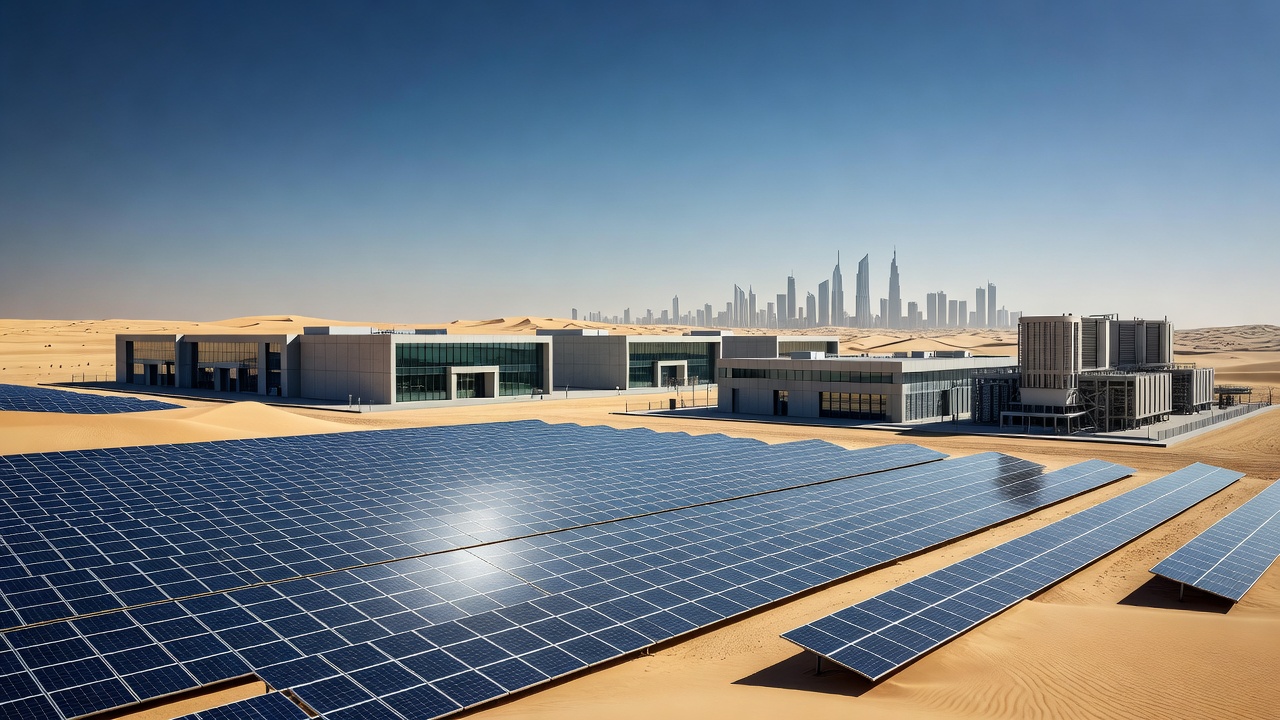
Energy efficiency forms a core pillar of the accelerated strategy, with the Ministry of Energy and Infrastructure reporting that AI systems have already cut electricity and water consumption in federal buildings by between 28 and 30 percent. Minister Suhail Al Mazrouei explained that scaling these optimizations could free substantial capacity for AI-driven industries without requiring equivalent increases in generation. The ministry has paired efficiency gains with a $6 billion project combining solar capacity and battery storage to deliver reliable renewable supply.
The Ministry of Energy and Infrastructure launched an AI pilot with Khazna Data Centers and Agility to test advanced control systems for data center power, cooling and workload management, an Economy Middle East briefing stated. Phaidra’s artificial intelligence agents are being evaluated for their ability to improve tokens-per-watt performance in the UAE’s challenging climate. This work builds on Khazna’s existing NVIDIA partnership and supports broader goals under the ministry’s Energy Efficiency Strategy.
AWS data centers globally achieved a power usage effectiveness rating of 1.14 in 2025, which the company said outperformed the public cloud industry average of 1.25. The firm also matched 100 percent of its electricity consumption with renewable sources for the third consecutive year through investments in carbon-free energy projects. These benchmarks inform the UAE deployment within the AWS Middle East region, where sovereign cloud frameworks ensure data residency while delivering efficiency gains.
The National AI Strategy 2031, first launched in 2017, sets objectives across talent development, research, infrastructure and governance that together are projected to contribute AED 335 billion to the economy, according to government-aligned analyses. Partnerships such as the AWS alliance further these aims by combining global cloud capabilities with local expertise in regulated environments. Industry reports place current UAE data center capacity at more than 400 megawatts, with major expansions under way through projects including the Stargate UAE cluster.
Minister of Economy Abdulla bin Touq Al Marri has described AI as a sovereign asset requiring dedicated investment comparable to defense and cybersecurity, statements carried in regional policy reviews noted. The integration of energy efficiency tools into AI infrastructure planning helps balance rising demand from high-performance computing with available resources from nuclear, solar and gas sources. Such coordinated efforts position the UAE to sustain its AI ambitions while advancing national sustainability targets through 2031 and beyond.