

 ع


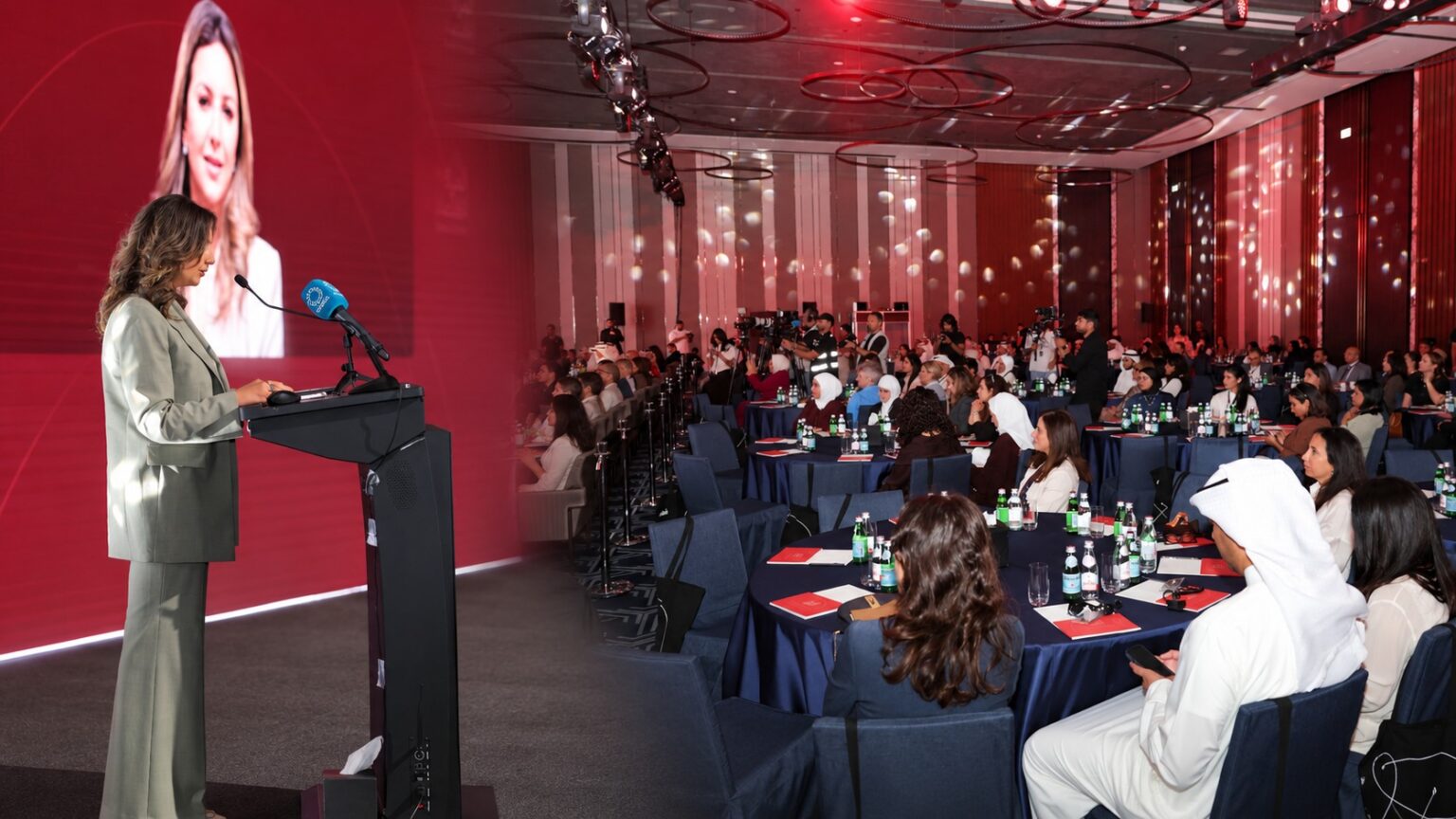

The Lei Wa Lakom founder explains the thinking behind Kuwait’s Women & the Economy conference, as international research highlights the role of new connections in ideas and careers.
Taiba Al-Humaidhi’s reason for bringing people together at Kuwait’s Women & the Economy conference begins with something she has experienced herself: a conversation that changes the direction of her work.
“You’ll be surprised, one conversation can change the trajectory of what you’re working on, and that’s exactly what happened with me,” the founder of Lei Wa Lakom told Diwaniya Media on 17 October.
She said conferences had been the setting for some of her best ideas. Organising a gathering of her own was a way to create opportunities for others to encounter people who might inspire them.
Her account raises a wider business question about how ideas and opportunities travel. Professional development depends partly on what people know, but also on the information, experience and perspectives they encounter through others.
Why meeting in person mattered
“I wanted to bring people together,” Al-Humaidhi said. “I’ve been to a lot of conferences. Some of them were the places where I got some of my best ideas.”
She described the participants as an important part of that experience. The opportunity to hear a different perspective, or speak to someone with relevant experience, helped explain her interest in organising the event.
“For me, it was important to make it in person,” she said. “We need to come back together as a community and network face to face.”
Her emphasis was on interaction. A formal session can introduce a subject, while a conversation creates room for a participant to explain their own question and hear a response shaped around it.
Someone may arrive with an idea they have already considered extensively and encounter a person who sees it from another professional context. The value of the exchange can lie in that difference.
Such outcomes cannot be assumed simply because people share a venue. Al-Humaidhi’s account instead identifies what she hoped the setting would make possible, based on experiences that had influenced her own work.
New connections can carry new information
Research into professional networks provides evidence that relationships outside a person’s closest circle can affect economic opportunities.
A study published in Science in 2022, described in MIT’s account of the research, examined around 20 million LinkedIn users over five years.
Researchers used changes to connection recommendations to investigate how the strength of new relationships affected job mobility. Weaker connections could be more useful than stronger ones, although the results varied according to the measure of relationship strength and the industry.
The explanation is relevant to the purpose of professional networking. Close contacts may already share much of the same information and know many of the same people. A more distant acquaintance can introduce something outside that familiar circle.
The study concerned an online platform, so it does not establish that attending a conference produces employment or business deals. It does, however, demonstrate that the composition of a network can matter.
Al-Humaidhi described a different form of influence: an exchange that changes how someone approaches their work. That can precede any measurable commercial outcome.
The setting can affect creative discussion
A separate line of research considers whether the format of interaction changes the ideas people produce.
A 2022 study published in Nature compared virtual and in-person collaboration through laboratory research and a field experiment across five countries.
The researchers found that videoconferencing inhibited creative idea generation in the tasks studied. The finding is specific to those activities and does not establish that every type of meeting should take place in person.
It offers context, nevertheless, for a gathering intended to encourage exploration and fresh thinking. When participants are developing ideas, the conditions in which they interact can be relevant.
Al-Humaidhi’s explanation also extends beyond the physical setting. She spoke about the importance of bringing inspiring people into the room.
The two elements serve different purposes. Meeting in person establishes the conditions for an exchange. The participants’ experiences and perspectives determine its substance.
That helps explain why the value of a conference can be difficult to capture immediately. An idea may become more useful after a participant returns to work, discusses it with colleagues or follows up with someone they met.
What happens after the introduction
A new contact and a productive relationship are different stages. The first creates an opening; the second develops through subsequent interaction.
For the same reason, an interesting conversation and a change in professional direction are not necessarily simultaneous. A comment may prompt someone to reconsider a question, seek more evidence or pursue an introduction.
Those are possible pathways through which a gathering becomes useful, rather than outcomes established for this event.
Al-Humaidhi’s own test for the months following the conference was focused on understanding. Asked what success would look like six months later, she said: “Having better questions that we need to answer.”
She explained that stronger access to data would help her determine where initiatives should begin and work with others on issues affecting women in the workforce and the wider community.
That connects the conversations she wanted to encourage with a practical next step. Encounters can help identify questions; subsequent work can determine how to investigate and address them.
Her interview did not claim that the event had already generated partnerships, employment or measurable economic gains. It explained the experience that motivated her to organise it and the learning she hoped would follow.
The meaningful follow-up will therefore concern the exchanges that continue beyond the gathering. Which introductions lead to further discussion? Which ideas become research questions? Which conversations bring people together around a specific piece of work?
For Al-Humaidhi, the possibility is personal as well as professional. She has experienced a conversation changing the direction of an idea. Through the conference, she sought to create the conditions in which others might encounter that same turning point.