

 ع


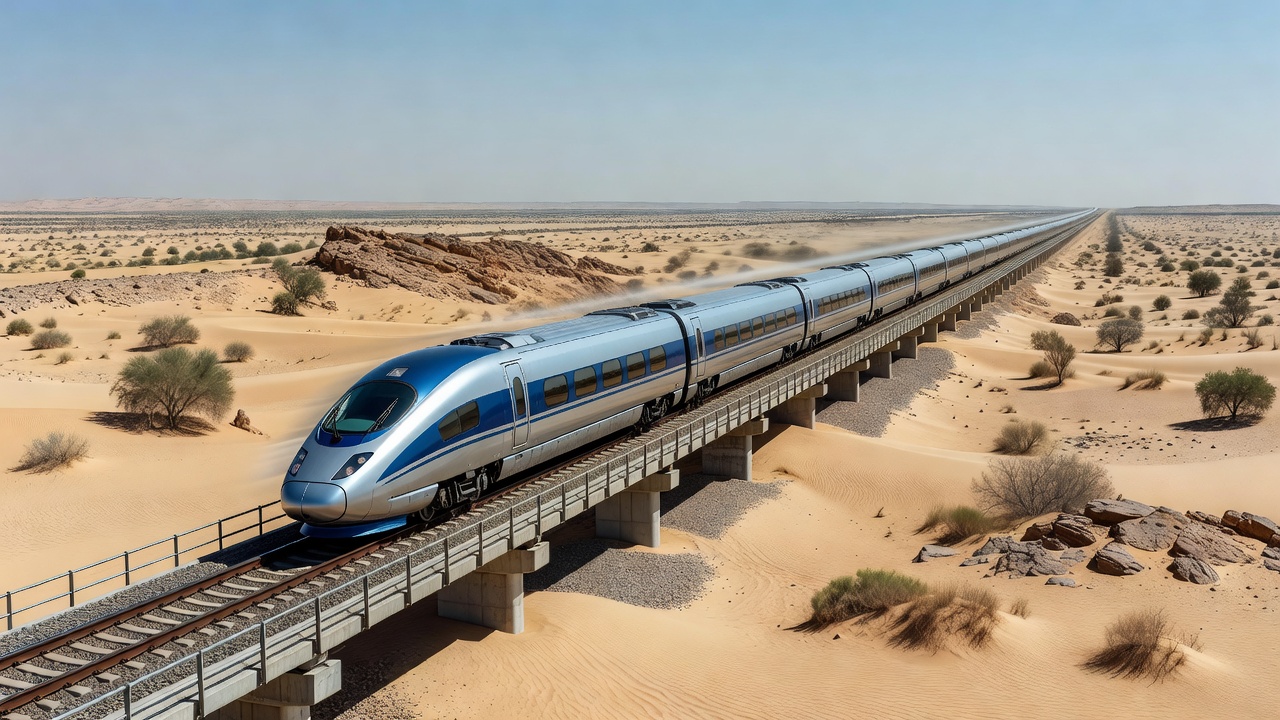

Transport ministers from all six GCC countries signed the General Agreement on the GCC Railway Project at a ceremony in Bahrain’s Al Zahir Palace on November 8, The National reported. The pact establishes a shared regulatory framework for an interconnected network while confirming that each state will fund and build the segment within its territory, according to Bahrain’s Minister of Transportation and Telecommunications Sheikh Abdulla bin Ahmed Al Khalifa. Sheikh Abdulla told Asharq Al-Awsat the arrangement reflects a long-term investment in the future of the Gulf and its people that will translate historic ties into concrete economic gains.
The railway will stretch 2,117 kilometres from Kuwait in the north through Saudi Arabia, Bahrain, Qatar and the UAE to Oman, with full operations targeted for December 2030, Asharq Al-Awsat reported. By that date the network is projected to carry six million passengers and 200 million tons of freight annually, figures expected to rise to more than eight million passengers and 271 million tons by 2045. GCC Secretary General Jasem Albudaiwi described the signing as a significant milestone that strengthens transport integration and lays the groundwork for improved trade and travel across the region.
Kuwait’s portion covers 111 kilometres from Al-Shaddadiya to the Saudi border at Al-Nuwaiseeb, a commitment reiterated by Kuwaiti officials at the meeting. The overall project has reached 55.92 percent completion, the GCC General Secretariat stated in a briefing distributed after the event. Interconnection segments between neighbouring countries can begin service as soon as they are ready rather than waiting for the entire system, Sheikh Abdulla explained to Asharq Al-Awsat.
The initiative was originally agreed by GCC leaders in 2009 but encountered delays after the 2014-2016 fall in oil prices increased fiscal pressures on member economies, according to an Economist Intelligence Unit review of Gulf infrastructure spending. Each country remains responsible for its domestic section under the new agreement, with Saudi Arabia and the UAE expected to account for the largest shares because of the length of their routes. Separate studies have placed core construction costs between 15 and 16 billion dollars while noting that associated national networks, stations and logistics hubs could push the total investment toward 250 billion dollars.
The UAE has already commissioned significant sections of its national railway, including the 605-kilometre line from the Saudi border to Fujairah, while Oman is advancing its 238-kilometre Hafeet Rail link to Abu Dhabi, The National noted in its coverage. These national efforts feed directly into the GCC framework now formalised by the agreement. Albudaiwi thanked Bahrain for hosting the ministerial meeting and praised national teams and the Gulf Railway Authority for sustained progress on technical and coordination issues.
Bahrain’s leadership in organising the 30th GCC transport ministers gathering underscored the kingdom’s role in driving joint initiatives during its presidency of the GCC Supreme Council. Sheikh Abdulla highlighted that the project will cut freight costs, expand travel choices and encourage private investment in warehousing and ancillary services. The agreement also sets common standards for safety, maintenance and cross-border operations once the network enters service.