
 ع


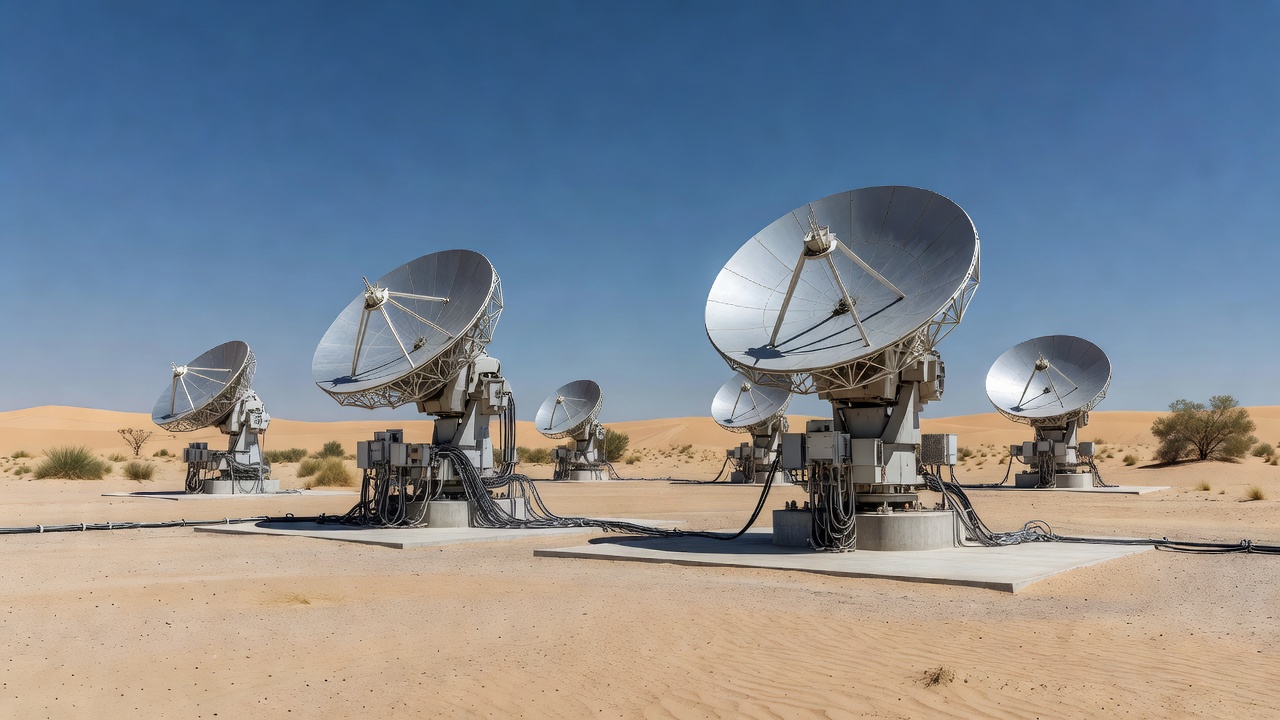

The Saudi Cabinet chaired by Crown Prince and Prime Minister Mohammed bin Salman approved the National Space Policy on November 3 to foster a domestic ecosystem and advance scientific, technological and investment activities in the sector, Asharq Al-Awsat reported on November 15. The Communications, Space and Technology Commission projects the space economy will rise from SAR 33 billion ($8.8 billion) in 2024 to SAR 119 billion ($31.7 billion) by 2035 with a compound annual growth rate of 12 percent while the domestic market reaches SAR 21 billion ($5.6 billion), according to the commission’s assessment. A separate CST report placed the global space economy on course to attain SAR 6.7 trillion ($1.79 trillion) over the same horizon, highlighting the opportunities available to nations developing sovereign capabilities.
The policy decision follows Saudi participation in NASA’s Artemis II mission launched on April 1, which Asharq Al-Awsat described as a historic step reinforcing the kingdom’s international partnerships. Engineer Frank M. Salzgeber, former deputy governor for the space sector at the CST, told Asharq Al-Awsat he believes firmly in the future of the space economy in Saudi Arabia because demand exists and the opportunity allows the kingdom to assume a leading role. Al-Meleihi, another specialist who spoke to the newspaper, stated that Saudi Arabia possesses the economic, industrial and investment capabilities to emerge as a major player in defense, security and space industries.
Al-Meleihi argued that the kingdom can shift from consuming technology to developing, manufacturing and localizing it, thereby strengthening its position as a regional hub for these industries, according to the Asharq Al-Awsat account. Specialists consulted by the newspaper recommended adopting a target to localize 67.5 percent of contract value in the space sector, a step they said would create a national industrial base able to meet domestic requirements and expand into foreign markets. The CST’s KSA Space Market Report 2025, cited by Al Arabiya on November 3, confirmed the same growth trajectory and identified satellite communications, earth observation and data services as primary drivers.
Vision 2030 continues to serve as the main catalyst for high-value investments even during periods of regional and international uncertainty, experts told Asharq Al-Awsat. Saudi Space Agency figures published by Okaz showed fresh investments in the sector totaled SAR 2.2 billion during 2025, a 16 percent annual increase and more than 200 percent rise from the 2021 baseline of SAR 750 million. The Public Investment Fund-owned Neo Space Group is expected to anchor much of the sovereign capability building and attract global partners in satellite manufacturing and related infrastructure, Arab News reported in December 2025.
The CST’s Digital and Space Sustainability Report 2026, developed with support from the International Telecommunication Union, found that more than half of essential climate variables can be measured from space, underscoring applications in water management, agriculture, desertification combat and disaster response. General Authority for Statistics data indicate artificial intelligence adoption among Saudi businesses climbed to 33.1 percent in 2025 from 20 percent the previous year, illustrating synergies with space-derived technologies. Saudi Space Agency chief Mohammed Al-Tamimi told Arab News that space innovations now link directly to daily life and national priorities including logistics and urban planning.
The National Space Policy supplies a clearer regulatory foundation that should improve transparency and draw additional capital into areas such as small satellites, ground systems and launch services, a Leaders Mena analysis of the CST projections noted on November 4. These measures align with broader efforts to position the kingdom as a knowledge-based economy hub while addressing sustainability challenges through advanced Earth observation, according to the commission’s published outlook. Saudi Arabia’s space investments have already contributed to diversified growth under Vision 2030, with downstream applications expected to generate substantial value across multiple economic sectors.