 ع
ع
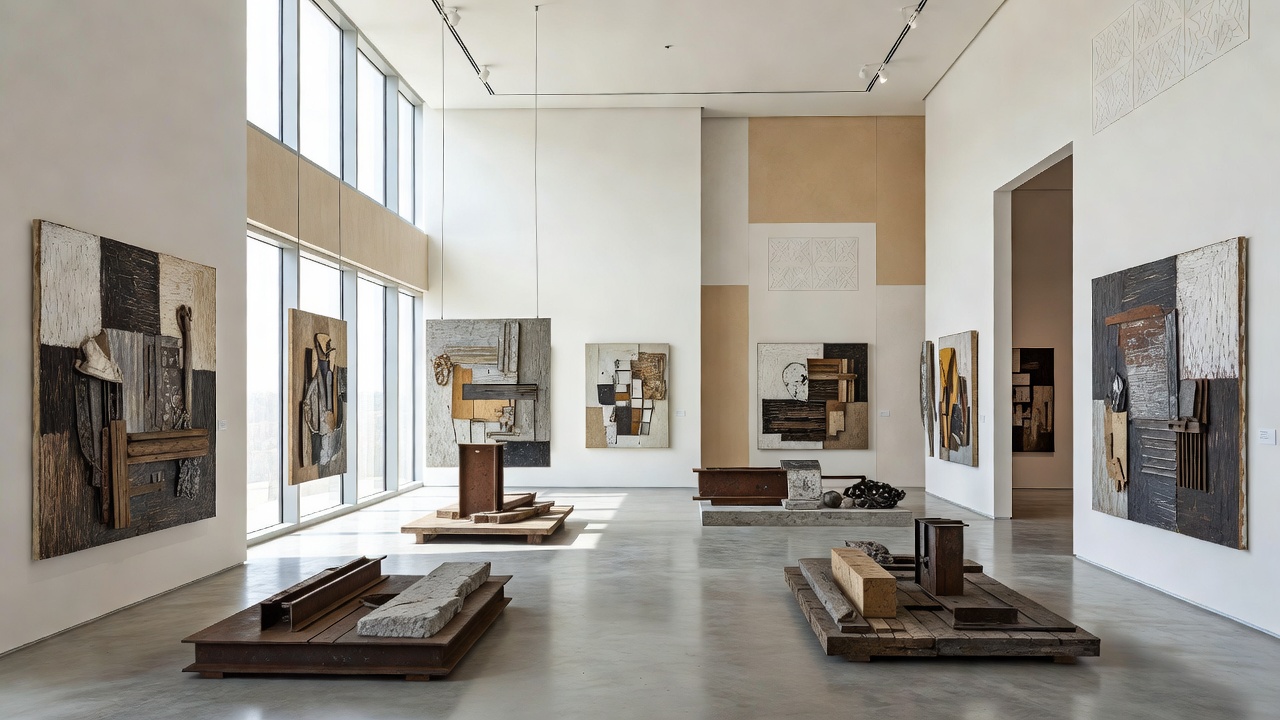

Art Basel opened its first fair in the Middle East from February 5 to 7, 2026, in Doha, Qatar, featuring 84 artist presentations by 87 galleries including 16 first-time participants. The event, held at M7 and the Doha Design District with preview days on February 3 and 4, was presented in partnership with Qatar Sports Investment and QC+, according to Art Basel. More than 17,000 attendees visited, with over half hailing from the region, Artsy reported.
Art Basel data places the fair as the organization’s fifth global edition after events in Switzerland, Paris, Hong Kong and Miami. Artistic director Wael Shawky curated the presentations with half the artists from the Global South and a particular focus on the Middle East, departing from traditional booth formats to allow gallery-style displays of multiple works by each participant. The approach enabled deeper engagement with pieces ranging from installations using found objects to mixed-media paintings.
Al Jazeera reported that Qatari artist Aisha Ahmad, 25, highlighted the event’s local appeal. “If you want to observe art like that, you would have to travel abroad. It’s exciting for the locals and amazing to see people from different countries, people travelling all the way to come to this country,” Ahmad told Al Jazeera. Pakistani diaspora artist Aiza Ahmed, 28, who received a dedicated exhibition space for her mixed-media works inspired by border ceremonies, described the experience as a dream come true and praised the artist-driven focus in remarks to the outlet.
The Art Basel and UBS Global Art Market Report 2025 placed worldwide art sales at an estimated $57.5 billion in 2024, a 12 percent decline from the prior year amid economic pressures. ArtTactic figures show the MENA modern and contemporary auction market grew 8 percent to $28 million between 2021 and 2022, while a separate analysis found sales in the region expanded 30 to 40 percent overall from 2013 to 2023 despite periodic volatility. Online art sales across the Middle East generated $1.41 billion in 2024 with a projected 5 percent compound annual growth rate through 2033, according to market data compiled by Zurani.
Emirati artist Sarah Al Mehairi, 27, told Al Jazeera the fair represented a pivotal moment for regional visibility. “I would say that the region has always been serious and important for arts and culture, and with moments like these, Art Basel Qatar and Frieze coming to Abu Dhabi in November of this year, it’s showing that this is the centre right now,” Al Mehairi said. Palestinian artist Khalil Rabah contributed an installation titled “Transition” that incorporated household and construction elements to address themes of survival and reinvention, while Iraqi painter Nazar Yahya, 60, noted the balanced selection of artists avoided tokenism.
Art Basel Miami Beach generated $547 million in economic activity in 2024 with approximately 75,000 attendees, city officials reported, offering a benchmark for the potential regional effects of the Qatar edition. The Doha fair included special projects such as a large-scale projection by Jenny Holzer on the Museum of Islamic Art facade and sound installations by Sumayya Vally in Msheireb courtyards. Organizers positioned the event as part of Qatar’s broader cultural strategy that has included major investments in museums and public art spaces over the past decade.