
 ع


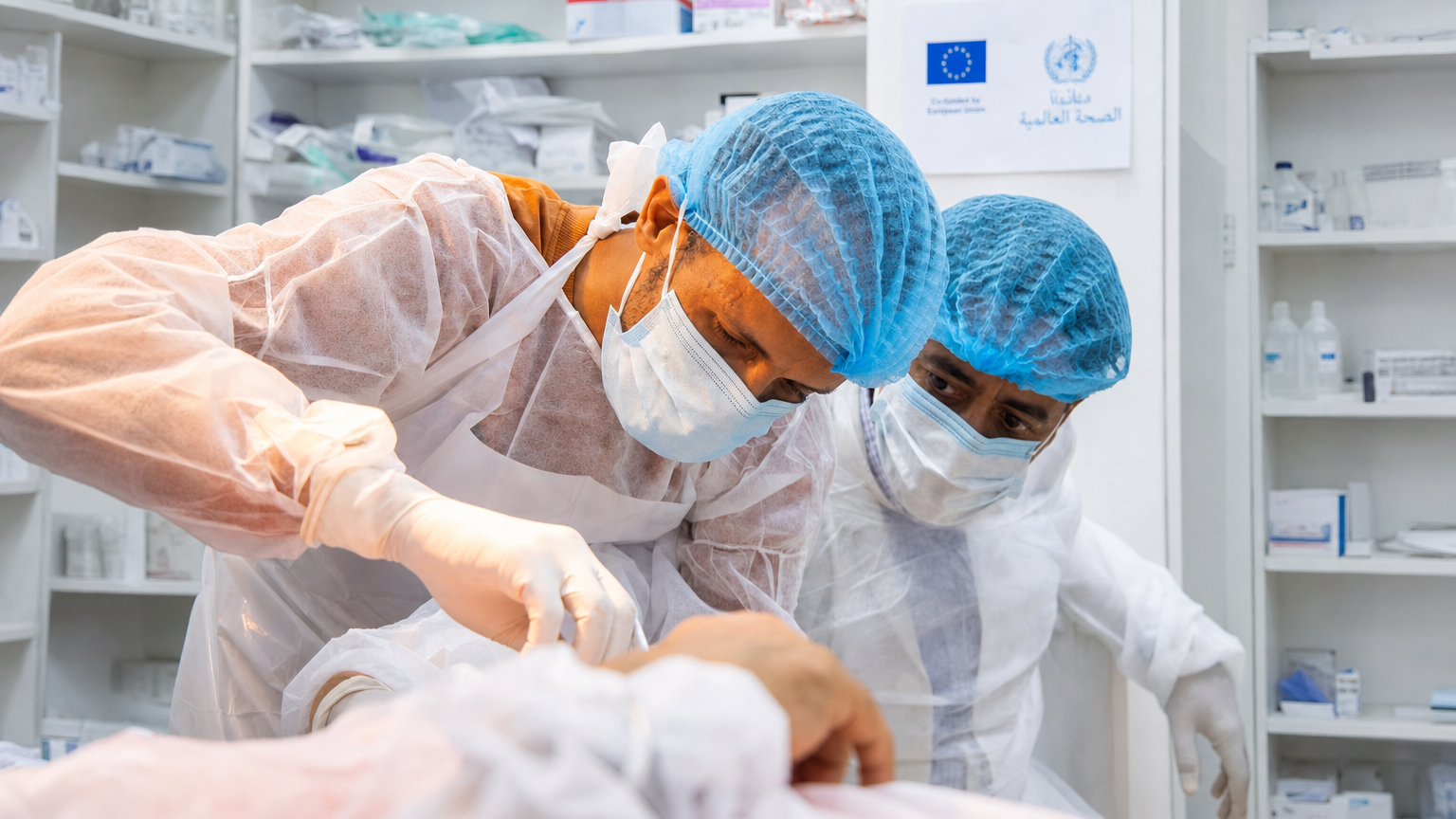

A 25-year-old pregnant mother of two lay immobilised in a Taiz hospital after a bullet lodged in her spine while she was trapped inside her home without food or water for two days, according to a Reuters dispatch from the city. The United Nations and aid agencies described health needs in the besieged area as critical. Acute shortages of medicine, oxygen, surgical gloves, anesthetic and fuel have compounded the difficulties for facilities struggling to cope.
Hospitals near Yemen’s front lines have faced large influxes of patients with some treating as many as 700 war wounded in a single week, the International Committee of the Red Cross reported. Taiz, Marib and the Red Sea coast have seen some of the highest casualties with patients arriving bearing gunshot wounds and complex blast injuries. “The healthcare system across Yemen is at a breaking point,” said Red Cross spokesperson Hachem Osseiran.
Even before the latest fighting more than 40 percent of hospitals and healthcare facilities across the country were already either closed or partially functioning after years of protracted conflict, Osseiran added in the Reuters report. World Health Organization assessments have placed the share of fully functioning health service delivery units at around 60 percent with comprehensive trauma care available in only a small proportion of facilities. This underlying fragility has left the system vulnerable to the current surge in demand for emergency treatment.
Intensified fighting has displaced more than 200,000 people since clashes resumed in recent weeks, United Nations International Organization for Migration data shows. The World Food Programme has reported that the violence cut off humanitarian aid to around 800,000 people in Taiz and surrounding districts with local wheat flour stocks nearly exhausted. Such disruptions have trapped civilians in affected zones and blocked supply lines for both food and medical materials.
Concerns have grown over possible disease outbreaks as water runs short and rubbish accumulates on streets in besieged locations, the Reuters report noted. Fuel shortages have already forced one hospital to slash the number of operating incubators from 40 to 10, placing newborns at heightened risk. Medical teams must balance care for war casualties against ongoing needs for mothers, children and those with chronic illnesses.
The International Committee of the Red Cross has chartered flights and trucks to deliver more than 500 tonnes of life-saving medical supplies to Sana’a and Aden since the escalation began, according to an ICRC statement. The organisation currently supports over 40 health facilities nationwide including major hospitals in Aden, Taiz, Al-Dhale and Marib with trauma kits, surgical materials and technical assistance for staff. Further sustained access and resources will be required to prevent additional deterioration across the country’s health network.