

 ع


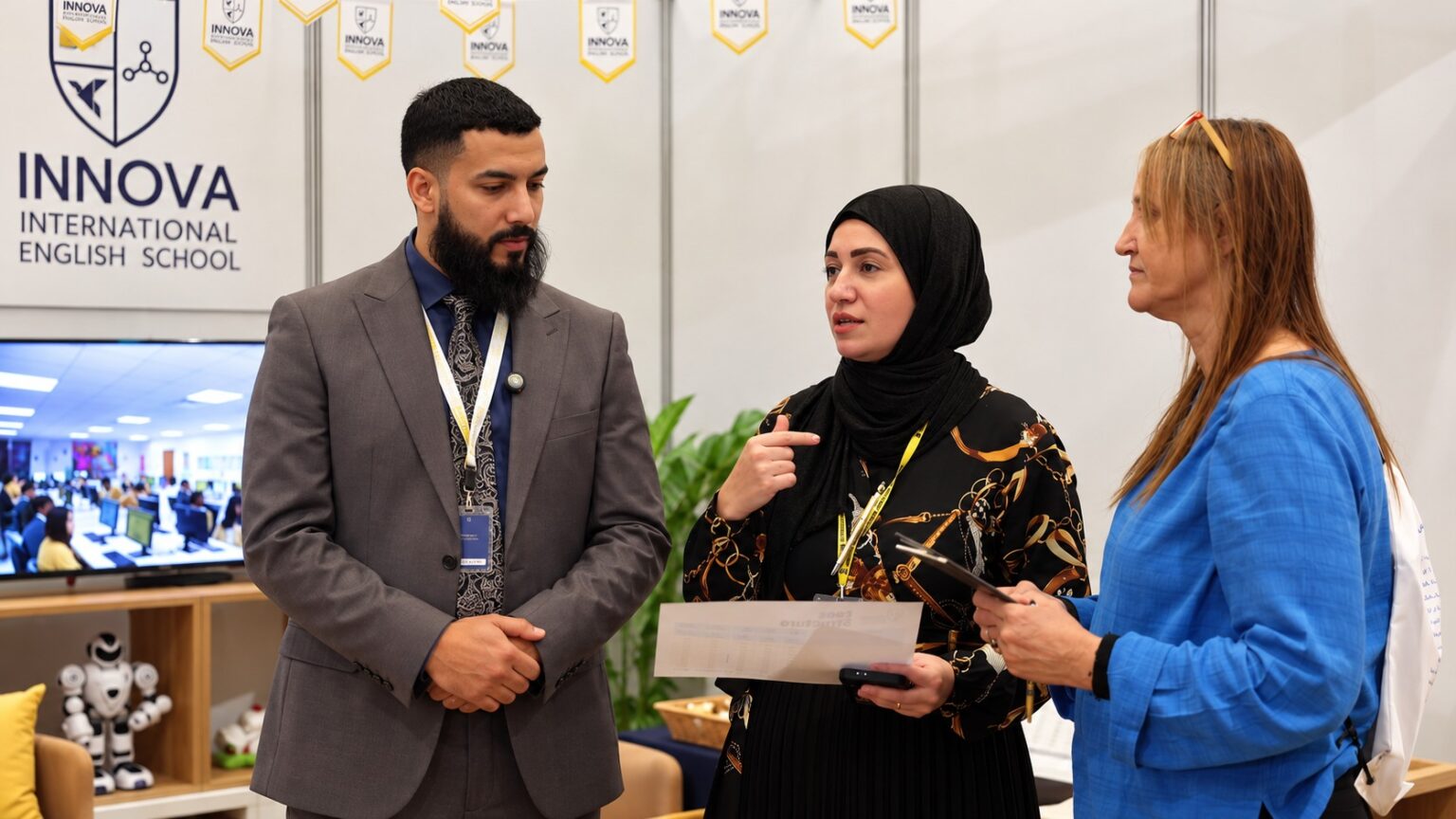

The Mahboula school’s representatives used HigherED to explain its British curriculum and learning support, while a parent’s questions brought the next stage of education directly into the discussion.
At Innova International English School’s HigherED stand, the conversation moved naturally from school qualifications to what comes after them. Representatives described the school’s British curriculum, the support available to students and the choices families face as they prepare for university.
One of the school representatives also spoke as a parent, describing her interest in university options in Lebanon for her son. It was a useful reminder that a school’s role in an education exhibition reaches beyond introducing its own classrooms. Families are also trying to understand how one stage of education connects with the next.
For Innova, based in Mahboula, that connection gives the discussion a practical focus. The relevant question is how a student’s subjects, qualification level and preparation match the course they eventually want to study.
Understanding the qualification being offered
Innova’s official school information describes a British-style education from Kindergarten to A/S Level in Year 12. The school says it was established in 2019 and identifies Cambridge and Pearson Edexcel among the examination bodies connected with its provision.
At HigherED, the representatives discussed the later school years and the routes students consider around GCSE and advanced study. For families, the important detail is the exact qualification a student will finish with, the subjects available and how those qualifications fit the requirements of a chosen university.
AS study and a complete A-level programme should be discussed precisely. The appropriate route depends on the institution and course a student intends to enter. A family comparing schools can therefore ask for the published subject offering and then check that plan against university requirements, rather than relying on a general description of a British curriculum.
That conversation is useful before the final school year. It creates time to identify which subjects need to be continued, where additional preparation may be required and which options remain open. The school and the destination university have different roles in providing those answers, but both sets of information belong in the same plan.
Support alongside classroom teaching
The Innova representatives also discussed extra lessons and support beyond the regular timetable, including online help where needed. Their account placed attention on how students are assisted through their studies as well as on the qualifications themselves.
A family can make that conversation more specific by asking how support is arranged. What happens when a student begins to struggle in one subject? How are parents informed? Which activities are part of the regular provision, and which are scheduled in response to a particular need?
Innova’s secondary information offers a reference point for the school’s academic stage, while its extracurricular page sets out another part of school life. Looking at both helps families distinguish between subject support, wider interests and the experience a student has outside formal lessons.
The distinction matters because these activities serve different purposes. A student preparing for an examination may need targeted academic help. Another may benefit from an activity that develops confidence or gives them a new interest. A clear account of the provision allows parents to understand what is relevant to their own child.
A parent’s question brings the next stage closer
The representative’s contribution as a parent gave the university discussion a personal dimension. She was considering Lebanon as a possible destination for her son. Her question did not require a general sales pitch; it called for information that could connect his current studies with a particular future route.
That is often where an exhibition becomes most useful. Representatives of schools and universities are available in the same setting, so a family can begin linking a school qualification to a course of interest. The conversation can expose details that need to be confirmed in writing after the event.
For a student considering study in another country, those details might include the academic entry route, the language of instruction and the documents the university will need to assess. The answers should be obtained for the actual programme and applicant, since a broad statement about studying in a country cannot resolve an individual application.
The parent’s question also underlined the value of keeping students involved. A family may have a preferred destination, but the student still needs to understand what the course contains and why it suits their interests. Matching those perspectives is part of preparing for the transition from school to university.
Bringing the conversation back to Mahboula
Innova’s published background locates the school within Kuwait’s international education community. Its Mahboula campus gives local families a place to continue the discussion after an exhibition introduction, with the focus shifting from a broad overview to the details of a child’s education.
A useful follow-up visit can begin with the student’s current year group and recent academic work. From there, the family can discuss subject progression, support needs and the qualification they are working towards. Bringing a possible university destination into that meeting can make the longer-term questions more concrete.
Families should also ask which published information applies to the next intake. School websites may contain material from more than one academic year, and a conversation about future study needs the current course offering and admissions arrangements. A written response gives parents a clearer basis for comparison.
At HigherED, Innova’s representatives connected their school offering with the decisions waiting beyond it. The next step for interested families is to develop that connection in detail: the subjects a student will study, the support available along the way and the university requirements those choices are intended to meet.