
 ع
ع

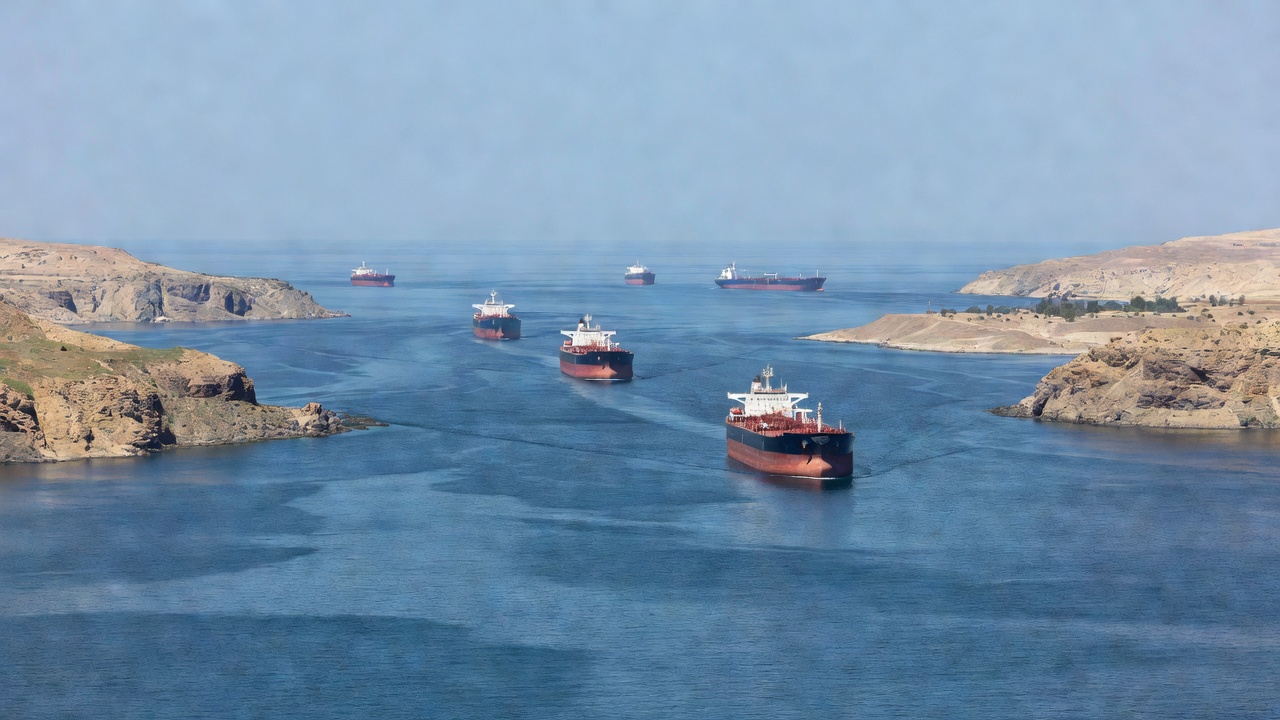

Reuters reported that France and Britain will outline plans for a multinational maritime mission in the Strait of Hormuz during talks between NATO and Gulf Arab foreign ministers on Tuesday. The meeting in Ankara brings together counterparts from Bahrain, Kuwait, Qatar and the United Arab Emirates as tensions linger in the waterway despite a mid-June interim peace deal between Washington and Tehran. Belgian Foreign Minister Maxime Prevot said before the gathering that Bahrain, Kuwait, Qatar and the United Arab Emirates were directly targeted by Iranian attacks this spring, stressing that their stability and prosperity are inextricably linked in ways that extend well beyond the strait and its importance for Europe’s energy security.
The United Kingdom Maritime Trade Operations agency reported early Tuesday that a tanker was struck east of Oman’s Limah while Axios reported that Iran’s Revolutionary Guards fired at least two missiles at commercial ships in the strait. Iran began blockading the waterway after U.S. and Israeli military action against it in February, leaving passage difficult even after the interim accord and placing continued pressure on shipping costs and global supply chains. NATO allies have focused on initiatives outside the alliance framework to reopen the strait, through which around a fifth of the world’s oil supply normally passes, rather than direct involvement in the preceding conflict.
U.S. President Donald Trump said upon arrival in Ankara that he might not have attended the summit had it not been hosted by his friend, Turkish President Tayyip Erdogan. Trump criticized NATO allies for their reluctance to support his administration’s actions in Iran. “We weren’t treated well because we did something in Iran. We don’t need anybody’s help. I didn’t even want their help. But before I asked, they said they wouldn’t be there,” he said, according to Reuters, directing his remarks at Britain, Italy, France and Germany.
European nations have stated they do not wish to be drawn into a war launched without their consultation yet remain prepared to assist in securing the strait once tensions subside. France and Britain have worked to assemble a coalition of roughly a dozen countries for the mission, though any durable solution would require Iranian acquiescence that has so far been withheld. A Franco-British joint statement issued on July 3 said, “The Sultanate of Oman has agreed to work with the United Kingdom and France to ensure that its sovereign territorial waters are safe for navigation,” with initial operations potentially focused on the adjacent Gulf of Oman.
U.S. Energy Information Administration figures show that total oil flows through the Strait of Hormuz averaged 20.9 million barrels per day in the first half of 2025, equivalent to about 20 percent of global petroleum liquids consumption. The International Energy Agency’s May 2026 Oil Market Report placed cumulative supply losses from Gulf producers since the February conflict at more than 1 billion barrels, with output from affected countries running 14.4 million barrels per day below pre-war levels. Analyses from the Atlas Institute have pointed to the Istanbul Cooperation Initiative as a platform for enhanced NATO-GCC training and interoperability on maritime security without ceding command authority to external actors.
Diplomats told Reuters that French President Emmanuel Macron’s recent comments on the mission appeared aimed at projecting European solidarity with the United States at the summit following his visit to Syria. One European diplomat said that in the end, as long as Iran does not give a green light, everyone is too scared to proceed. Two other diplomats described the Tuesday meeting itself as largely symbolic even as several NATO allies have deployed minehunters, warships and support vessels to the surrounding region.