
 ع


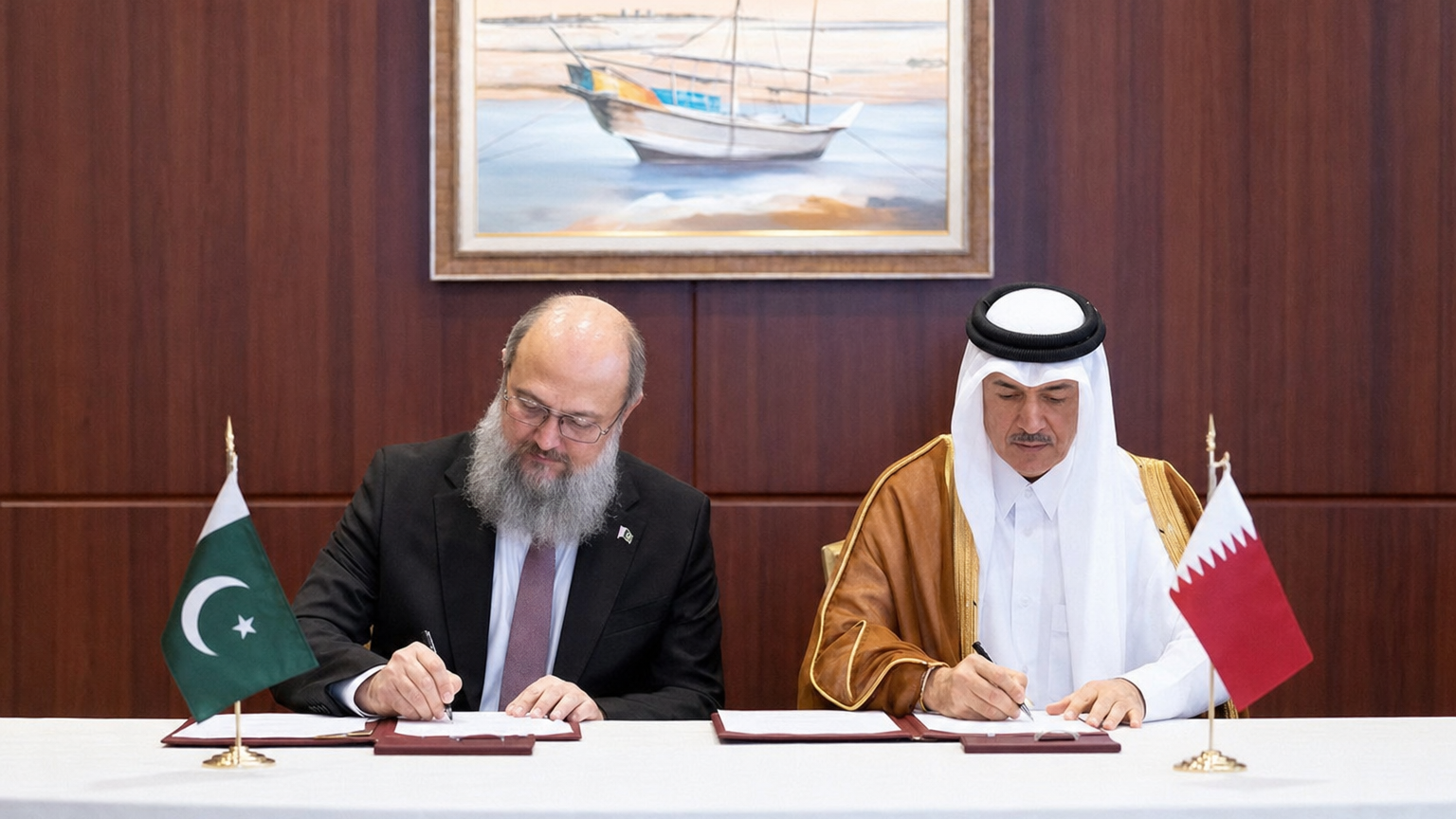

The second meeting of the Pakistan-Qatar Joint Task Force on Trade and Investment convened in Doha, where Federal Minister for Commerce Jam Kamal Khan and Qatar’s Minister of State for Foreign Trade Affairs Dr Ahmad bin Mohammed Al-Sayed signed the minutes from the first session held in April 2026. The Ministry of Commerce said in a statement that participants evaluated advancements in economic relations since the inaugural gathering and identified practical steps to expand trade volumes, ease investment procedures and build industrial partnerships. Relevant Pakistani ministries joined parts of the discussions virtually while the Special Investment Facilitation Council coordinated proceedings from Islamabad.
Pakistan called for the early signing of the Pakistan-Gulf Cooperation Council Free Trade Agreement and requested Qatar’s support to finalise outstanding formalities, the ministry stated. Officials informed their Qatari counterparts that domestic approval procedures had been completed with the agreed text forwarded to the GCC Secretariat on December 31, 2025. The Pakistani side further sought swift resolution of restrictions on bone-in meat exports after submitting a full technical dossier covering animal health and food safety standards.
A proposed government-to-government rice supply deal between the Trading Corporation of Pakistan and Qatar’s Hassad Food has been submitted to the federal cabinet for approval, according to the ministry statement. Both delegations examined options for developing sustainable food supply arrangements to reinforce food security across the two countries. Pakistani representatives invited Qatari investors to examine projects in modern agriculture, grain storage facilities, silos, cold storage, integrated cold-chain infrastructure and advanced farming technologies.
The ministry reported that investment opportunities in electric vehicles and new energy vehicles were presented under Pakistan’s updated policy framework, with emphasis on joint manufacturing initiatives, technology transfers and broader industrial collaboration. Discussions extended to information technology, digital infrastructure, shipping and maritime transport, including potential Qatari participation in oil tankers, LNG carriers and container vessels to support energy security and trade links. The proposed Karachi-Hyderabad Motorway was offered as an infrastructure investment that could improve port connectivity and facilitate regional transit trade with Central Asian states.
Pakistani officials outlined the concept of an investment fund that would draw Qatari capital into infrastructure, agriculture, industrial development, information technology and additional priority areas, the statement added. The two sides addressed the prompt activation of 11 technical working groups formed at the first meeting, which span logistics, aviation, advanced manufacturing, mining, tourism, healthcare, education, financial technology, startups and related fields. Pakistan has shared its nominees for the groups and asked Qatar to provide corresponding representatives so the panels can begin project identification, issue resolution and sector-specific recommendations before the third meeting scheduled in Pakistan.
United Nations COMTRADE figures show Pakistan exported goods worth 105 million dollars to Qatar in 2025 while importing 3.17 billion dollars, largely mineral fuels and plastics. State Bank of Pakistan data indicates the trade deficit with Gulf partners including Qatar narrowed 26 percent in the first quarter of fiscal 2026-27 compared with the previous year, driven mainly by lower energy imports. The Joint Task Force framework forms part of ongoing efforts to address structural imbalances through focused cooperation in the sectors highlighted during the Doha session.