
 ع
ع


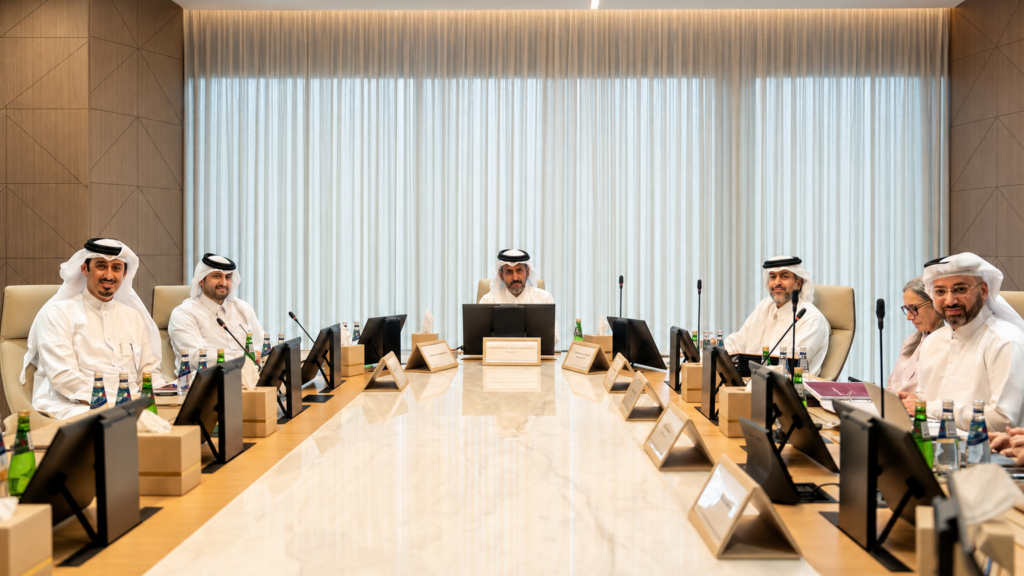
The gathering brought together senior government officials, global decision-makers, prominent investors, business executives and thought leaders to exchange views on emerging economic issues and strategic investment priorities, according to the Emirates News Agency. Inspired by the traditional Emirati Majlis format that emphasises open dialogue and consensus-building, the new platform enabled candid discussions on overlapping economic interests between participants. The inaugural edition advanced economic diplomacy by fostering closer ties between public and private sectors while highlighting the UAE’s role in international investment networks.
Held under the theme of resilient supply chains and smart logistics, the Majlis spotlighted opportunities in multimodal transport, infrastructure, digital trade, AI-enabled logistics, trade facilitation, ports and logistics hubs. Participants engaged in ministerial-level talks, targeted investment sessions and business networking to identify cooperation prospects and new project possibilities. The UAE Ministry of Foreign Affairs and the Ministry of Investment jointly organised the gathering to connect investors with viable opportunities and reinforce the country’s position as a trusted global partner.
A Mordor Intelligence assessment projects the UAE logistics services market to grow from 21.6 billion dollars in 2025 to 30.19 billion dollars by 2030 at a compound annual growth rate of 6.9 percent. This expansion reflects increasing adoption of sustainable and autonomous solutions across the sector, supporting the themes addressed at the Majlis. The market growth further benefits from digital customs platforms and smart transport initiatives that have reduced operational costs and improved efficiency for businesses operating in the country. Industry data places the overall UAE logistics market at approximately 41 billion dollars in 2025 with expected annual growth of 6 to 7 percent through 2030.
WAM figures show the UAE’s non-oil foreign trade reached a record 1.937 trillion dirhams in the first half of 2026, underscoring the momentum in diversified commerce that the Investment Majlis aims to build upon. Khalifa Port handled 9.6 million TEU in the first half of 2025 with 21 percent year-on-year growth, elevating its global ranking and demonstrating the infrastructure advances central to resilient supply chains. These developments illustrate how targeted investments in ports, rail and free zones are enhancing the UAE’s connectivity to global trade routes. The Ministry of Economy reported that non-oil trade rose 14.6 percent in 2024 to about 817 billion dollars.
Etihad Rail transported roughly 1.8 million tonnes of sulphur, more than four million tonnes of aggregates and 129,000 containers in 2026 across 11 terminals linking industrial centres and ports including Khalifa Port and Jebel Ali, WAM data indicates. Jebel Ali Free Zone attracted 854 million dirhams in new investments during the first four months of 2026 for projects in manufacturing, logistics, healthcare and food production. Such infrastructure expansions align with the Majlis emphasis on multimodal networks and digital trade facilitation.
The warehousing automation market in the UAE stood at 778 million dirhams in recent years and is forecast to reach 1.9 billion dirhams by 2030 at an annual growth rate of 17.4 percent, according to sector analysis. This growth is driven by e-commerce expansion, government initiatives in artificial intelligence and projects such as the Dubai Logistics Corridor that links Jebel Ali port with Al Maktoum International Airport. Supply chain management in the UAE was valued at 5.22 billion dollars in 2024 and is projected to hit 8.5 billion dollars by 2031 with 7.2 percent compound annual growth.