
 ع


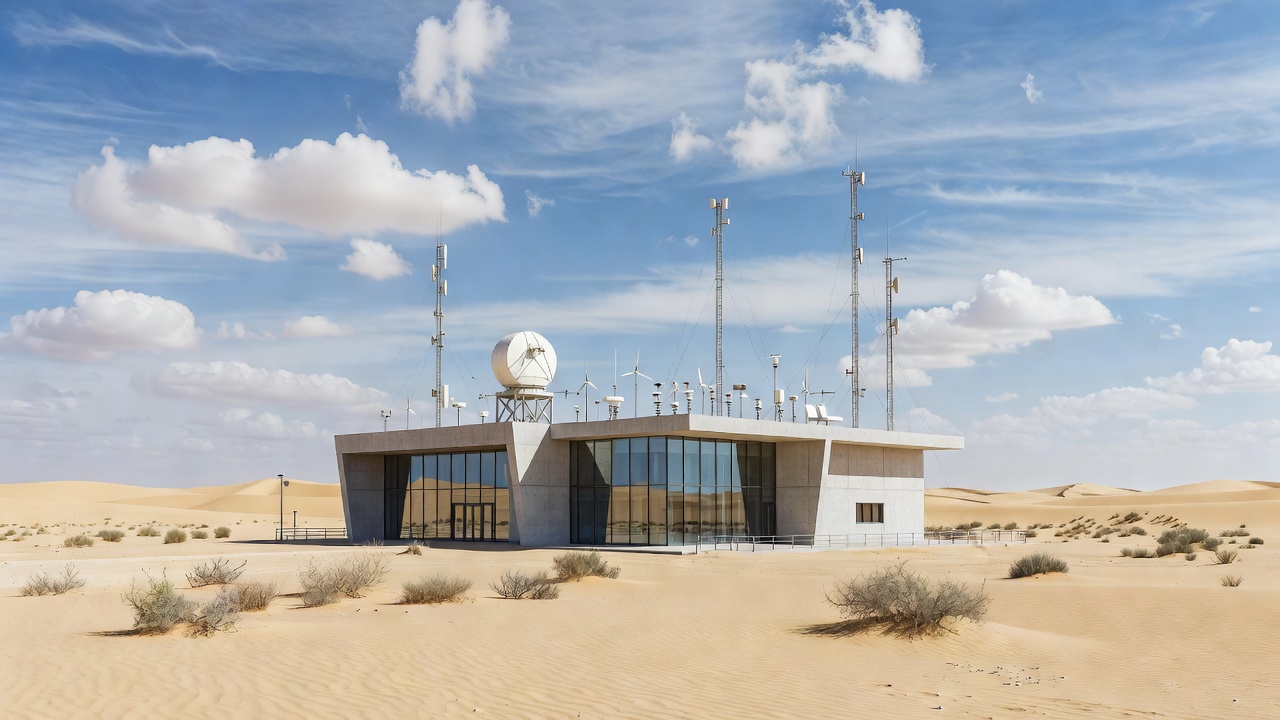

The National Center of Meteorology unveiled the solicitation document for the seventh cycle of its rain enhancement research program on November 5 2026 outlining priorities intended to push promising technologies closer to operational use in water-stressed environments. The initiative will distribute a total of $3 million across as many as five awards with individual project durations ranging from one to three years. According to the center the cycle builds directly on six previous rounds that have drawn proposals from dozens of countries and supported international collaboration on weather modification techniques.
Five strategic areas will receive emphasis under the new cycle the National Center of Meteorology reported. These encompass optimised seeding materials that examine physical chemical and environmental properties tailored to arid conditions novel cloud formation and rain enhancement systems that move beyond traditional seeding methods autonomous unmanned aircraft systems for deployment and data collection limited-area climate interventions including land-surface modifications and advanced models software and data that leverage artificial intelligence for prediction and evaluation. Each area seeks to address specific technical barriers to scaling rain enhancement in the Gulf region.
Funding will be allocated according to project length with a ceiling of $500,000 for one-year initiatives $1 million for two-year projects and $1.5 million for those spanning three years the program announcement stated. Researchers from academic institutions private organisations and government laboratories worldwide are invited to submit proposals that demonstrate clear pathways toward practical application and capacity building within the National Center of Meteorology. The structure mirrors earlier cycles that awarded comparable sums to selected teams from the United States Australia and Germany.
The UAE Research Program for Rain Enhancement Science which the National Center of Meteorology has managed since 2015 has previously selected multiple awardees whose work contributed to improved evaluation tools nanomaterials and land-form modelling a pattern the seventh cycle aims to continue. In the sixth cycle concluded earlier in 2026 three projects received grants of up to $1.5 million each focusing on radar signatures with artificial intelligence glaciogenic seeding materials and land-cover modifications that could stimulate convection. Those awards formed part of a decade-long roadmap designed to strengthen national expertise in weather modification.
Cloud-seeding operations overseen by the National Center of Meteorology have expanded in recent years with the authority completing 110 missions during one recent forecasting period as it monitors atmospheric conditions across the emirates. The program integrates research outcomes into these operational flights seeking measurable improvements in precipitation efficiency amid the country’s limited natural freshwater resources. Earlier cycles have already produced data and technologies that inform current seeding strategies employed by the center’s fleet of aircraft.
Dr. Abdulla Al Mandous director general of the National Center of Meteorology said through the program the UAE is supporting new research and technologies that advance rain enhancement science and contribute to addressing water scarcity. The latest solicitation places particular weight on moving innovations from laboratory concepts toward field-ready solutions that can be tested in local conditions. Proposals must demonstrate scientific merit potential for capacity building and alignment with the five priority domains to qualify for funding.